Synthetic cedar shake roofing in Gilbert, AZ gives homeowners the hand-split wood look without the splitting, warping, and upkeep that real cedar suffers in the desert. It costs more upfront than asphalt shingles but is built to last two to three times longer. Here's what it actually costs, how it holds up against Gilbert's heat, and whether it's worth it for your roof.
What Is Synthetic Cedar Shake Roofing?
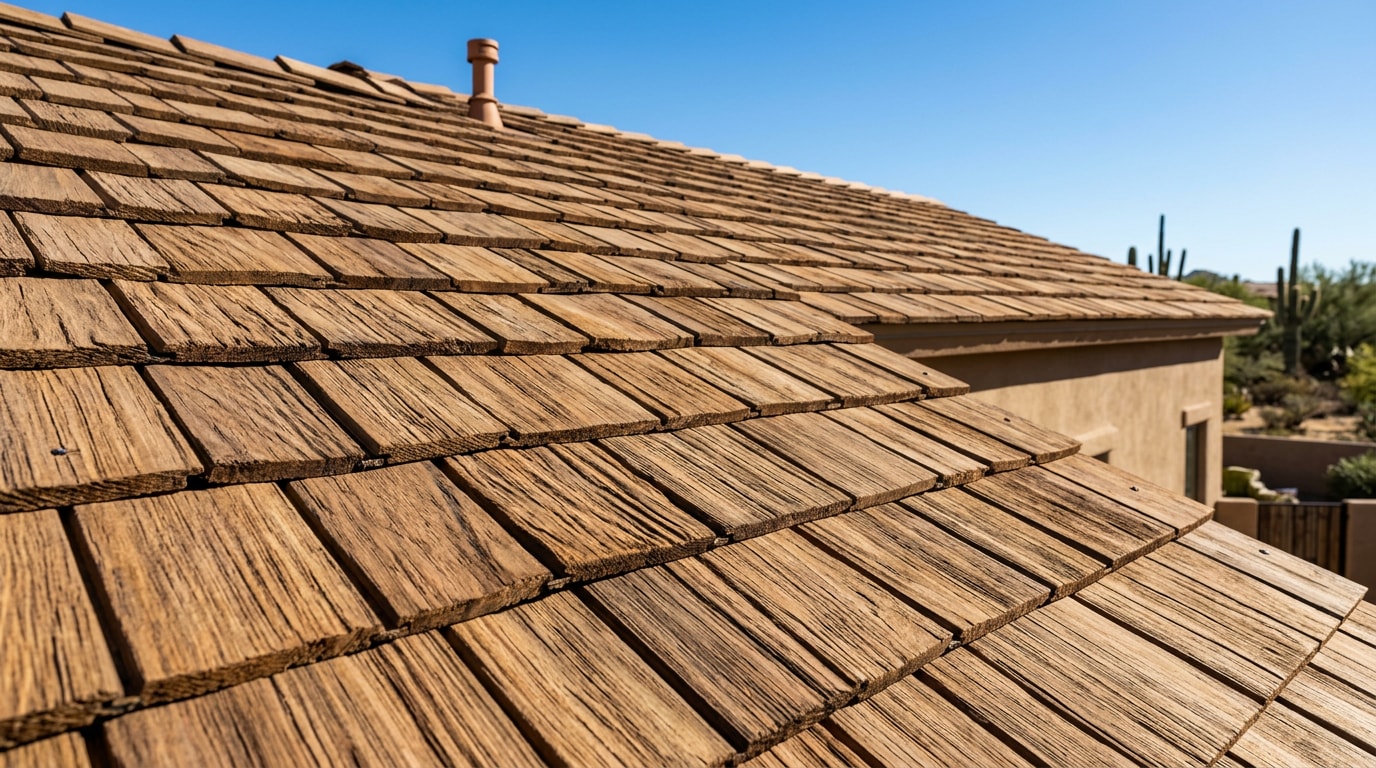
Synthetic cedar shake is an engineered roofing material made from molded polymer, rubber, or recycled composite blends. It's shaped to copy the grain, texture, and staggered shadow lines of real cedar shakes without using any actual wood.
Homeowners researching this material in Gilbert are usually comparing it to traditional wood shake. They're trying to decide if the look is worth the investment.
Because it's manufactured rather than harvested, composite shake behaves differently than real timber once it's on a roof. That difference matters in a desert climate, and it's the thread running through the maintenance, fire-resistance, and lifespan comparisons below.
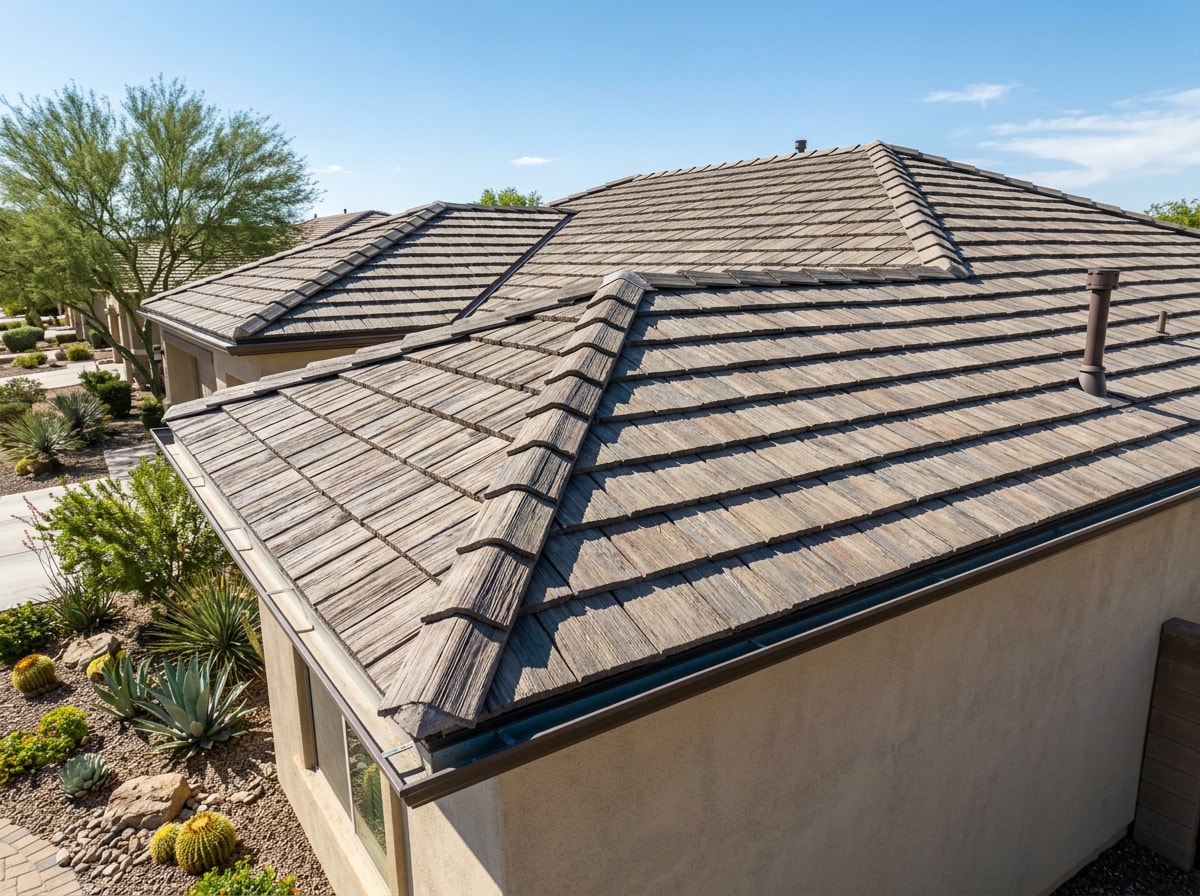
Pros and Cons of Synthetic Cedar Shake Roofing
Before weighing cost or climate fit, it helps to look at this material honestly: strengths and tradeoffs both.
Pros
- Low maintenance. Composite shake never needs staining or sealing, unlike real wood.
- Long lifespan. It resists splitting in heat and holds its shape through decades of sun exposure.
- Curb appeal. It delivers the dimensional, hand-split look buyers want without the upkeep.
- Fire resistance. Most quality synthetic shake products carry a Class A fire rating, the highest classification under standardized roof-covering fire tests. The Federal Emergency Management Agency lists Class A roof coverings as a primary way to reduce ignition risk, which matters given regional wildfire exposure and how some insurers factor roofing material into premiums.
Cons
- Higher upfront cost. Synthetic shake sits in the premium material tier, well above standard asphalt shingles.
- Fewer specialized installers. Not every roofer has hands-on experience with composite shake, so finding an experienced crew matters as much as the product itself.
- Long-term commitment. This is a decision to plan a budget around, not an impulse upgrade.
How Long Does a Synthetic Cedar Shake Roof Actually Last?
A quality synthetic cedar shake roof typically lasts 30 to 50 years, depending on the manufacturer, installation quality, and local climate conditions. That's two to three times longer than standard asphalt shingles, and it's a major reason the higher price tag often pencils out over time.
Longevity depends heavily on proper installation and attic ventilation. Even a top-tier product underperforms if it's installed poorly or trapped under a poorly ventilated roof deck.
On the synthetic shake jobs our crews have handled around Gilbert, the callbacks almost never trace back to the shake itself. They trace back to ventilation details at the ridge and valleys that got rushed during installation.
Most manufacturers back their products with a multi-decade warranty, so confirm coverage terms before committing to a specific brand. For homeowners planning a full roof replacement, synthetic shake's lifespan can reduce how many times a roof gets redone over the life of a home.
How Much Does Synthetic Cedar Shake Roofing Cost in Gilbert, AZ?
Pricing varies by material grade, roof complexity, and local labor rates. It helps to see where synthetic shake lands next to the alternatives before digging into tear-off costs.
Most Gilbert-area homeowners can expect an installed cost in the range of $4.50 to $9.00 per square foot, or roughly $450 to $900 per roofing "square" (100 square feet).
| Roofing Material | Installed Cost (per sq. ft.) | Typical Lifespan |
|---|---|---|
| Asphalt shingles | $1.00 – $3.00 | 15–25 years |
| Synthetic cedar shake | $4.50 – $9.00 | 30–50 years |
| Real cedar shake | $6.00 – $12.00 | 20–30 years (with upkeep) |
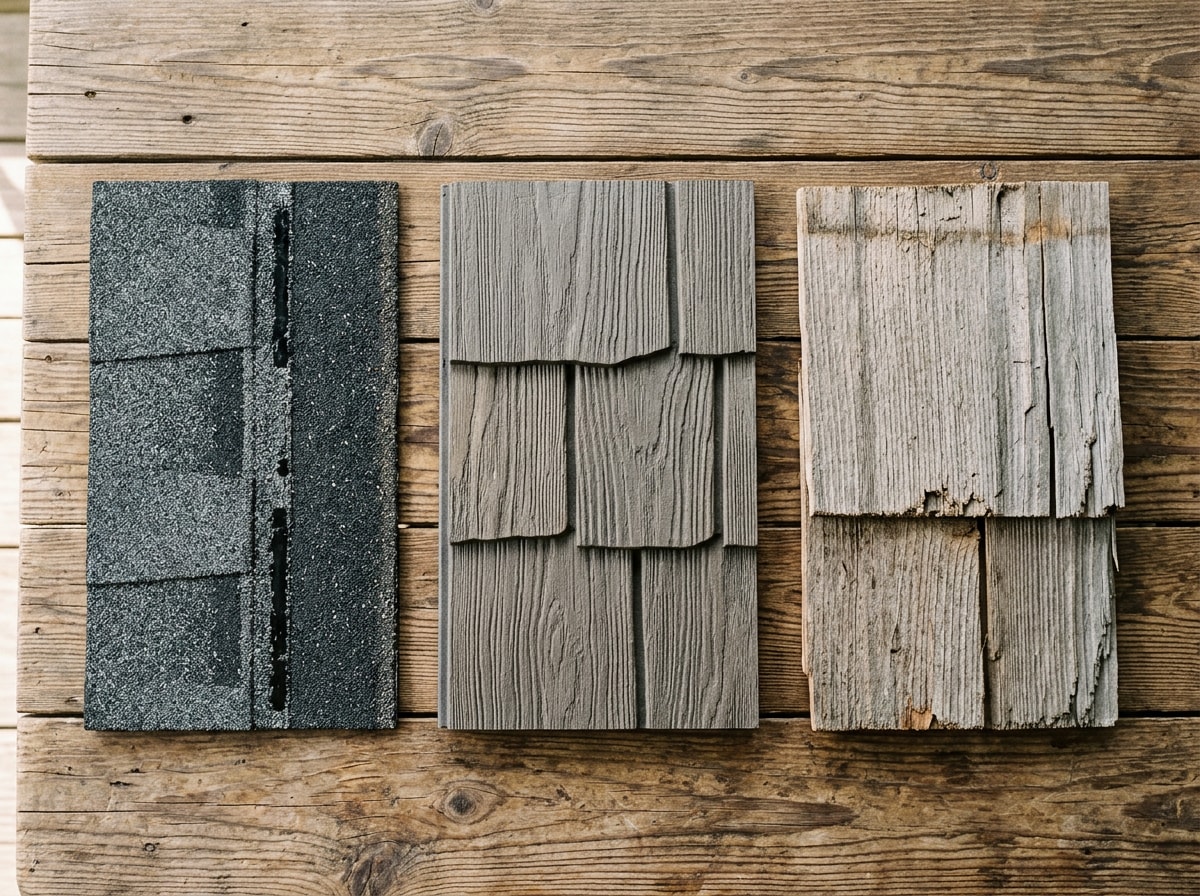
A detailed estimate from a local installer is the only reliable way to know your actual installed cost. Roof pitch, layout, and ventilation upgrades all shift the final number.
Removal of Existing Roofing
Tearing off an old roof before installing synthetic shake adds its own line item. Tear-off cost depends on the number of existing layers and material type, and most quotes also include disposal fees for hauling away old shingles or wood shakes.
Budget for removal as a separate cost bucket rather than assuming it's bundled into the per-square material price.
Synthetic vs. Real Cedar Shake: Which Holds Up Better?
This is usually the real question behind the search. Real cedar needs periodic sealing or staining to resist splitting, while composite shake needs essentially none.
Fire performance also favors synthetic. Treated real wood rarely matches a factory Class A rating consistently over decades of weathering, since fire-retardant treatments on wood shake can lose effectiveness over time.
As a cedar shake alternative, synthetic product wins on durability in dry, high-UV climates where real wood tends to shrink and crack. The main area where real cedar still appeals is resale perception in certain historic or rustic-style neighborhoods, though that gap has narrowed as faux cedar shake has gotten more convincing.
Cost Over Time
Sticker price isn't the whole story. Real cedar typically needs re-staining or sealing every three to five years, and that recurring cost adds up across a 20-to-30-year roof life.
Factor that into lifetime roofing cost, and synthetic shake's higher upfront price often evens out, or comes out ahead, once maintenance is included.
Why Shake Roofs Need Extra Protection in Gilbert's Climate
Real wood shake struggles in Gilbert's climate because intense, sustained UV exposure and extreme dry heat accelerate cracking, warping, and drying far faster than in milder regions. That's a core reason synthetic cedar shake roofing in Gilbert has become a practical substitute rather than just a style preference.
Phoenix-area weather stations average roughly 75 to 76 degrees Fahrenheit annually, with summer highs that regularly top 100 degrees for months at a stretch, according to National Weather Service climate normals for the region. Under that kind of sustained heat and UV exposure, real wood shake dries out and splits years earlier than it would elsewhere, while engineered composite holds its shape and color far longer.
Before hiring anyone, check that the crew has installed synthetic shake locally and not just standard shingles. If you're outside Gilbert proper, our Gilbert, AZ service area page covers the surrounding communities we work in as well.
Where Synthetic Cedar Shake Works Best
Synthetic shake tends to suit craftsman, cottage, and custom luxury homes where a textured, dimensional roofline is part of the architectural style. It's also a practical pick when a home's structure can't support heavier materials like slate or clay tile.
Because of its lightweight profile, synthetic shake gives homeowners that higher-end look without the structural reinforcement sometimes required for stone-based options. If you're deciding between shake styles for an older home, our guide on cedar shake roof repair in Fountain Hills covers how real and synthetic shake age differently once they're already on a roof.
For a broader look at material options, our cedar shake service page and wood shake services page both cover installation details specific to shake-style roofing.
What to Check Before You Sign a Contract
Three things matter most before signing: budget, warranty terms, and approval requirements.
- Financing. Synthetic shake's premium cost often benefits from financing or phased budgeting.
- Warranty coverage. Confirm the manufacturer warranty length and whether it covers materials only, or labor too.
- HOA approval. If you're in a planned community, secure approval before ordering material. Some associations restrict roof profiles or colors.
- Insurance impact. Ask how your material choice affects your policy. Some insurers adjust premiums based on fire rating and wind resistance, a point the Insurance Information Institute covers in its guidance on how roof condition and materials factor into coverage and discounts.
A free, on-site roof inspection is the easiest way to get these specifics nailed down before you commit to a material.
Is a Synthetic Cedar Shake Roof Right for You?
Synthetic cedar shake makes the most sense for homeowners who want cedar's classic look and minimal long-term upkeep, and who have a realistic budget for a premium material. If low maintenance and 30-plus years of performance matter more than the lowest upfront bid, it's generally worth it.
If you're still weighing whether it's worth it for your specific home, the clearest next step is a detailed, no-pressure quote. Schedule a free inspection to get pricing based on your roof's actual size, pitch, and material preferences, or visit Irish Roofing Company to see our full range of roofing services across the Phoenix metro.
FAQ
Is cedar shake a good choice for an Arizona home?
Real cedar can work architecturally, but it demands regular sealing and struggles with Arizona's dry heat and UV exposure. Most Gilbert homeowners who like the look choose synthetic cedar shake instead, since it delivers the same visual style with far less maintenance and better long-term durability in desert conditions.
How much does synthetic cedar shake roofing cost?
Installed synthetic cedar shake typically runs $4.50 to $9.00 per square foot in the Gilbert area, depending on material grade and roof complexity. A personalized estimate is the best way to know your exact project cost.
Is synthetic cedar shake cheaper than real cedar?
Upfront, pricing is often similar or slightly lower than real cedar. Over the roof's lifetime, synthetic is usually cheaper once you factor in real cedar's recurring staining and sealing costs every few years.
How long does synthetic cedar shake roofing last?
Quality synthetic cedar shake typically lasts 30 to 50 years. Actual lifespan depends heavily on installation quality, attic ventilation, and the specific manufacturer's product line.
Does synthetic cedar shake hold up in Arizona's heat?
Yes. Unlike real wood, composite shake resists cracking and warping under sustained UV and heat exposure, which is exactly the condition that shortens real cedar's lifespan in the Phoenix metro.
Can synthetic cedar shake be installed over an existing roof?
Usually not. Most manufacturers require a full tear-off to a clean deck so the ventilation and underlayment system works as designed, which is why removal is typically quoted as a separate line item.
Is synthetic cedar shake fire resistant?
Most quality synthetic cedar shake products carry a Class A fire rating, the highest classification under standard roof-covering fire tests, which is notably better than untreated real wood shake.