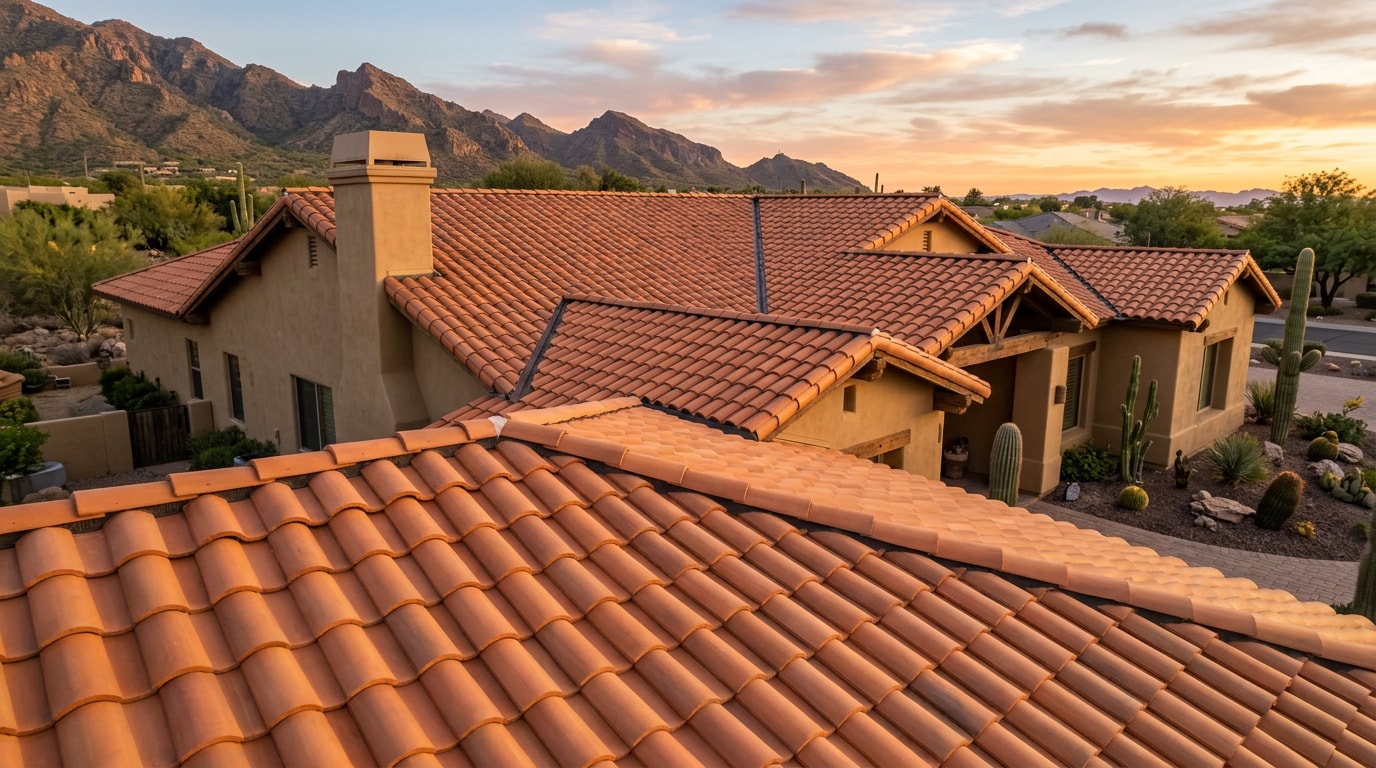
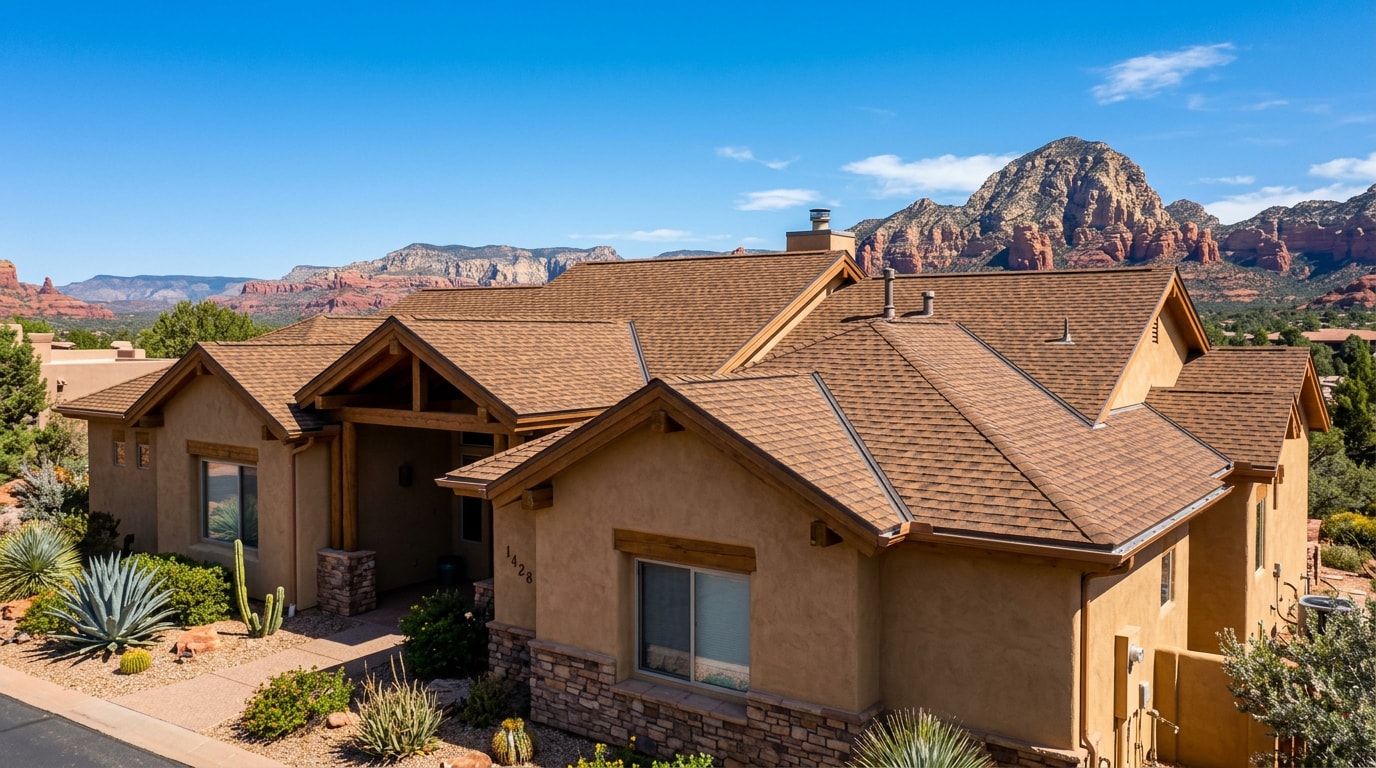
Shingle roofing in Fountain Hills, AZ has to survive 115-degree summer afternoons, intense UV exposure, and HOA design standards that favor a Southwest look. This guide breaks down what shingle roofs actually cost in 2026, which products hold up best in the desert, and how shingle stacks up against tile for homes near the McDowell Mountains. Use it to narrow your options before you schedule a free inspection.
How Much Does Shingle Roofing Cost in Fountain Hills in 2026?
Shingle roof cost in Fountain Hills depends on more than square footage. Shingle grade, roof pitch, the number of valleys and penetrations, whether a full tear-off is needed, and two-story access all factor into the price per square foot a contractor quotes.
Steeper pitches take longer to work safely and need more fall-protection setup. Homes with multiple valleys or dormers need more flashing labor. Two-story access usually adds staging time, which shows up as a separate line item.
Rather than quoting one flat number, it helps to compare shingle grades across a few roof sizes:
| Roof Size | 3-Tab Shingles (2026 est.) | Architectural Shingles (2026 est.) | Designer-Grade Shingles (2026 est.) |
|---|---|---|---|
| 1,500 sq ft | $6,500 – $8,500 | $8,500 – $11,500 | $12,000 – $15,500 |
| 2,500 sq ft | $10,500 – $13,500 | $13,500 – $18,000 | $19,000 – $24,500 |
| 3,500 sq ft | $14,500 – $18,500 | $18,500 – $24,500 | $26,000 – $33,000 |
These ranges are regional estimates, not fixed quotes. Final roof replacement cost in Fountain Hills always depends on an on-site inspection.
Wind-resistance class also affects price. Shingles are tested under one of two standards, and Asphalt roofing shingles in the market generally all carry the same wind resistance classifications: ASTM D3161 Class F and ASTM D7158 Class H, based on a fan-induced wind test or an uplift force and uplift resistance test . Confirm the class on the shingle wrapper before you sign a contract; local building codes may require a specific minimum for your lot's exposure, as explained on Owens Corning's wind-resistance guide.
One often-overlooked cost driver: Fountain Hills charges building permit fees by square footage rather than a flat rate. Building Permit fees run $0.73 per square foot for air-conditioned space and $0.55 per square foot for non-A/C space under the current IRC submittal schedule, which means a full re-roof permit cost scales directly with your home's size, not just the roofing bid.
Shingle Types We Install in Fountain Hills
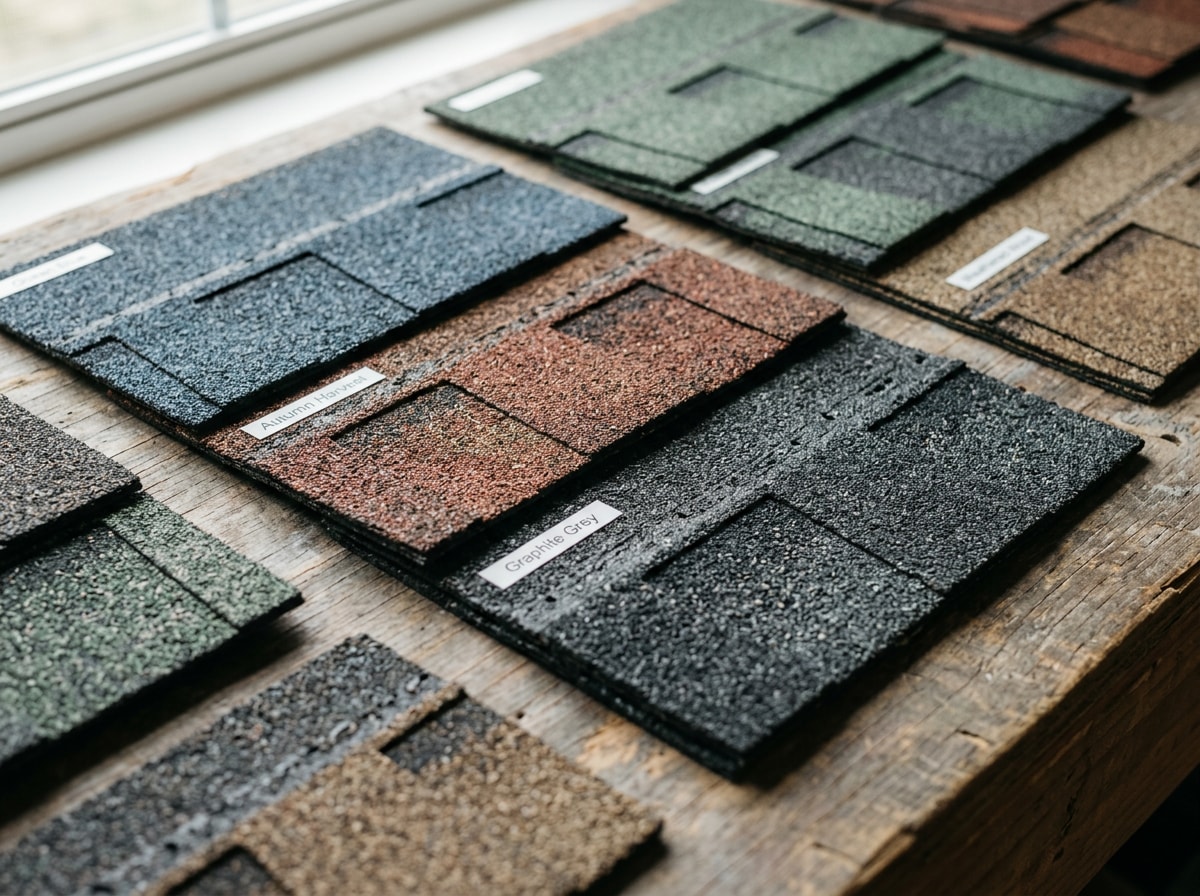
Shingle roofing in Fountain Hills typically falls into three categories: 3-tab shingles, architectural shingles, and premium or designer-grade shingles. Each differs in layer construction, wind rating, and expected lifespan. Architectural shingles are the most common choice for new installs and replacements in the area.
3-tab shingles are flat and single-layer. They're the most budget-friendly option, but they carry lower wind ratings and a shorter service life. Architectural, or dimensional shingles, use a laminated, multi-layer design that handles wind uplift better and adds visual depth to the roof plane.
Many manufacturers also offer cool-roof shingles with reflective granules designed to cut attic heat gain. A cool roof is designed to reflect more sunlight than a conventional roof, absorbing less solar energy, and most have high thermal emittance, the ability to shed heat by giving off thermal infrared radiation , which is a meaningful consideration given Fountain Hills summers. The Department of Energy's cool roof overview covers how reflective granules perform across different climates.
Residential and Commercial Shingle Roofing in Fountain Hills
Shingle work in Fountain Hills covers both homes and businesses, and the scope of a shingle roofing contractor's job stays fairly consistent across property types. That includes full shingle roof installation on new construction, shingle roof replacement on aging roofs, and targeted repairs after storm or wind events.
Residential shingle roofing tends to lean on architectural and designer products for curb appeal. Commercial shingle projects sometimes prioritize cost efficiency across larger, lower-slope sections instead. Either way, the underlying installation steps stay the same:
- Decking inspection for rot, delamination, or moisture damage
- Underlayment installation
- Flashing at valleys, chimneys, and penetrations
- Shingle layout and fastening to manufacturer spec
For a broader look at available materials, see our roofing contractor services page.
Tear-off and Decking on Older Fountain Hills Homes
Homes built decades ago often need a full tear-off before new shingles go down, since removing the old roof reveals whether the decking underneath has warped, delaminated, or taken on moisture damage. Skipping this step risks installing new shingles over a compromised substrate.
A re-roof quote should always account for possible decking repair, since that cost isn't visible until the old shingles come off. Our roof replacement page outlines what a full tear-off and deck inspection typically involves, and you can browse recent jobs on our projects page to see what a tear-off and re-shingle actually looks like start to finish.
Shingle vs. Tile: Which Is Right for Your Fountain Hills Home?
Shingle roofs generally cost less upfront and install faster than tile, but they tend to have a shorter service life in Arizona's heat. Tile costs more initially and lasts longer, though it's heavier and pricier to repair. Neither option is universally "better." The right call depends on budget, home style, and how long you plan to stay in the house.
In Fountain Hills' upscale, mountain-adjacent neighborhoods, some HOAs favor tile for its traditional Southwest look, while others allow architectural shingles in earth-tone blends that mimic tile profiles. Check your HOA's guidelines before committing to a material. For a side-by-side look at the alternative, visit our tile contractor page or our tile roof installation service.
If cedar shake is also on your shortlist, our Cedar Shake Roof Repair guide for Fountain Hills covers how that material compares on cost and maintenance.
Shingle Roof Repair in Fountain Hills
Common shingle roof repair triggers in Fountain Hills include missing shingles after monsoon storms, lifted or cracked seals along ridges, and granule loss from sustained heat exposure that leaves shingles brittle. These issues don't always mean the whole roof needs replacing.
A repair-versus-replace decision usually comes down to age and extent of damage. Isolated torn shingle repair is often straightforward, while widespread granule loss or multiple leak points may point toward [full replacement]({{SITE_URL}}/services/roofing-contractor/full-replacement} instead.
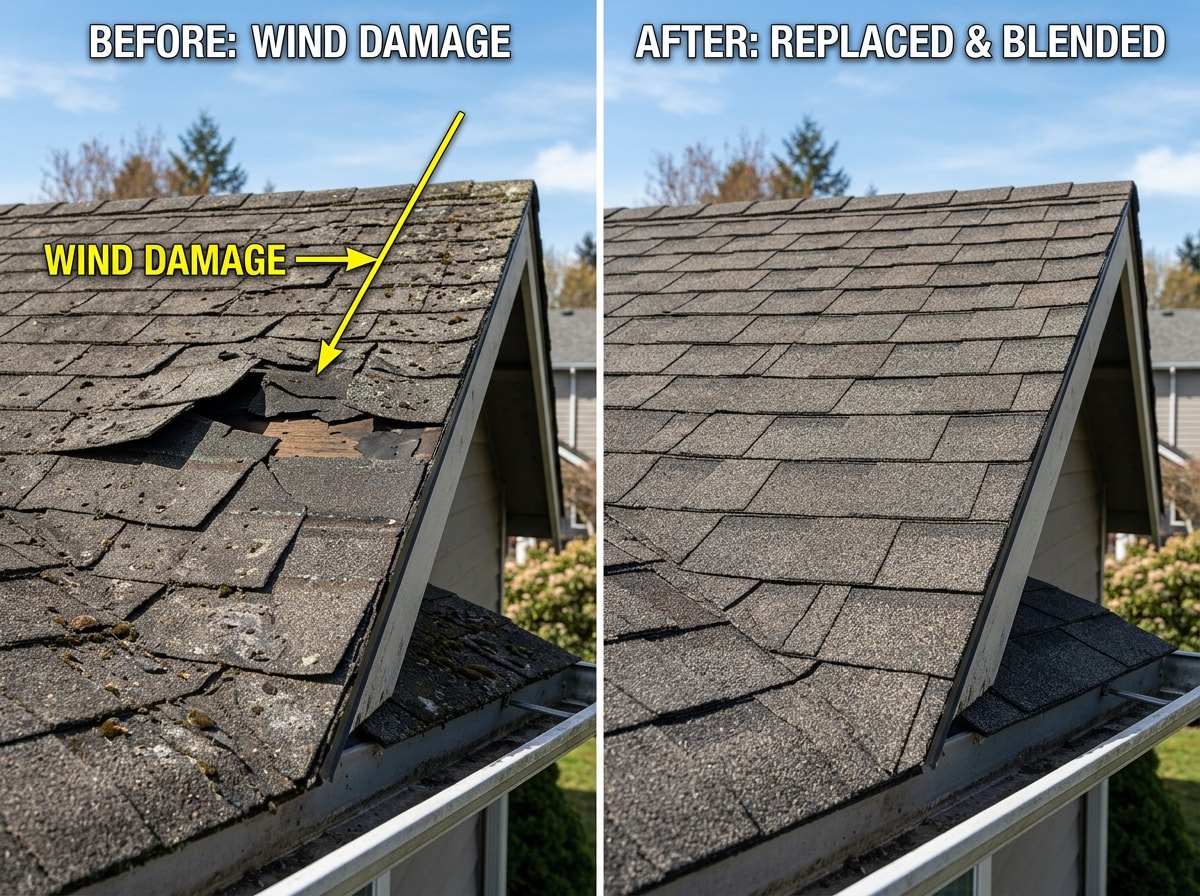
Our crews see the same pattern on most Fountain Hills roofs we inspect after monsoon season: shingles facing southwest take the worst UV and wind damage first, since that's the exposure that gets direct afternoon sun for the longest stretch of the day. If your shingle roof repair quote only covers that slope, ask whether the rest of the roof was actually inspected or just eyeballed from the ground.
Frequently Asked Questions
What are the best shingle brands for Fountain Hills's heat?
Look for architectural shingle lines with cool-roof or solar-reflective granule technology, which are formulated to handle intense UV exposure and reduce surface heat buildup. These heat-rated shingles tend to resist premature granule loss better than standard products in desert climates.
How long will a new shingle roof last in Fountain Hills?
Manufacturers often rate architectural shingles for 25-30 years nationally, but in Fountain Hills' heat, realistic lifespan tends to run closer to 15-20 years due to accelerated UV degradation and high roof-surface temperatures. A cool-roof shingle, which reflects more solar energy, can help close that gap.
Do you need a permit for shingle roof installation in Fountain Hills?
Yes, a building permit is typically required for a full shingle roof install or replacement in Fountain Hills. The Building Safety Division processes applications for permits to construct homes, commercial buildings, and other structures, and coordinates the review of plans and construction inspections . Details on the application process are on the Town of Fountain Hills Building Safety page, and a licensed contractor usually handles the filing for you.
How do I maintain my shingle roof in Fountain Hills?
Basic roof maintenance includes clearing debris after monsoon season, scheduling periodic roof inspections, and addressing lifted or cracked shingles before they turn into leaks. A simple maintenance plan can meaningfully extend shingle roof life in a hot, sun-heavy climate.
Can you install shingles over an existing roof?
Sometimes, but it isn't recommended for most Fountain Hills re-roofs. Layering over old shingles traps heat against the new material and hides decking problems, which is why most quotes in this climate call for a full tear-off instead.
Ready to compare options for your own roof? Contact us for a free, on-site shingle roofing estimate, or visit our homepage to see the full range of services we offer across Fountain Hills and the surrounding Fountain Hills, AZ area.