Cedar shake roof repair in Fountain Hills, AZ isn't a one-and-done job — it's a recurring part of owning a wood roof in a climate that swings between brutal UV exposure and sudden monsoon downpours. Loose shakes, dried-out wood, and flashing failures show up faster here than in milder states. This guide covers what causes the damage, which fixes are safe to DIY, and when it's time to call a crew that works on Fountain Hills roofs every week.
Understanding Cedar Shake Roofs in the Desert
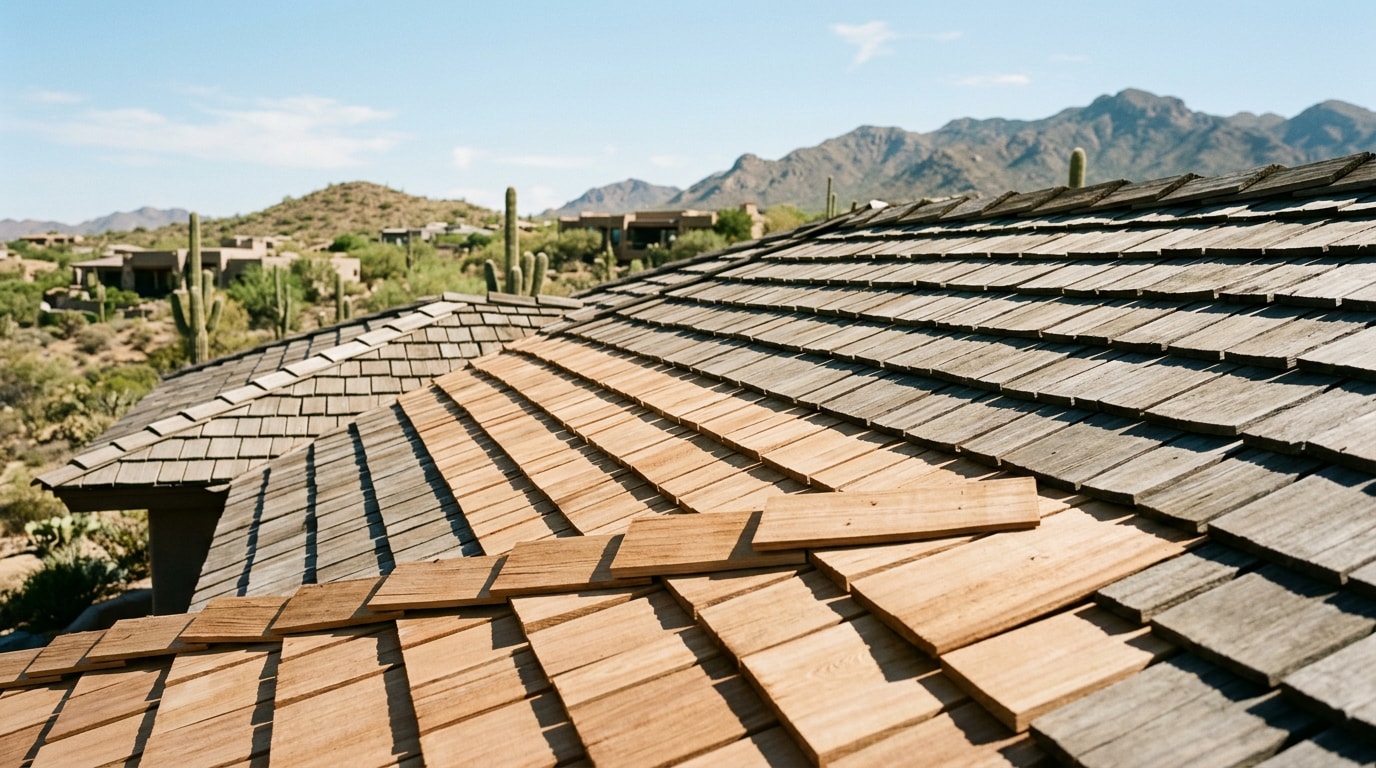
A cedar shake roof is built from split or sawn cedar wood pieces installed in overlapping rows, giving a textured, natural look few other materials can match. As a wood roof, cedar brings real character, but that organic composition means it ages differently than asphalt or tile roofing material. Cedar shakes are porous, so they absorb moisture readily, which can lead to cracking, splitting, and rot over time, and damp cedar also attracts moss, algae, and lichen.
In Fountain Hills, the climate adds its own twist. Instead of fighting constant humidity, local cedar shakes face relentless UV exposure and extreme dry heat for most of the year, which dries out the wood's natural oils faster than in milder regions. Then monsoon season brings sudden, heavy rain that parched shakes absorb quickly, creating expansion-and-contraction stress. Our crews at Irish Roofing Company see this push-and-pull play out on nearly every wood roof we inspect east of the Beeline Highway — shakes that look fine in May often show hairline cracks by August. Understanding that cycle is the first step toward realistic repair planning, and our cedar shake service page breaks down the material options in more detail.
Common Cedar Shake Roof Problems in Fountain Hills
Most issues trace back to two root causes: physical damage from wind or impact, and moisture trapped against the wood.
Loose or Missing Shakes
Strong wind gusts, monsoon storms, and simple age-related wear can knock cedar shakes loose or send them off the roof entirely. Nails back out as wood shrinks and swells with temperature swings, and once a shake lifts, the next gust tends to finish the job. Missing shakes leave the underlayment exposed, inviting water intrusion at the next rain. Even a few loose shakes scattered across one slope can point to broader wind damage worth a full inspection.

Rot and Decay
Cedar shakes that stay damp for extended stretches are at risk of wood rot, and that risk climbs sharply when a roof lacks adequate ventilation. Moisture trapped between the shakes and the deck soaks into the wood fibers and breaks them down from the inside out. Left unaddressed, decay can compromise the structural integrity of the decking, turning a surface-level repair into a much larger project. Good attic and roof ventilation helps cedar dry out between monsoon storms — a detail our attic venting and attic venting repairs teams check on every wood-roof inspection.
Pros and Cons of Cedar Shake Roofing
Cedar shake roofing earns its popularity with a warm, natural appearance and decent insulating properties, but it's not the right fit for every budget.
- Pro: Natural insulation and curb appeal that holds up for decades when maintained.
- Con: Higher upfront cost than asphalt or metal, plus non-negotiable maintenance to avoid mold and rot.
- Pro/Con both: Cedar weathers to a silvery-gray patina over time — some homeowners love it, others don't expect it.
- Con: Improper installation can shorten a cedar roof's lifespan regardless of wood quality.
Fountain Hills sits in a wildland-urban interface region where wildfire risk factors into roofing choices. Federal wildfire-mitigation guidance recommends tested roofing systems that meet ASTM E108 or UL 790 Class A requirements, noting that systems include asphalt shingles, concrete, brick, or masonry tiles, or metal panel and shingles , while fire-retardant-treated wood shake assemblies can also qualify. It's worth reviewing the FEMA builder's guide to construction in wildfire zones before choosing untreated shakes, since untreated wood won't carry a Class A rating on its own. Homeowners weighing a full roof replacement against ongoing repairs should factor treatment costs into that comparison.
Tools and Materials Needed for Cedar Shake Roof Repair
A handful of core items cover most cedar shake repair jobs in Fountain Hills:
- Replacement cedar shakes matching the thickness, grade, and exposure of the existing roof
- A hammer or roofing nail gun
- Galvanized or stainless steel roofing nails that resist rust stains
- A sturdy ladder or roof scaffolding
Matching shake grade and thickness isn't guesswork. The Cedar Shake & Shingle Bureau is the certification and standards body behind every Certi-label cedar shake and shingle, setting the grading rules that manufacturer members follow , and building codes including the International Residential Code require wood shakes and shingles to conform to CSSB grading rules . Sourcing replacements that meet the same CSSB grading standards keeps your roof's appearance and performance consistent.

Key Steps for Cedar Shake Roof Repair
Repairing a cedar shake roof follows a fairly consistent workflow whether you're fixing a handful of shakes or addressing storm damage across a whole slope.
1. Identify Early Signs of Damage
Cracked or curled shakes usually point to prolonged dryness, UV damage, or storm impact. Moss or dark streaks signal trapped moisture, often in shaded valleys or north-facing slopes where cedar dries more slowly. Loose or missing shakes leave the underlayment exposed, so a short gap between inspections can let a leak form quietly. Walking the roofline from the ground with binoculars after monsoon season is often enough to catch these issues before they worsen.
2. Replace Damaged or Missing Shakes
Replacing a damaged cedar shake starts with removing only the affected piece, which limits disruption to the surrounding roof. The replacement is cut to match the existing thickness and texture, then secured with stainless steel or copper nails that won't streak or corrode. Some contractors use galvanized nails instead, which still resist rust and create a tight fit for the new shake.
Fountain Hills roofs add a wrinkle most repair guides skip: steep rooflines adjacent to tile accents, and HOA rules that often require aesthetic matching across repaired sections. Here's how DIY and professional shake replacement compare under those conditions:
| Factor | DIY Replacement | Professional Replacement |
|---|---|---|
| Time investment | Half a day to a full weekend for a few shakes | Typically 1–3 hours per visit |
| Cost range | $50–$150 in materials, plus tool costs | $150–$500+ depending on scope |
| Risk to adjacent shakes | Higher — inexperienced prying can crack neighboring pieces | Lower — trained crews work around existing material |
| HOA aesthetic matching | Hard to source an exact grade/weathering match | Contractors often have sourcing relationships |
| Warranty impact | None; self-performed work isn't covered | Many repairs include a workmanship warranty |
For one obviously loose shake on a low, accessible slope, DIY may be reasonable. Anywhere near a steep, tile-adjacent valley or an HOA-regulated elevation, professional replacement tends to protect both your roof and your budget.
3. Inspect Flashing and Roof Valleys
Flashing and valleys are consistently the most leak-prone areas of any cedar shake roof. These metal components can corrode, loosen, or pull away from the wood over time, especially after repeated monsoon downpours. Check for rusted, bent, or lifted flashing around chimneys, skylights, and valleys, and reseal any failing joints. Clearing debris from valleys matters too, since blockages force water sideways under the shakes instead of off the roof.
NRCA recommends the use of drip edge metal at all eaves and rakes for asphalt shingle, metal shingle, slate, wood shake and wood shingle roof systems , a detail worth confirming on any chimney flashing repair. See the NRCA's updated flashing guidance for the full technical reference.
DIY Cedar Shake Roof Repairs
Some cedar shake repairs are genuinely manageable for a handy homeowner. Securing a loose shake usually means nailing it back into place with corrosion-resistant nails, following the original nailing pattern so the repair blends in. Replacing a missing shake follows similar logic: slide in a new piece of the same size and thickness, align it with surrounding courses, and nail it securely.
That said, roof-walking carries real risk. Fountain Hills' steep rooflines, often paired with tile accents on adjoining sections, make footing unpredictable even for an experienced DIYer. A fall isn't worth saving a service call fee, and cracking an adjacent shake while working alone can turn a small fix into a bigger repair. If you're not fully confident on a ladder and a sloped roof, this is the point where professional roof repair services make more sense than a weekend project.
When to Call a Professional Roofer
Some cedar shake problems go beyond a weekend fix. Extensive damage — numerous missing or severely damaged shakes, persistent leaks that keep returning, or visible rot and decay in the decking — all signal it's time for expert repair or a section replacement. Patching widespread damage piecemeal often costs more over time than addressing it properly once.
Before hiring anyone for cedar shake roof repair in Fountain Hills, AZ, verify the contractor is properly licensed. The Registrar of Contractors, established in 1931, licenses and regulates over 45,000 residential and commercial contractors in Arizona , and you can confirm license status and complaint history through the AZ ROC contractor search tool in a few minutes. The same due-diligence steps apply whether you're vetting a Fountain Hills roofer or a crew in Scottsdale — our guide to licensed roofing contractors in Scottsdale, AZ walks through exactly what to check before signing a contract.
A licensed, insured contractor familiar with local HOA requirements and fire-code considerations can save you headaches down the road. If you suspect your roof needs more than a simple patch, schedule a free inspection before small problems grow into bigger ones.
Maintenance & Prevention Tips to Extend the Life of Your Cedar Shake Roof
Preventive care is the cheapest form of cedar shake repair you'll ever do. A little consistent attention throughout the year keeps small issues from becoming expensive ones.
Regular Inspections
Plan on a visual roof inspection at least once a year, ideally right before and after monsoon season. Walking the perimeter of your home and scanning the roofline with binoculars is often enough to catch curling shakes, debris buildup, or flashing issues before they become leaks. A professional roof inspection after any major windstorm helps catch problems while they're still a one-shake fix.
Gentle Cleaning & Debris Removal
Moss and algae can take hold in shaded valleys even in a dry climate, especially after a wet monsoon stretch. A gentle mixture of water and white vinegar, or a commercial moss remover labeled safe for wood, clears growth without damaging the shakes the way a pressure washer would. Keeping the roof clear of leaves, pine needles, and wind-blown branches matters just as much, since trapped debris holds moisture against the wood.
Sealant & Protective Treatments
A cedar-friendly sealant fills small cracks and splits before they widen, and periodic application of a wood preservative protects shakes from moisture and UV damage. Fountain Hills' intense sun exposure may call for reapplying these treatments more often than the manufacturer's label suggests for milder climates, since UV breaks down protective coatings faster here.

Trim Overhanging Branches
Overhanging branches drop leaves and debris that trap moisture, and they risk cracking shakes outright if a limb breaks loose in high wind. Trimming trees back from the roofline reduces both risks at once.
Clean Gutters & Downspouts
Clogged gutters force water to back up under the lowest course of shakes instead of draining away cleanly. Keeping gutters and downspouts clear protects the roof edge, which takes on a disproportionate amount of water during monsoon downpours. For ongoing guidance on building these habits into a yearly routine, visit our roof maintenance page.
FAQ
How Long Does a Cedar Shake Roof Last?
Most industry sources put the average cedar shake lifespan at around 30 years with proper installation and maintenance, reaching up to 50 years under ideal conditions. On average, a cedar shake roof lasts about 40 to 50 years, which is longer than a traditional 3-tab asphalt shingle roof's typical 10 to 20 years . Fountain Hills' intense sun and dry heat can push a given roof toward the lower end of that range unless sealant and preservative treatments stay on schedule.
How Much Does Cedar Shake Roof Repair Cost?
Small repairs, like fixing a handful of loose or cracked shakes, typically run $100 to $400. Larger repairs involving flashing, valleys, or sections of rot can easily exceed $1,000. Arizona material and labor pricing can differ from national averages, so a local quote is the most reliable way to budget for a specific repair.
Can I Repair My Cedar Shake Roof Myself?
Minor fixes, like securing a single loose shake on an easily accessible, low-sloped section, are reasonable DIY projects for a careful homeowner. Anything involving steep slopes, flashing, valleys, or widespread damage is safer and more cost-effective left to a professional. When in doubt, the risk of a fall or a bigger repair bill tips the decision toward calling a licensed roofer.
How Do I Know If I Should Repair or Replace My Cedar Shake Roof?
Small, isolated areas of damage can usually be repaired without replacing the entire roof, especially if the decking underneath is still sound. Widespread problems — rot across multiple sections, repeated leaks in different spots, or a roof nearing the end of its expected lifespan — often mean it's more cost-effective to plan for a full cedar shake replacement rather than continuing to patch an aging roof.
Does Cedar Shake Roofing Meet Fire Code in Fountain Hills, AZ?
Untreated cedar shakes do not carry a Class A fire rating on their own. Fire-retardant-treated shake products can qualify as part of a tested assembly, but the treatment, underlayment, and installation all have to match what was actually tested. Check with your insurer and a licensed contractor before assuming any cedar product meets local fire requirements.
How Often Should a Cedar Shake Roof Be Treated or Sealed?
Most manufacturers recommend reapplying sealant or wood preservative every 2 to 4 years in moderate climates. In Fountain Hills' high-UV environment, treatments tend to break down faster, so many homeowners find a 2-year cycle holds up better than stretching to the manufacturer's upper limit.
{ "hero": { "prompt": "Photoreal exterior photo of a Southwest desert home with a textured cedar shake roof under bright sun, Sonoran desert landscaping with saguaro cacti visible, clear blue sky, no people, high detail wood grain on the shakes, natural daylight, professional architectural photography style", "alt": "Cedar shake roof on a Fountain Hills, AZ desert home under bright sunlight" }, "inline": [ { "id": "inline-1", "prompt": "Photoreal close-up photo of a cedar shake roof section with several loose and missing wood shakes exposing black felt underlayment beneath, weathered gray wood texture, bright daylight, no people, high detail macro roofing photography", "alt": "Close-up of a Fountain Hills cedar shake roof section with loose and missing wood shakes exposing the underlayment" }, { "id": "inline-2", "prompt": "Photoreal flat-lay photo on a wood plank surface showing cedar shake roofing repair tools and materials: stack of new cedar shakes, a hammer, a box of galvanized roofing nails, and a tape measure, natural overhead lighting, no people, product photography style", "alt": "Flat-lay of cedar shake roof repair tools and materials including replacement shakes, roofing nails, and a hammer" }, { "id": "inline-3", "prompt": "Photoreal photo of a well-maintained cedar shake roof on a desert home showing even silvery-gray weathering and clean, intact wood shakes, bright sunny day, blue sky, no people, professional real estate exterior photography style", "alt": "Well-maintained cedar shake roof on a Fountain Hills home showing even weathering and intact protective treatment" } ] }