Liquid applied roofing in Chandler, AZ gives flat and low-slope roofs a seamless, waterproof surface without the cost and disruption of a full tear-off. This guide walks through how the system is built, what it costs in 2026, and when it beats TPO, EPDM, or spray foam on a Phoenix-metro roof. Keep reading to see if it's the right fit for your building.
What Is Liquid-Applied Roofing?
Liquid-applied roofing is a sprayed or rolled-on material, usually elastomeric, silicone, or polyurethane-based, that cures into a seamless membrane directly over your existing roof. There are no seams, laps, or exposed fasteners for water to exploit.
That matters in Chandler because most flat and low-slope roofs here don't need a full tear-off to get a fresh, waterproof surface. The system goes down over the existing substrate, which saves on labor, disposal, and downtime. For older commercial buildings with multiple HVAC penetrations, that's a real advantage over demolition-and-replace options. Property owners weighing this against a full tear-off can compare options on our roof coating services page.
Membrane vs. Roof Coating: Why the Difference Matters
A liquid-applied membrane is a reinforced, multi-layer system thick enough to serve as a new roof covering. A roof coating is thinner and meant to restore and extend the life of a roof that's already structurally sound. The difference isn't just semantics; it changes what your project legally qualifies as.
Building codes reference specific material standards for this category. Under the International Building Code's roof covering requirements, liquid-applied roofing shall comply with ASTM C836, ASTM C957 or ASTM D3468 , and acrylic coatings fall under a separate specification for liquid-applied acrylic coatings used in roofing. A reinforced membrane applied at full spec thickness can trigger permitting and depreciation treatment that a thin maintenance coat does not, so it's worth confirming with your contractor before you assume either path, and you can review local code questions through the Chandler, AZ service area page.
How Liquid-Applied Roofing Is Applied in a Desert Climate
Prep work matters as much as the material itself. The typical sequence:
- Clean and repair the existing roof surface, including flashing and penetrations.
- Apply a primer coat to promote adhesion.
- Install a reinforcing fabric layer on reinforced membrane systems.
- Apply a base coat, then a final topcoat at the manufacturer's specified mil thickness.
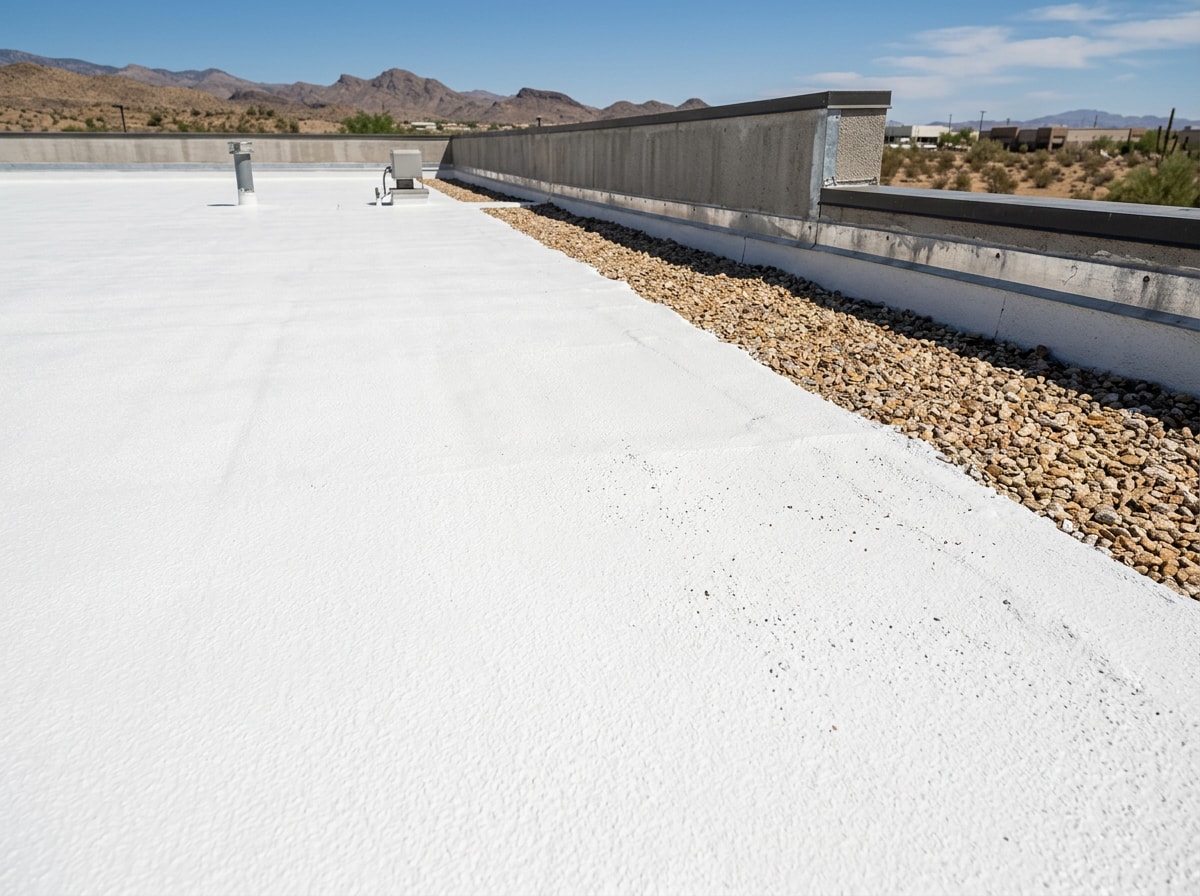
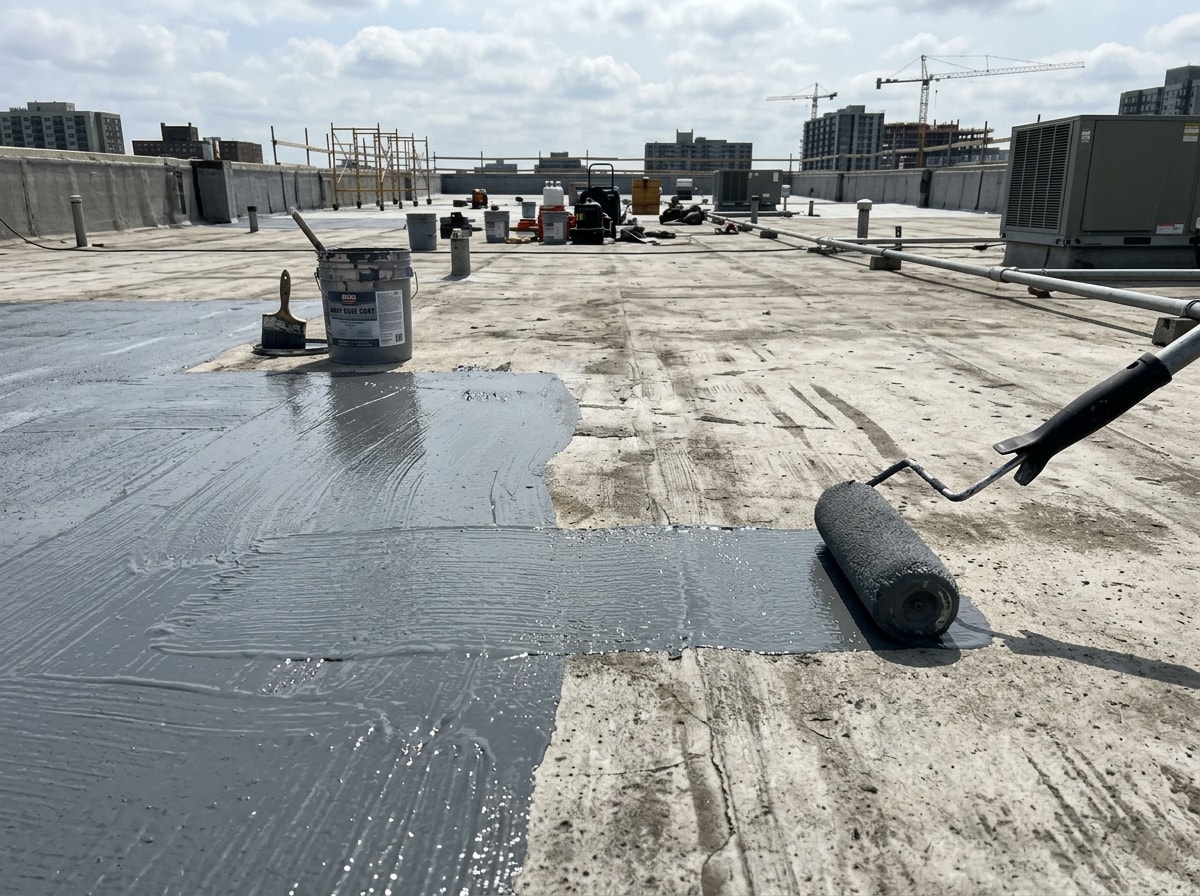
Crews apply these layers by spray, roller, or squeegee depending on the product and roof geometry. Cure time between coats depends heavily on temperature and humidity, and that's where Chandler's climate becomes a real scheduling factor. Summer surface temperatures here routinely exceed what many products are rated for, so crews often shift application to early morning hours or cooler months to avoid flash-curing or bubbling.
Liquid Roofing Chemistries: Which One Fits a Chandler Roof
Different chemistries perform differently under desert heat, UV load, and ponding risk.
| Chemistry | Cure & Traits | Best Fit in Chandler | Watch-Outs |
|---|---|---|---|
| Silicone | High solids, resists UV degradation, tolerant of ponding water | Flat roofs that pond or see intense summer sun | Holds dirt; needs re-priming before recoat |
| Polyurethane | Strong flexibility and abrasion resistance | Roofs with foot traffic or rooftop equipment access | Higher material cost than acrylic |
| PMMA | Fast cure, works in cooler temperature windows | Quick-turnaround commercial projects | Needs trained crew and correct ambient conditions |
| Acrylic | Water-based, budget-friendly, reflective white finish | Moderate-exposure roofs on a tighter budget | Not rated for standing water; softens under extreme heat |
A contractor familiar with local conditions should walk through which chemistry matches your roof's slope, ponding history, and sun exposure before quoting a price. Our acrylic roof coating page covers that option in more detail if budget is the deciding factor.
Benefits of Liquid-Applied Roofing for Chandler Properties
The core benefits are seamless coverage, no tear-off requirement, heat reflectivity, and flexibility against thermal expansion, all of which translate into lower lifecycle costs than a full roof replacement.
- No seams to fail. The membrane bonds continuously across the roof, removing the laps and fasteners that are the usual leak points on sheet-based systems. That's the core idea behind our roof waterproofing coating service.
- Flexes with the deck. The cured film moves with the roof as temperatures swing from scorching afternoons to cooler nights, reducing cracking over time.
- Reflects solar heat. A reflective coating is
made of a material or has a coating that lowers the roof surface temperature, decreasing the amount of heat that passes into a home or commercial building .
- Cuts cooling load. Industry data from the Roof Coatings Manufacturers Association shows reflective roof coatings can reduce indoor temperature by 6-9 degrees and
reduce the roof surface temperature by up to 50% .
For a reflective finish to actually qualify as a cool roof, a reflective roof is defined by ENERGY STAR as one that has properties of at least 65% reflectivity and 50% emissivity after 3-year aging , which is a useful benchmark to ask your contractor about before signing off on a product.
Liquid-Applied Roofing vs. TPO, EPDM, and Spray Foam
Choosing between liquid-applied, TPO, EPDM, or spray foam comes down to roof shape, budget, and maintenance tolerance.
- TPO and EPDM are single-ply sheet systems, generally lower upfront cost but seamed, which creates potential leak points around penetrations.
- Spray foam offers excellent insulation value but needs a protective topcoat and periodic recoating to hold up under UV exposure; see our spray polyurethane foam page for how that system is maintained.
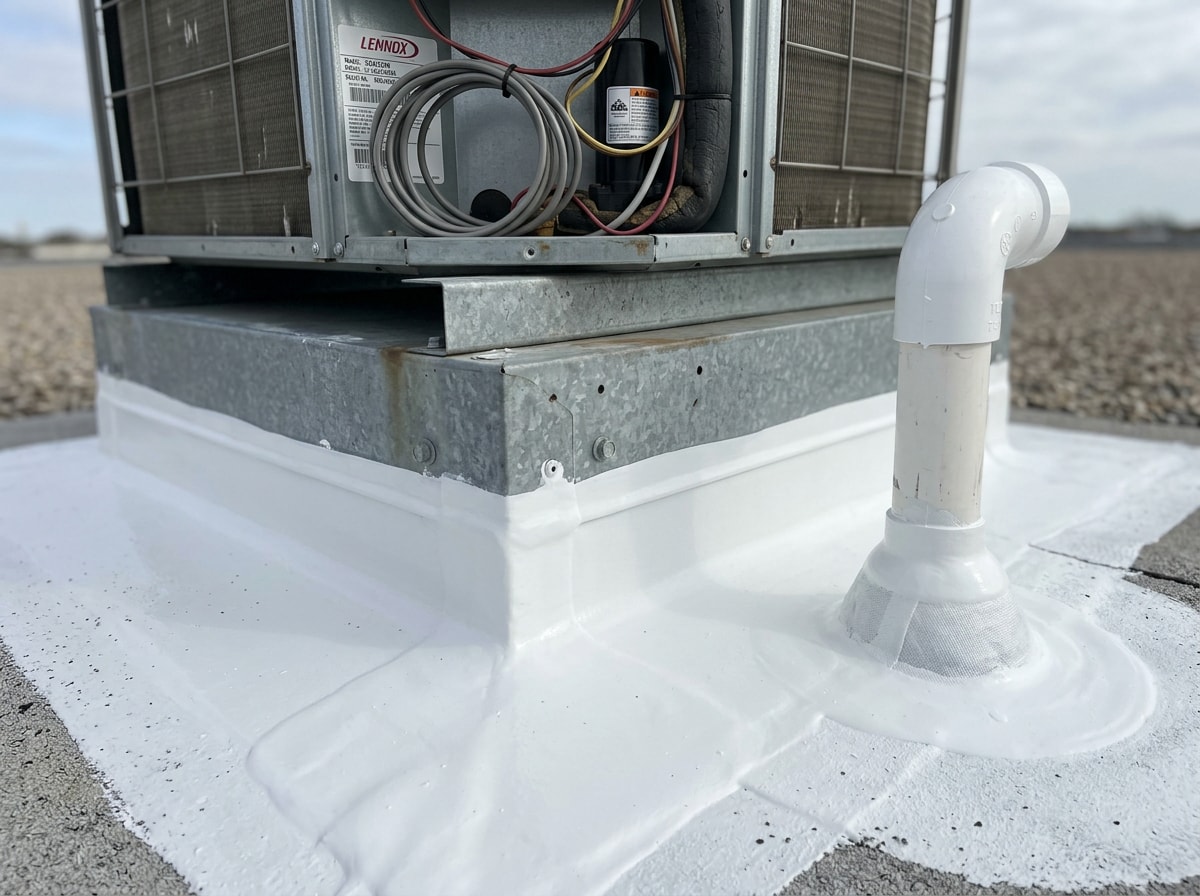
- Liquid-applied systems cost more upfront than basic single-ply roofing but perform better on roofs with irregular shapes, parapet walls, or heavy equipment penetrations, which are common on Chandler's flat commercial buildings.
For straightforward, large open rooftops with few penetrations, TPO can still be the more economical choice. For roofs with tile transitions or complex HVAC layouts, the seamless application usually wins out over patched seams. If you're deciding between systems for a flat or low-slope roof, our flat roof services page breaks down which fits your building type, and our guide on residential roofing installation in Chandler covers how desert durability factors into material choice more broadly.
Where Liquid-Applied Systems Make the Most Sense
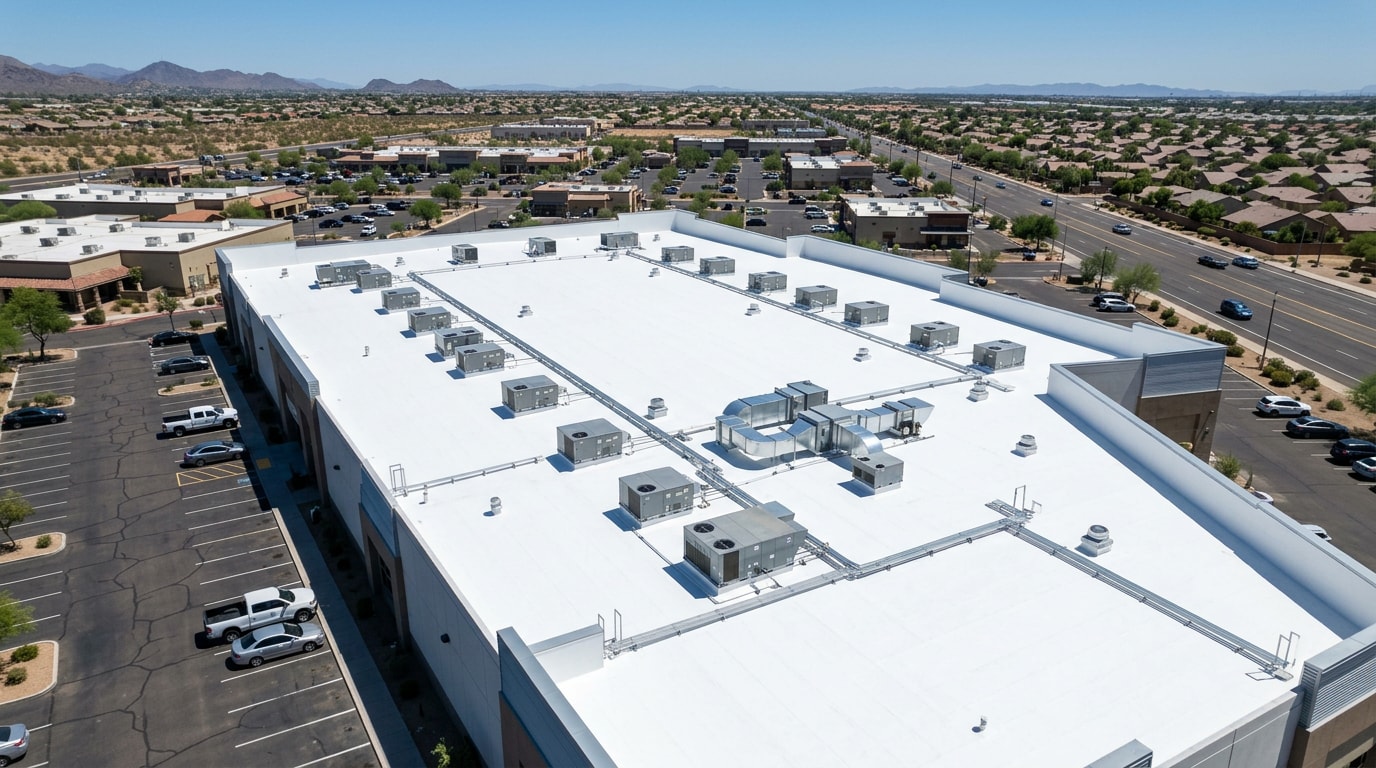
Liquid-applied systems work especially well on retail centers, warehouses, and office buildings with multiple rooftop penetrations. Skylights, vents, and mechanical units create seam-heavy areas on traditional roofing, and a seamless system eliminates most of those vulnerable points. Flat roof retrofit projects on older low-slope commercial structures are a common fit, since the liquid membrane conforms to existing irregularities without rebuilding the roof deck first.
Liquid Applied Roofing Cost in Chandler, AZ (2026)
| Project Type | Typical Cost Range (per sq. ft.) | Notes |
|---|---|---|
| Basic restoration coating | $1.50 - $3.50 | Thin single-layer product over sound substrate |
| Reinforced acrylic or silicone system | $3.50 - $6.00 | Includes fabric reinforcement at seams/penetrations |
| Full reinforced membrane (re-roof-level) | $6.00 - $9.00+ | Multi-layer system; may require permitting |
A few local factors shift pricing beyond national averages. Labor availability fluctuates seasonally, roof access on multi-story commercial buildings can add equipment costs, and existing substrate condition, particularly on older roofs with prior patch jobs, often requires extra prep work before coating can begin.
Monsoon season also affects scheduling. Contractors typically plan liquid-applied installations around dry stretches to avoid curing problems from sudden humidity or rain, which can push project timelines into spring or fall windows. We cover how storms specifically affect roofing timelines in our storm damage roofing guide for Chandler).
For an accurate estimate based on your specific roof, a site evaluation beats any per-square-foot average. A roof inspection will tell you the real substrate condition before you commit to a chemistry or price. Schedule a free inspection and we'll walk the roof with you.
FAQ
What is liquid-applied roofing and how does it work?
It's a sprayed or rolled liquid material that cures into a seamless, waterproof membrane directly over an existing roof surface. It's applied in layers, primer, base coat, and topcoat, without requiring a full tear-off.
How long does liquid-applied roofing last?
Most systems last 15 to 20 years with proper maintenance and periodic recoating. Early failure usually traces back to poor surface prep or persistent ponding water, both of which a qualified installer should address before application.
How much does liquid-applied roofing cost per square foot?
Pricing typically runs $1.50 to $3.50 per square foot for a basic restoration coating and $6.00 or more for a reinforced membrane system. Substrate condition, access, and chemistry all move the number.
Can you install liquid-applied roofing yourself?
Professional installation matters because correct mil thickness and manufacturer warranty requirements are hard to verify without training and testing equipment. DIY application risks under- or over-applying material, which can shorten the roof's service life significantly.
Can you walk on a roof after liquid waterproofing has been applied?
Yes, once the coating has fully cured, most liquid-applied roofs are walkable. Some formulations include a textured topcoat specifically for slip resistance, so confirm walkability needs with your installer before application.
How often does liquid-applied roofing need to be recoated?
Most systems need a maintenance recoat every 7 to 10 years, sooner on roofs with heavy ponding or foot traffic. Routine roof maintenance checks catch wear before it turns into a leak.
Is liquid-applied roofing a good fit for Arizona's heat?
Silicone and reinforced acrylic systems hold up well under Arizona's UV load and summer ponding risk, which is why they're the most common choices on Chandler flat roofs. Standard acrylic alone can soften under peak summer heat, so chemistry selection matters more here than in milder climates.
Ready to find out what it costs on your roof? Contact the team to schedule a free inspection and get a price based on your actual substrate, not a national average.