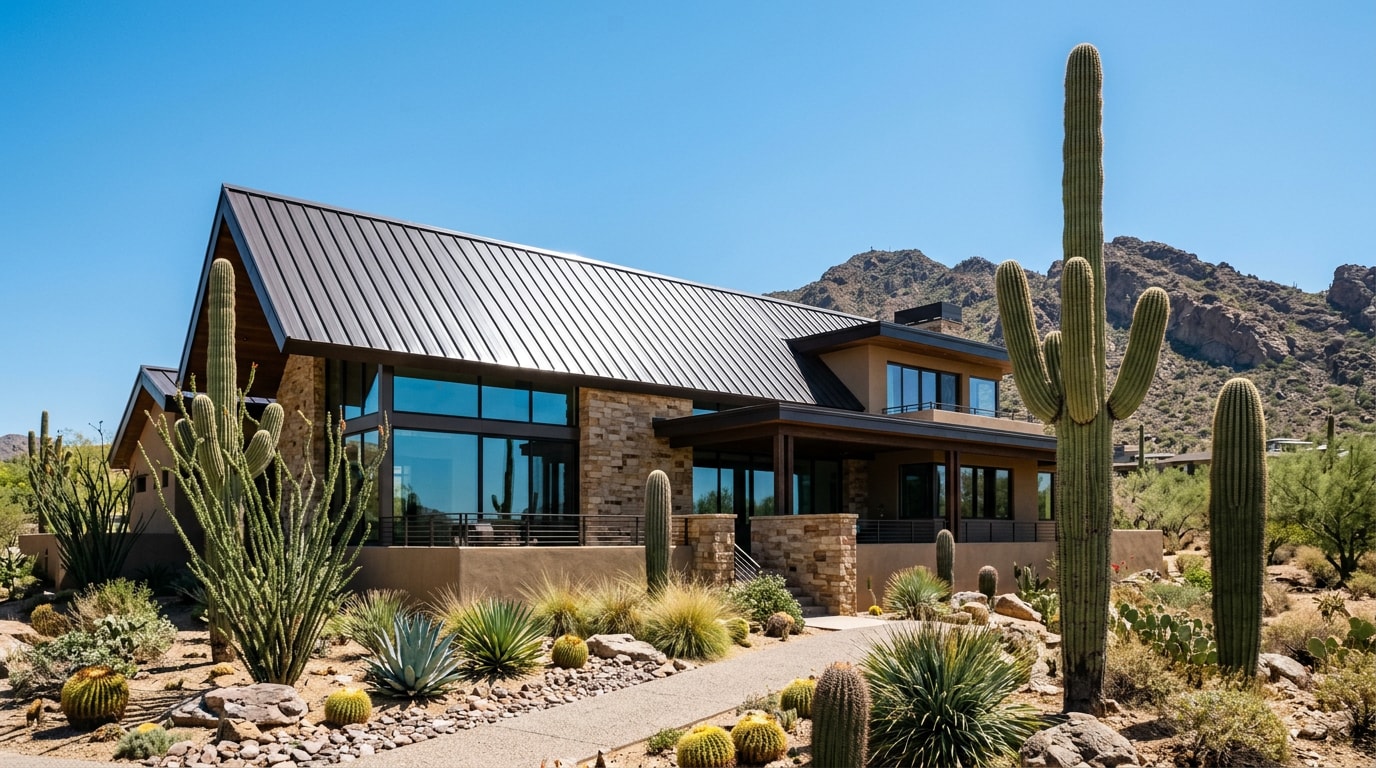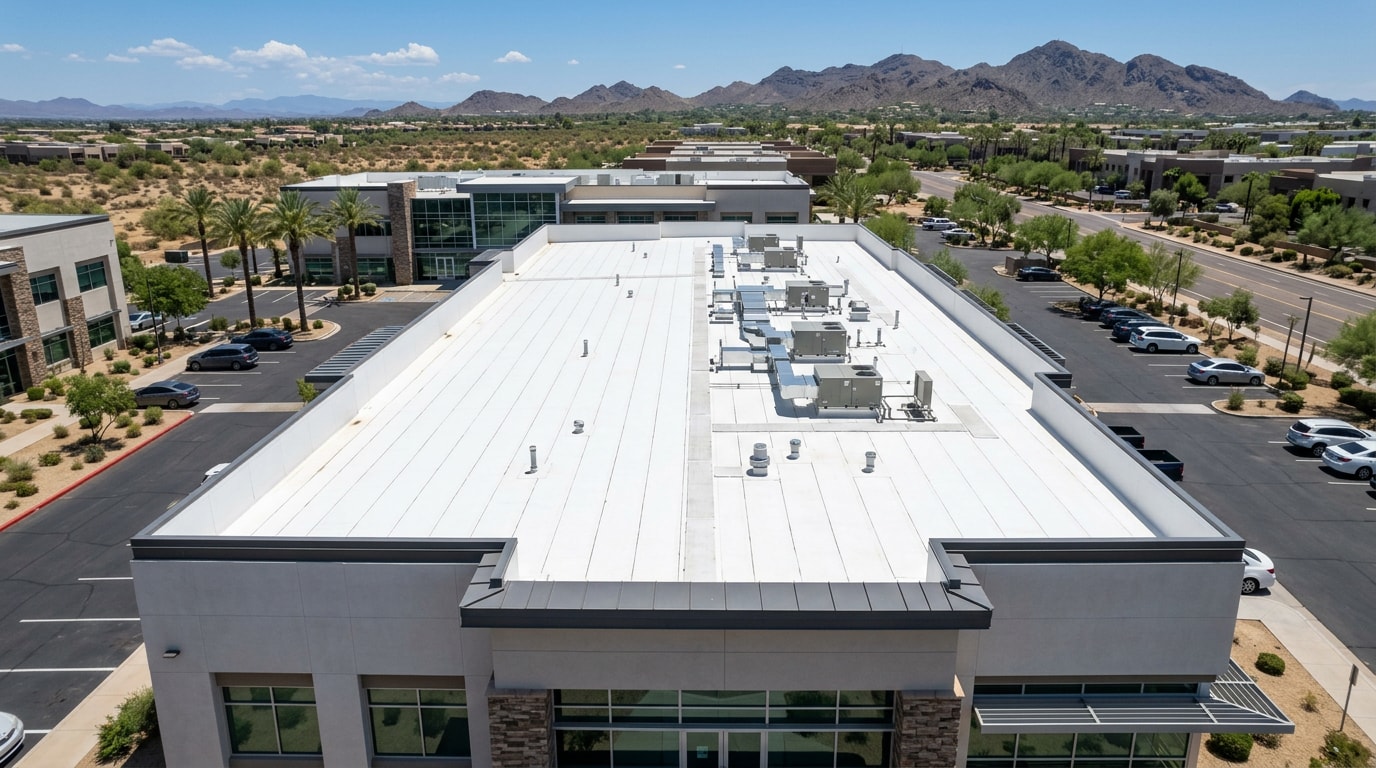
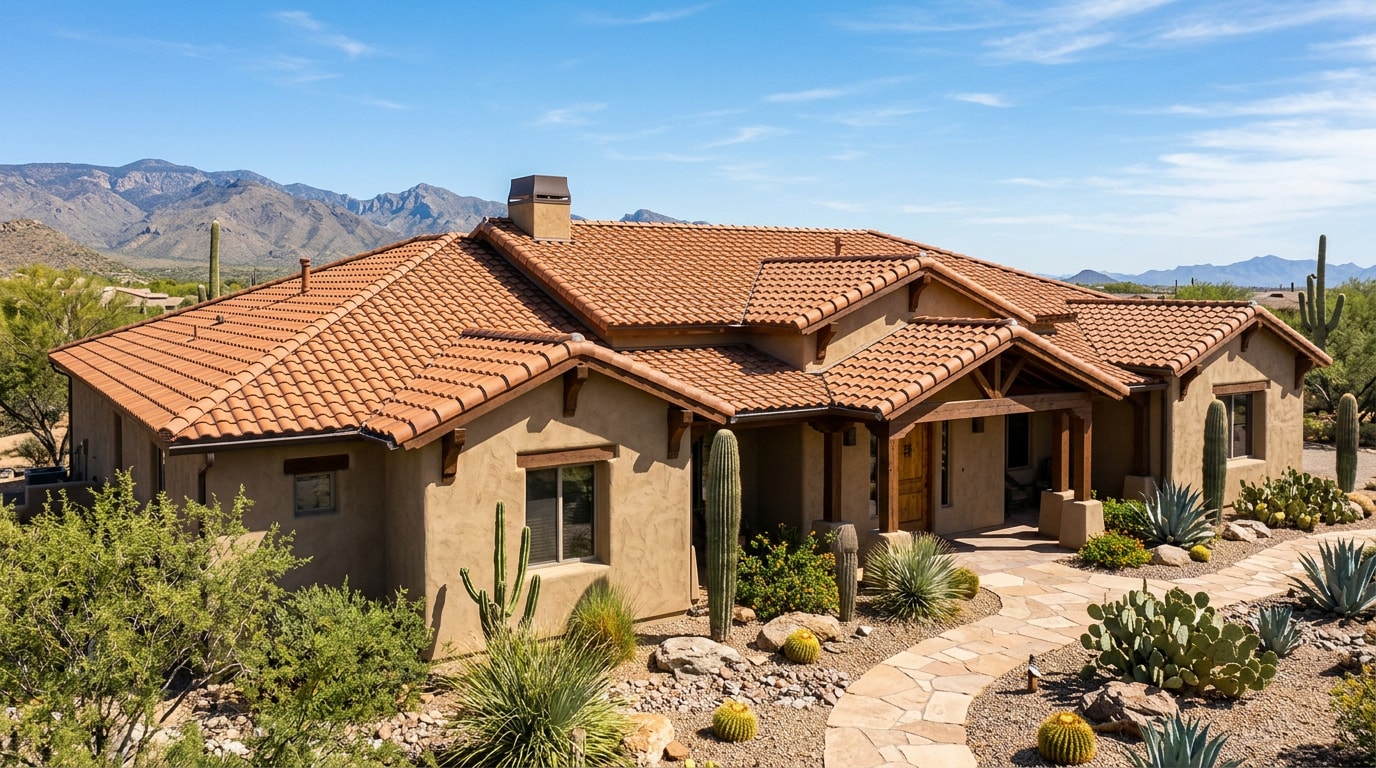
Residential roofing installation in Chandler, AZ has to survive two brutal forces every year: months of triple-digit heat and monsoon storms strong enough to peel back bad work in minutes. Get the materials, fastening, and ventilation right and a roof will protect your home for decades; get them wrong and you're looking at premature leaks and a voided warranty. This guide breaks down what actually goes into a Chandler-ready roof, what it costs, and how to vet the crew doing the work.
What Chandler's Climate Actually Demands From a Roof
Roofers across the Phoenix metro routinely report summer roof-surface temperatures in the 150°F to 170°F range on dark shingles, even when the air temperature sits in the low 100s. That daily heat cycle expands and contracts roofing materials every single day of the hot season, which is exactly why fastener spacing, underlayment quality, and attic ventilation matter more here than in milder climates.
Then there's wind. Monsoon thunderstorms produce powerful outflow winds, and downdrafts of precipitation-cooled air can create microbursts with wind gusts that exceed 100 miles per hour . A roof assembly that isn't fastened to current wind-load standards is a roof that's one storm away from a tarp and an insurance claim.
On tear-offs across older Chandler subdivisions, we regularly find felt underlayment that failed years before the shingles on top of it ever showed visible wear, proof that the layers homeowners never see are often what fail first.
Residential Roofing Services in Chandler
Most homeowners calling about residential roofing installation in Chandler need one of two things: a brand-new roof on fresh construction or an addition, or a full replacement of a roof that's aged out. Both start with the same question: what does your slope, framing, and sun exposure actually require?
New Roof Installation
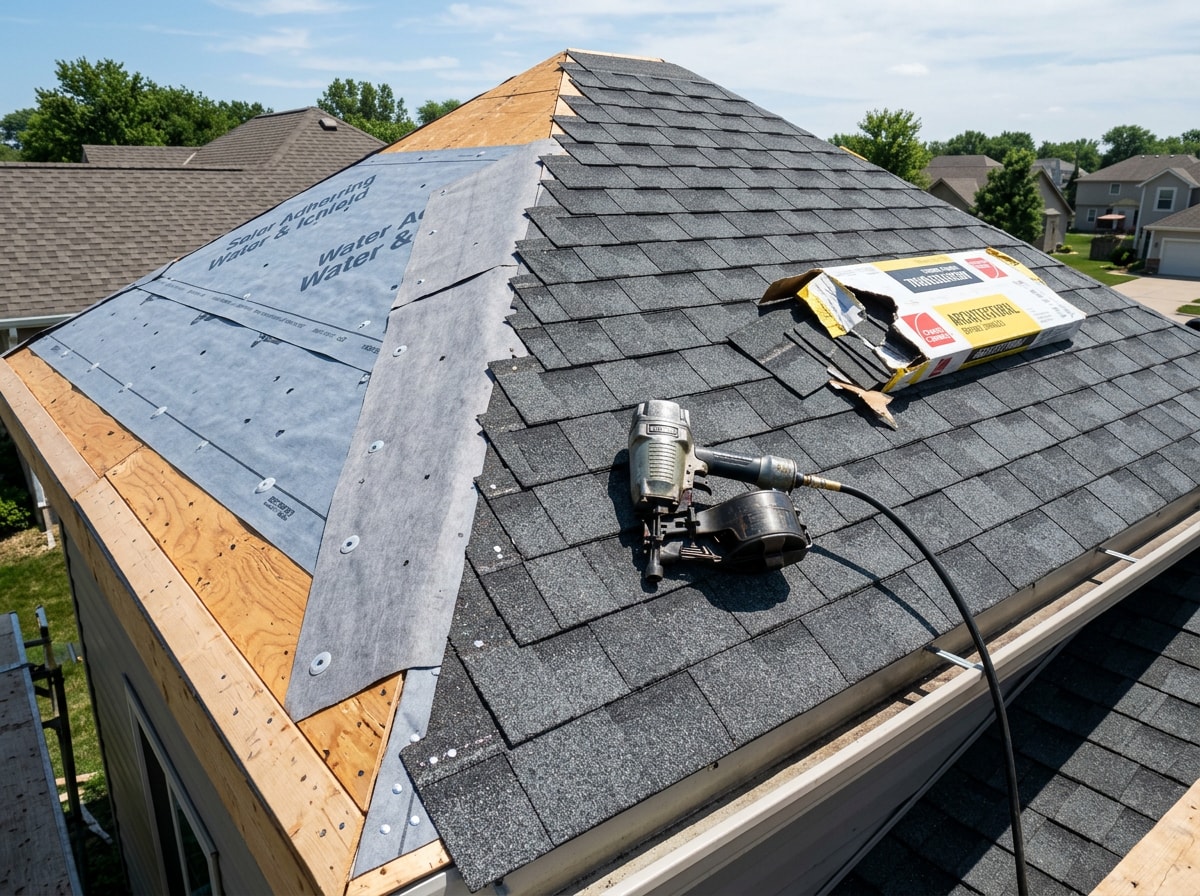
New construction and major additions need a roof installation built for Arizona heat load from day one, not retrofitted later. That means correct deck preparation, synthetic or modified-bitumen underlayment rated for high temperatures, and a ventilation plan sized to the attic. We cover this in more depth on our residential new roof page.
Roof Replacement
A roof replacement makes sense once repairs stop keeping pace with leaks, cracked tile, or granule loss. A proper job includes full tear-off, deck inspection and repair, new underlayment and flashing, and a final city inspection before anyone calls it done — see our new or replacement roof page for scope details.
The Installation Process, Step by Step
A straightforward residential job generally moves through the same sequence regardless of material:
- On-site evaluation — slope, decking condition, ventilation, and material selection.
- Permitting — your contractor pulls the required city permit before work starts.
- Tear-off and deck prep — old material removed, decking inspected and repaired as needed.
- Underlayment installation — heat- and wind-rated underlayment installed per code.
- Material application — shingles, tile, metal, or foam installed to manufacturer and fastening specs.
- Ventilation configuration — intake and exhaust venting balanced for attic airflow.
- Final inspection — city inspector or contractor sign-off before the job is closed out.
Chandler requires a building permit for most reroofing projects, and the city's own homeowner guidance sets a minimum permit fee of $60, based on a valuation of $500 or less, with fees increasing from there . Always confirm your contractor pulls that permit; skipping it can complicate insurance claims and resale down the line.
Simple asphalt shingle tear-offs often wrap up in a few days. Tile and metal installations typically run closer to a week because of material weight, battens, and more detailed flashing work. Larger or steep-pitch roofs extend both timelines.
2026 Material Comparison for Chandler Homes
Tile, shingle, metal, and foam dominate residential roofing in Chandler, and each trades off cost, weight, and heat performance differently.
| Material | Typical Lifespan | Relative Installed Cost | Best For |
|---|---|---|---|
| Asphalt / architectural shingles | 20–30 years | $ | Budget-conscious re-roofs, fast turnaround |
| Concrete tile | 40–50 years | $$ | Southwest-style homes, strong heat reflectivity |
| Clay tile | 50+ years | $$$ | Premium curb appeal, long-term value |
| Standing seam metal | 40–50+ years | $$–$$$ | Low maintenance, reflective coatings |
| Spray polyurethane foam | 20+ years (with recoats) | $$ | Flat or low-slope sections, patios, additions |

Tile Roofing
Tile roof installation pairs long service life with strong heat reflectivity, but performance depends almost entirely on correct fastening. The Tile Roofing Industry Alliance's current installation manuals build in updated ASCE-7-16 and ASCE 7-22 wind uplift design criteria to stay compliant with current IRC and IBC code requirements , which is exactly the kind of detail that separates a tile roof that survives monsoon season from one that doesn't.
Shingle Roofing
Asphalt shingle roofing remains the fastest and most budget-friendly option, with wide color selection and tiered warranties. It's a practical choice for homeowners prioritizing cost and installation speed over the longest possible lifespan.
Metal and Foam Roofing
Metal roofing suits homeowners who want decades of low maintenance, while spray polyurethane foam creates a seamless, monolithic surface that's ideal for flat or low-slope sections common on additions and covered patios.
Why Chandler Homeowners Verify Their Roofer First
Before signing anything, confirm your roofing contractor holds an active Arizona license. The Arizona Registrar of Contractors licenses and regulates tens of thousands of residential and commercial contractors statewide , and that license status is public record. A legitimate roofing contractor will also carry bonding, insurance, and manufacturer-backed warranty coverage, and won't hesitate if you ask to see proof.
Local experience matters too. A top-rated roofer with years of Chandler-specific jobs under their belt already knows the city's permitting process, the common failure points in this climate, and which fastening schedules actually hold up through monsoon season. You can see completed work on our projects page or get more detail on our Chandler, AZ service area.
If your roof is already showing active leaks rather than just wear, our roofing leak repair guide for Cave Creek, AZ walks through emergency steps that apply across the Valley, not just one city. For ongoing upkeep after installation, a roof maintenance plan and a periodic roof inspection will catch small problems before they become full replacements.
Ready to get specifics for your home? Schedule a free inspection and we'll walk your roof, measure your slope, and give you a real number instead of a generic estimate.
Why Chandler Homeowners Choose Our Team
We're a licensed, bonded, and insured Arizona roofing contractor, and our crews work Chandler and the surrounding East Valley year-round, not just during storm season. That means we've seen how specific subdivisions, roof pitches, and HOA material rules actually play out over time, not just on paper. If you want a second opinion on a quote you already have, or you're starting from scratch, reach out through our contact page and we'll give you a straight answer, even if it's not the answer you were hoping for. You can also browse our full range of services starting from our homepage.
FAQ
How much does residential roof installation cost in Chandler, AZ?
Cost depends heavily on material and roof size. Asphalt shingles are the most budget-friendly option, concrete tile runs in the mid-range, and clay tile or premium metal sit at the top of the price scale. Because roof size, pitch, and existing deck condition all swing the final number significantly, the most accurate figure comes from an on-site inspection rather than a generic calculator.
How long does a residential roof installation take in Chandler?
Asphalt shingle tear-offs and installs often finish in a few days. Tile and metal roofs typically take closer to a week because of material weight and more detailed flashing and batten work. Larger or steep-pitch roofs, and any decking repairs found mid-project, can extend either timeline.
Do I need a permit for a residential roof installation in Chandler?
Yes, in most cases. Chandler requires a permit for reroofing projects, and the city publishes its own homeowner permit manual with fee schedules and inspection requirements. A licensed contractor should handle this step for you and never start work before the permit is pulled.
Which roofing materials hold up best to Chandler's climate?
Concrete and clay tile, architectural shingles, and reflective metal roofing all perform well against Arizona's heat and monsoon wind loads when installed to current code. The right choice usually comes down to your home's architecture, your budget, and how much maintenance you want to deal with long-term.
How do I know if I need a new roof instead of a repair?
Frequent leaks, cracked or missing shingles, sagging rooflines, and granule loss in the gutters are all signs a roof has moved past the point where spot repairs make sense. Water stains on ceilings or in the attic are another reliable warning sign worth a professional inspection before they turn into structural damage.