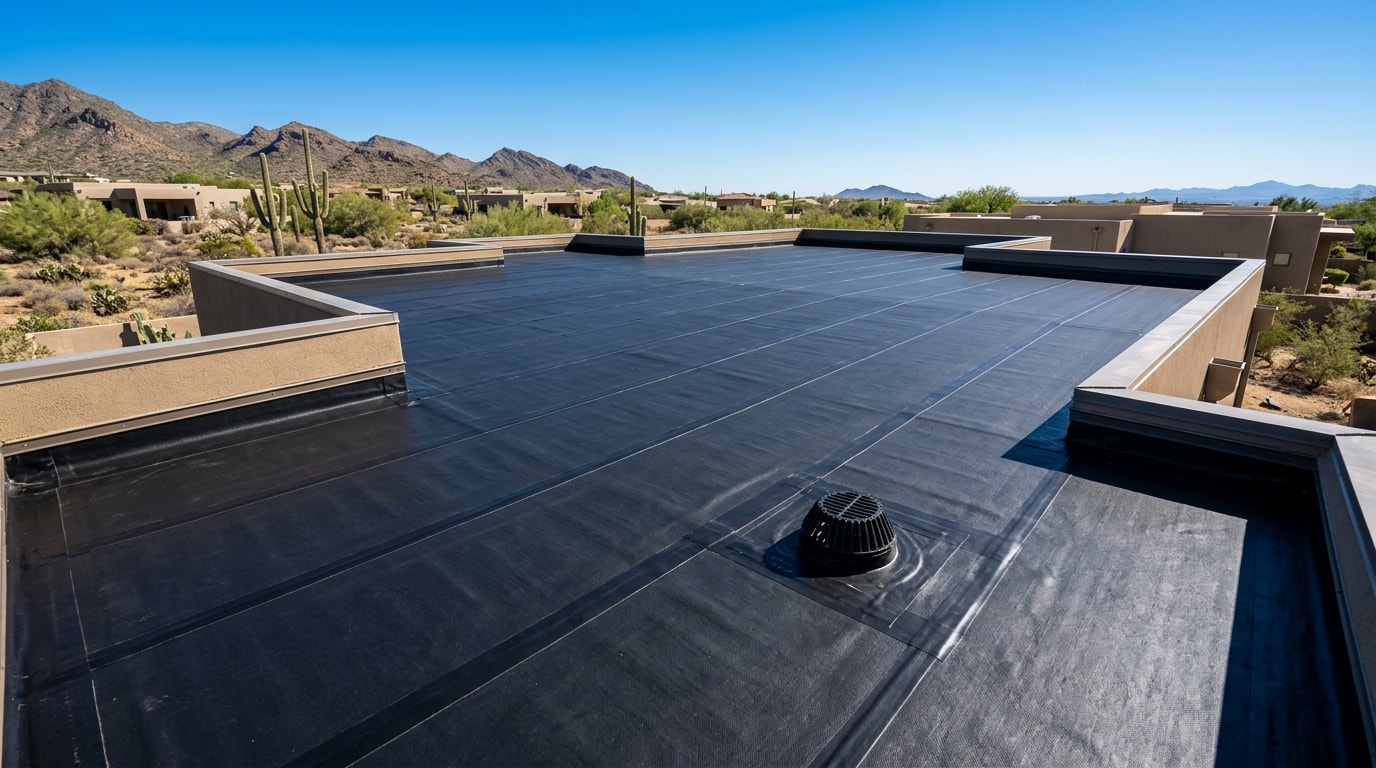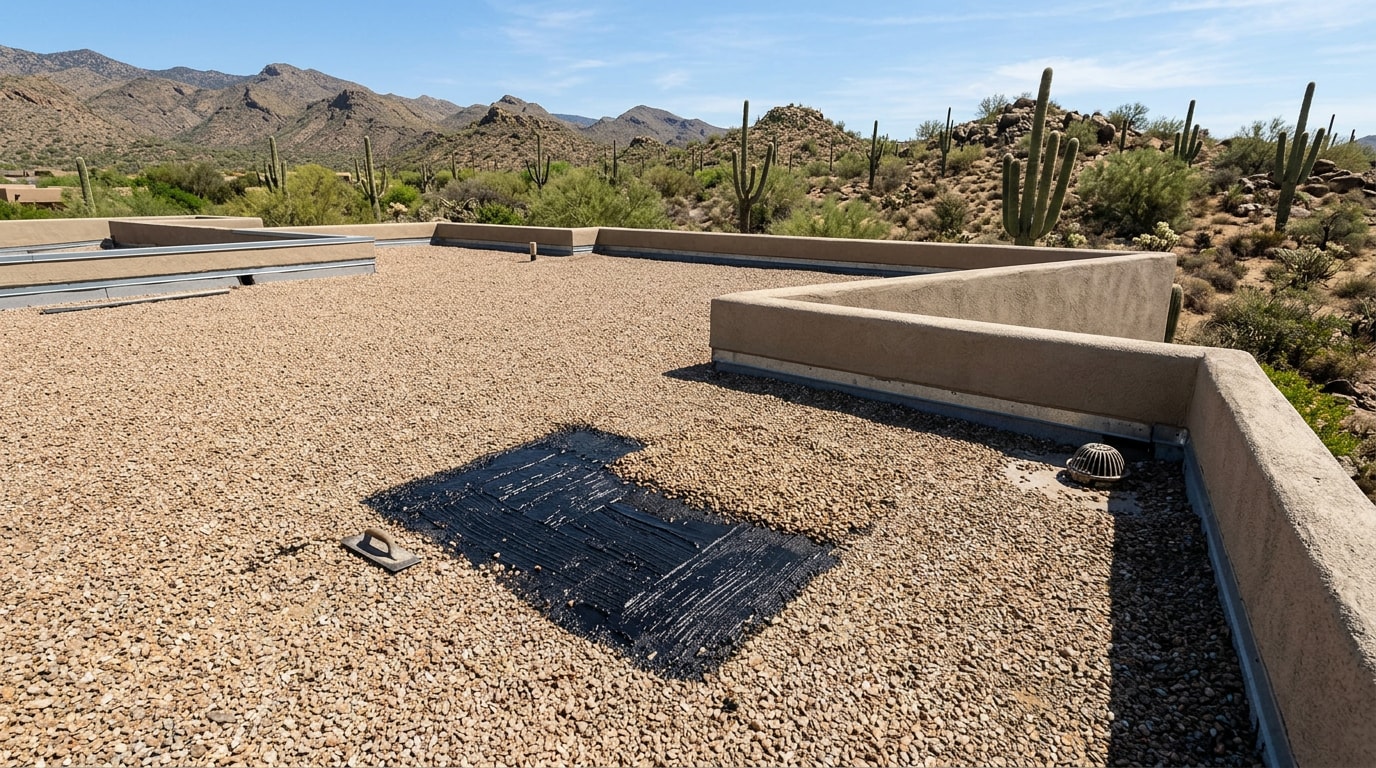
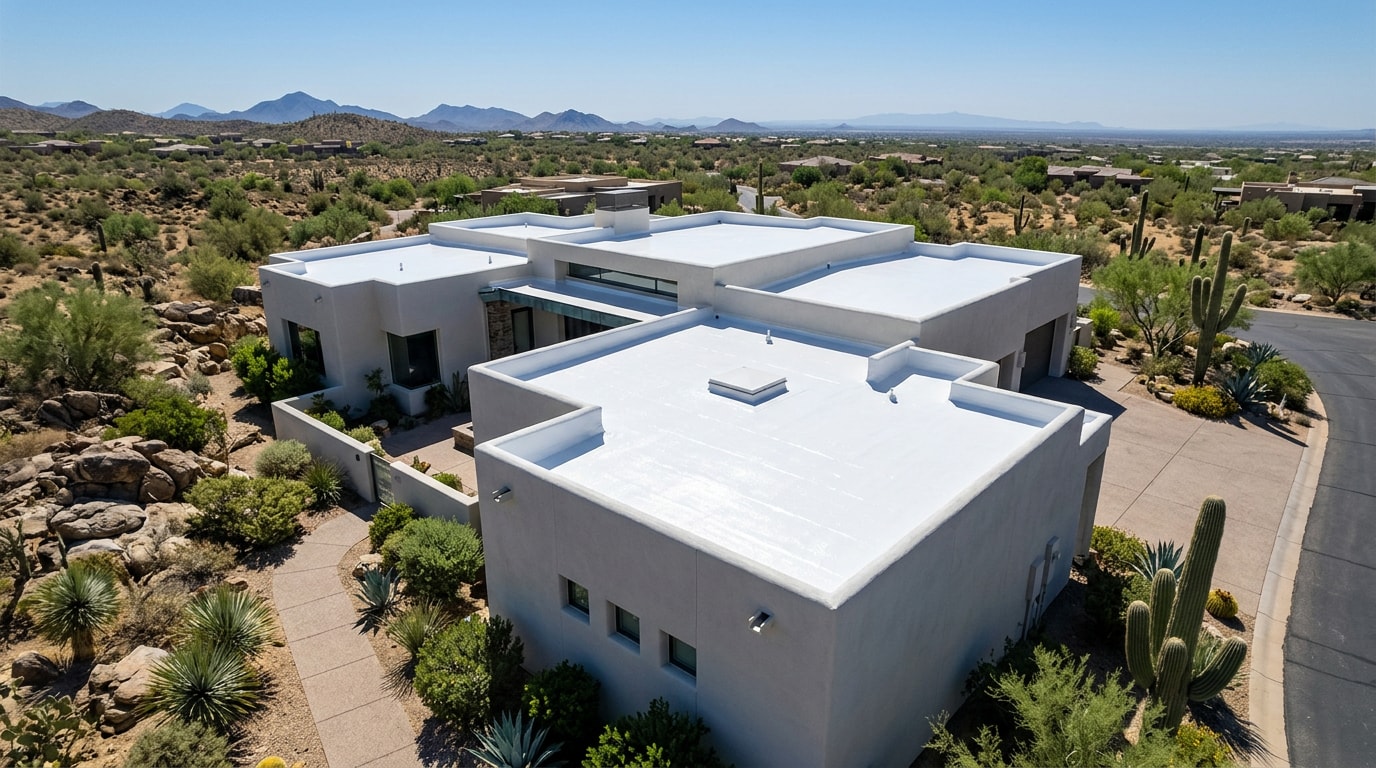
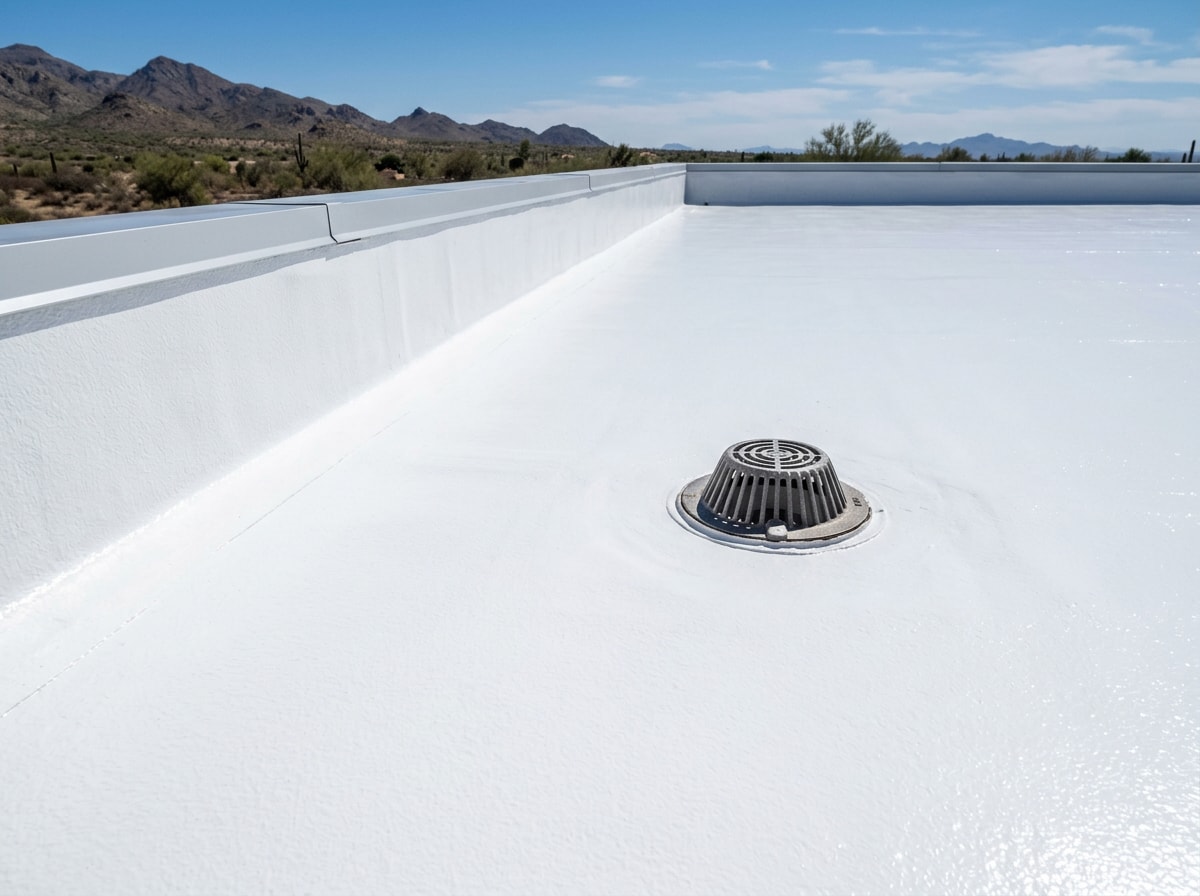
Spray foam roofing in Paradise Valley, AZ solves two problems at once: a flat or low-slope roof that keeps finding new leaks, and a cooling bill that spikes every summer. It's a liquid-applied system that cures into one continuous, seamless surface, so there are no laps or seams left for monsoon rain to exploit. Here's what it actually costs, how long it lasts in this climate, and what to check before you hire someone to spray it.
What Is Spray Foam Roofing?
Spray polyurethane foam (SPF) roofing is a two-component liquid that expands on contact and cures into a rigid, closed-cell layer across the entire roof deck. Unlike shingles or membrane sheets, the finished surface has zero seams. That's a meaningful advantage on the flat and low-slope sections so common on Paradise Valley additions, patio covers, and mid-century ranch homes. For the full technical rundown, see our spray polyurethane foam roofing page.
Why Spray Foam Roofing Works in Paradise Valley's Climate
The appeal isn't just waterproofing, it's insulation value baked directly into the roof assembly. Roofing-grade spray polyurethane foam insulates at roughly R-6 to R-6.5 per inch. Finished with a reflective topcoat, that same roof also stops absorbing solar heat the way a dark membrane does. Energy Star recognizes cool roof products that reduce peak cooling demand by 10% to 15%. In a market where air conditioning runs for the better part of six months, that's a real line item on the utility bill, not a rounding error.
Spray Foam Roofing Cost in Paradise Valley, AZ (2026)
Pricing depends on roof condition, access, foam thickness, and the coating you choose over it. Nationally, spray polyurethane foam roofing installs for about $4.50 to $10 per square foot , and Paradise Valley projects tend to land in that same band once labor, prep work, and desert-grade coatings are factored in.
| Cost Factor | Why It Moves the Price |
|---|---|
| Existing roof condition | Tear-off or extra prep adds labor hours |
| Roof access | Steep driveways, gated entries, or multi-story sections slow crews down |
| Foam thickness | Deeper application means more material and better R-value |
| Coating type | Silicone and acrylic coatings price differently per square foot |
| Roof complexity | Parapets, skylights, and HVAC curbs add detail work |
Want an exact number for your roof? Schedule a free inspection and we'll walk the roof before quoting anything.
How Long Does a Spray Foam Roof Last?
This is where SPF pulls ahead of most flat-roof alternatives. An SPF roof, when regularly inspected and recoated, can easily last the lifetime of the building. That's a longer claim than most installers make, but it holds up: the foam itself is the durable part of the system.
Closed-cell spray polyurethane foam, once properly installed and protected by a topcoat, doesn't degrade on its own, rot, compress, or lose structural integrity over time. Aging happens at the coating layer, not the foam underneath it. That's why recoat timing matters more than almost anything else in this system.
SPF roofs require a protective coating over the foam to protect it from ultraviolet light and routine surface damage, and depending on climate and coating type, that protection may last from 5 to 20 years. Given Arizona's intensity of year-round UV exposure, most spray foam roofs should be recoated every 10 to 15 years, depending on the type of coating used, local climate conditions, and overall roof wear. For the full technical guidance on inspection intervals, the Spray Polyurethane Foam Alliance FAQs are a solid reference. Skipping a recoat cycle doesn't just risk a leak later, it lets UV exposure eat into the foam itself, which is the one part of the system you don't want to replace.
Installation, Coatings & Ongoing Maintenance
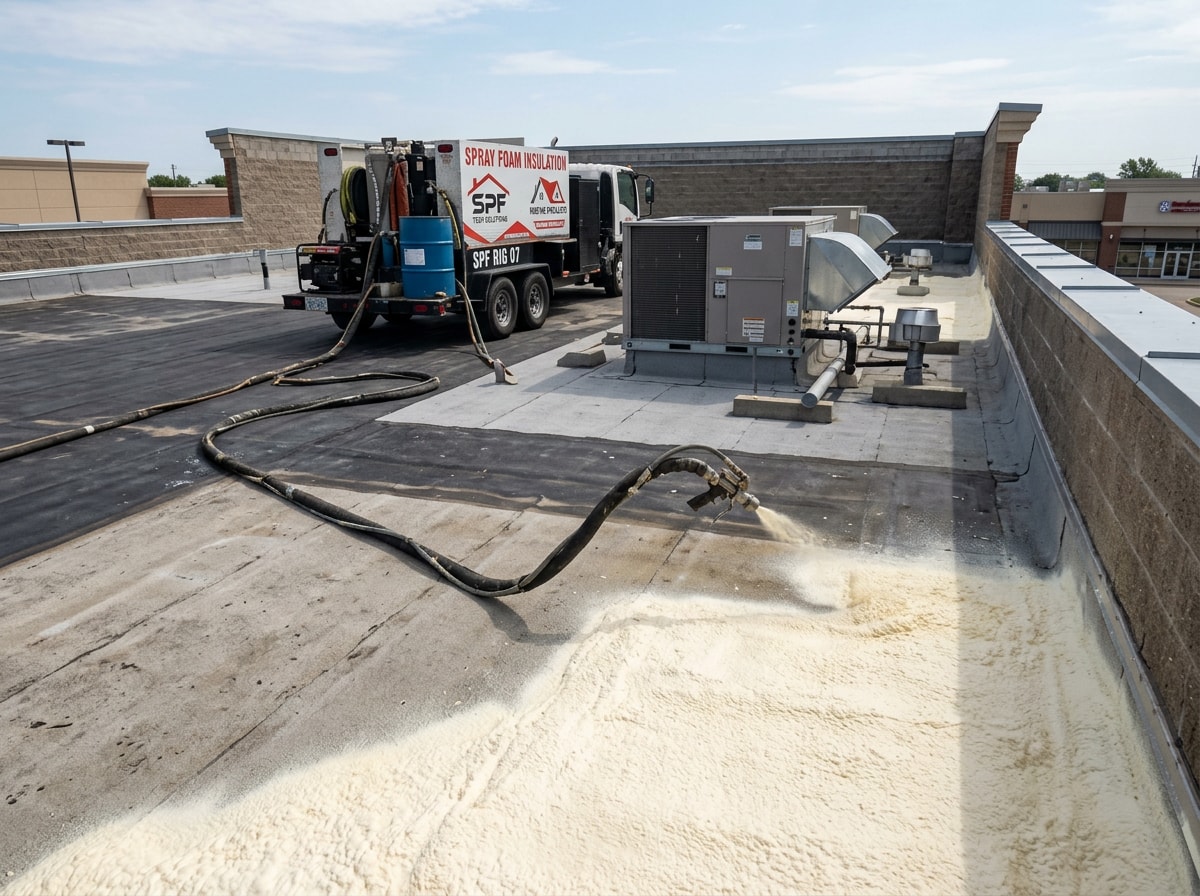
A proper SPF install follows a fairly predictable sequence: the existing roof is cleaned and dried, foam is sprayed in a controlled thickness that accounts for drainage slope, and a protective topcoat goes on once the foam cures. We've walked enough sun-cooked Paradise Valley flat roofs to know that rushing the prep step, especially moisture testing before spraying, is where most early failures start.
The topcoat you choose shapes the next decade of performance:
- Silicone coatings hold up best against ponding water and intense UV, a common combination on flat Paradise Valley roofs.
- Acrylic coatings cost less upfront but need more frequent recoating in areas with heavy sun exposure.
- Elastomeric coatings offer a middle ground of flexibility and weather resistance.
Explore our acrylic roof coating and silicone coating options, or keep a system performing with scheduled roof maintenance visits rather than waiting for a problem to show up as a stain on the ceiling.
Residential vs. Commercial Spray Foam Roofing in Paradise Valley
SPF isn't a commercial-only material, despite the common assumption. It performs just as well on the flat sections of a custom home, a detached garage, or a patio addition as it does on a warehouse roof. The application method and recoat schedule are nearly identical either way; what changes is roof size and detail work around skylights, vents, or HVAC curbs. If your property has mixed roof types, our commercial and residential page covers how foam sections pair with tile, shingle, or metal roofing elsewhere on the same structure. For a look at how SPF stacks up against another popular Paradise Valley material, see our guide to metal roofing in Paradise Valley.
Choosing a Spray Foam Roofing Contractor in Paradise Valley
SPF is unforgiving of a bad installer. Foam sprayed too thin, too thick, or in the wrong conditions shows up as blisters, ridging, or premature cracking within a few years, not decades.
Before signing anything, check for:
- A current Arizona ROC license in the correct classification.
Arizona roofing contractors must obtain a specific license classification known as R-42 for residential projects or CR-42 for contractors working on commercial and residential properties. You can verify any contractor's license status directly through the state's database before signing a contract.
- Manufacturer or industry certification.
The Spray Polyurethane Foam Alliance runs a professional certification program for SPF roofing installers, and specifiers often require SPFA-certified crews.
- A track record on desert-climate installs, not just general roofing experience.
- A clear, written warranty covering both the foam and the coating separately.
Serving Paradise Valley and the surrounding Valley, our crews handle everything from first inspection through recoat scheduling. Check our recent projects or visit the homepage for our full range of roofing services, then schedule a free inspection to get a straight answer on whether SPF makes sense for your roof.
FAQ
Is Spray Foam Roofing Worth It?
For most flat-roof properties, yes. The higher upfront cost is generally offset by lower cooling bills, seamless leak resistance, and a recoat-instead-of-replace lifecycle that can stretch for decades.
What Are the Disadvantages of a Foam Roof?
SPF can't be sprayed in wet, humid, or windy conditions, which limits installation windows. It also requires consistent recoating to prevent UV damage, and installation quality depends heavily on hiring an experienced, properly certified crew.
Can Spray Foam Roofing Be Repaired Instead of Replaced?
Usually, yes. Localized repairs and scheduled recoats typically extend a foam roof's service life without requiring a full tear-off, which is one of the system's biggest cost advantages over time.
How Does Spray Foam Roofing Handle Arizona's Monsoon Storms?
Its seamless design resists wind-driven rain intrusion at the seams the way layered membrane systems can't. When properly sloped during installation, it also avoids the ponding water that plagues other flat-roof systems during heavy monsoon downpours.
What R-Value Does Spray Foam Roofing Provide?
Roofing-grade spray polyurethane foam insulates at roughly R-6 to R-6.5 per inch , among the highest per-inch insulation values of any roofing material.
How Long Does It Take to Install a Spray Foam Roof?
Most residential SPF projects take one to three days, depending on roof size, substrate prep needs, and coating cure time. Weather windows matter too, since foam can't be sprayed in wind, rain, or high humidity.