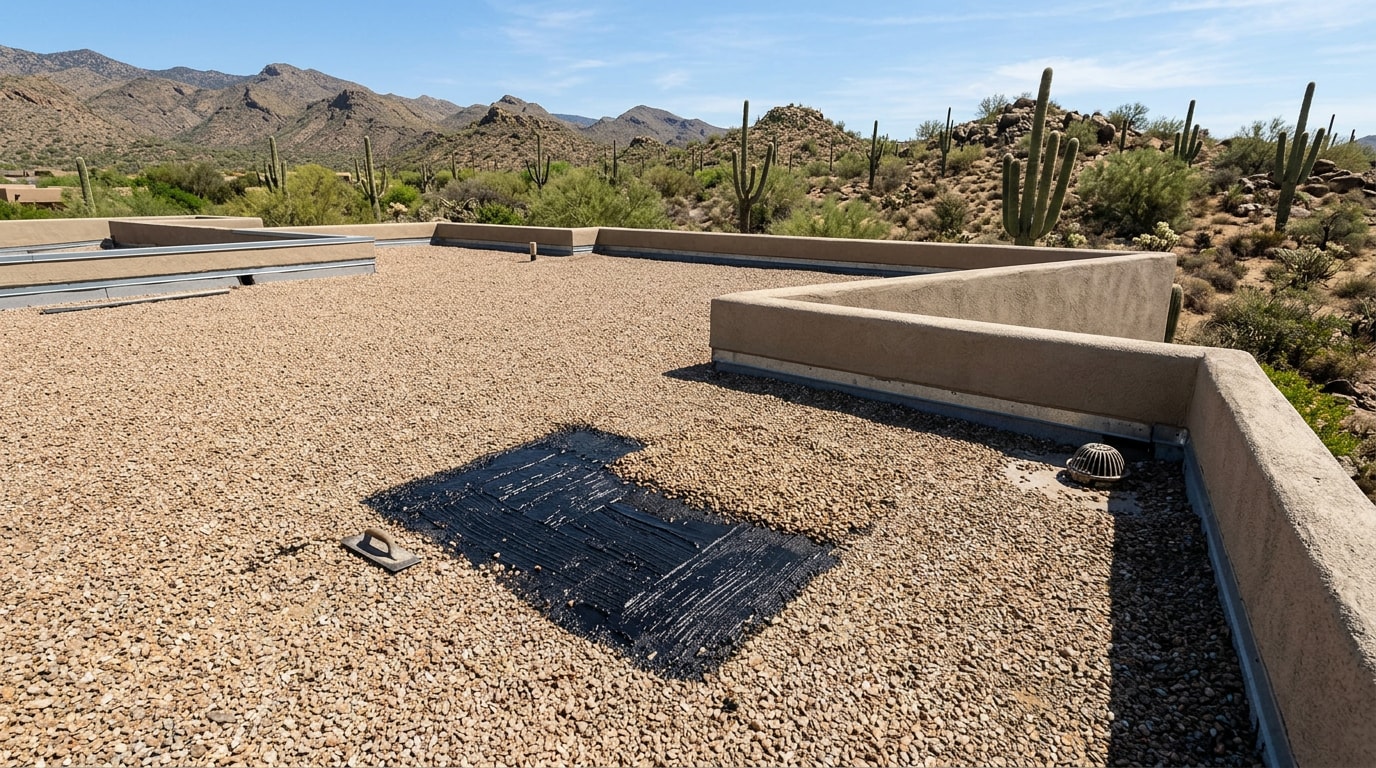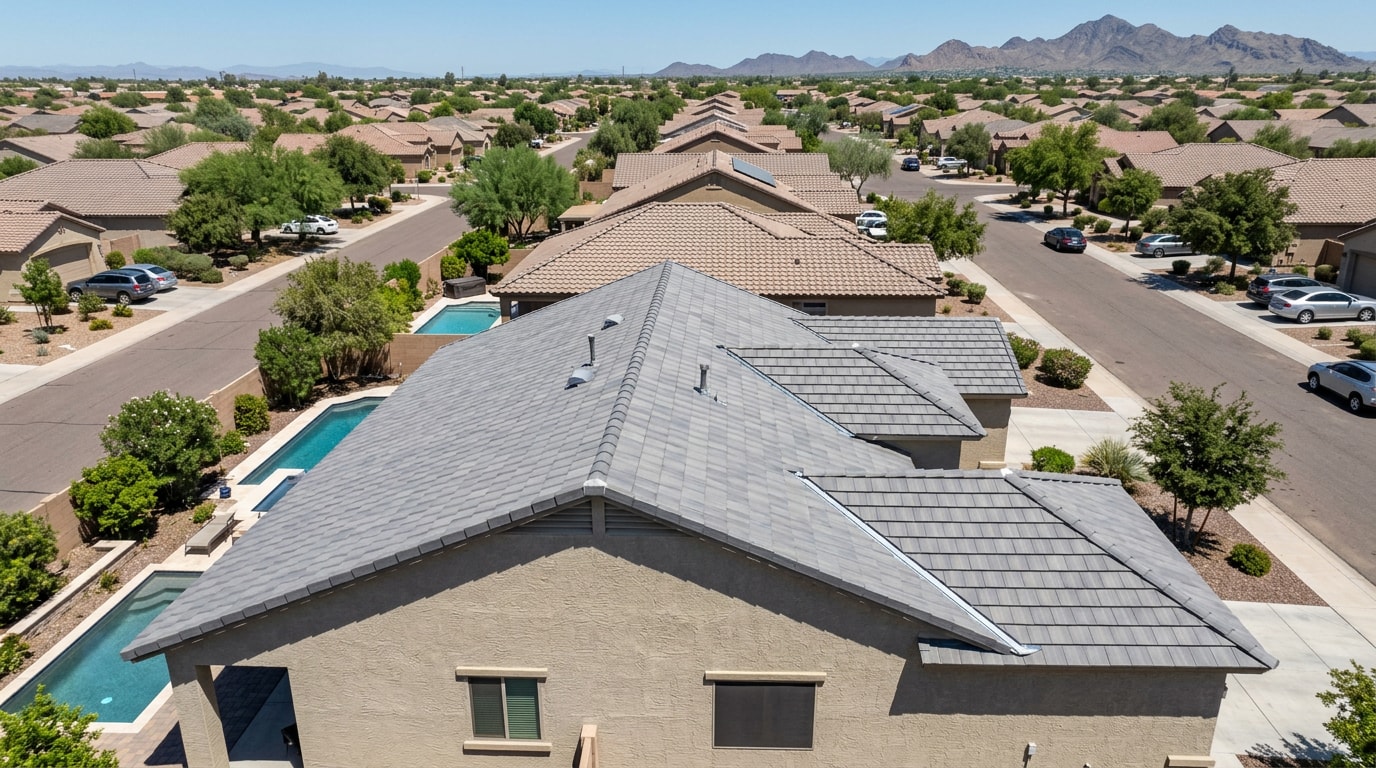
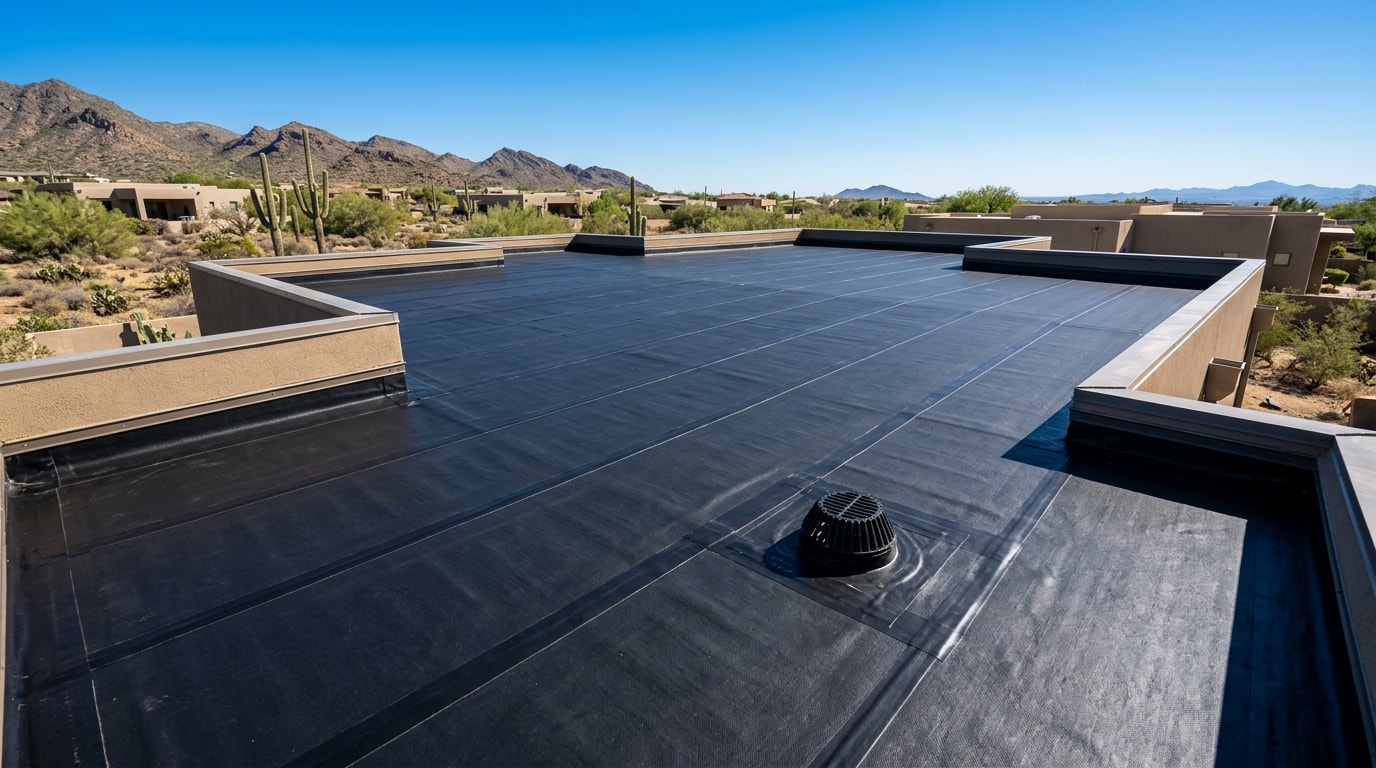
EPDM rubber roofing is one of the most common flat roof membranes installed on Cave Creek homes and small commercial buildings, prized for its low cost and long field history. Property owners weighing it against TPO or PVC need real numbers: what it costs here, how it holds up through a Sonoran Desert summer, and what a proper installation actually involves. This guide covers all three, plus the permit and licensing details most estimates leave out.
What Is EPDM Rubber Roofing?
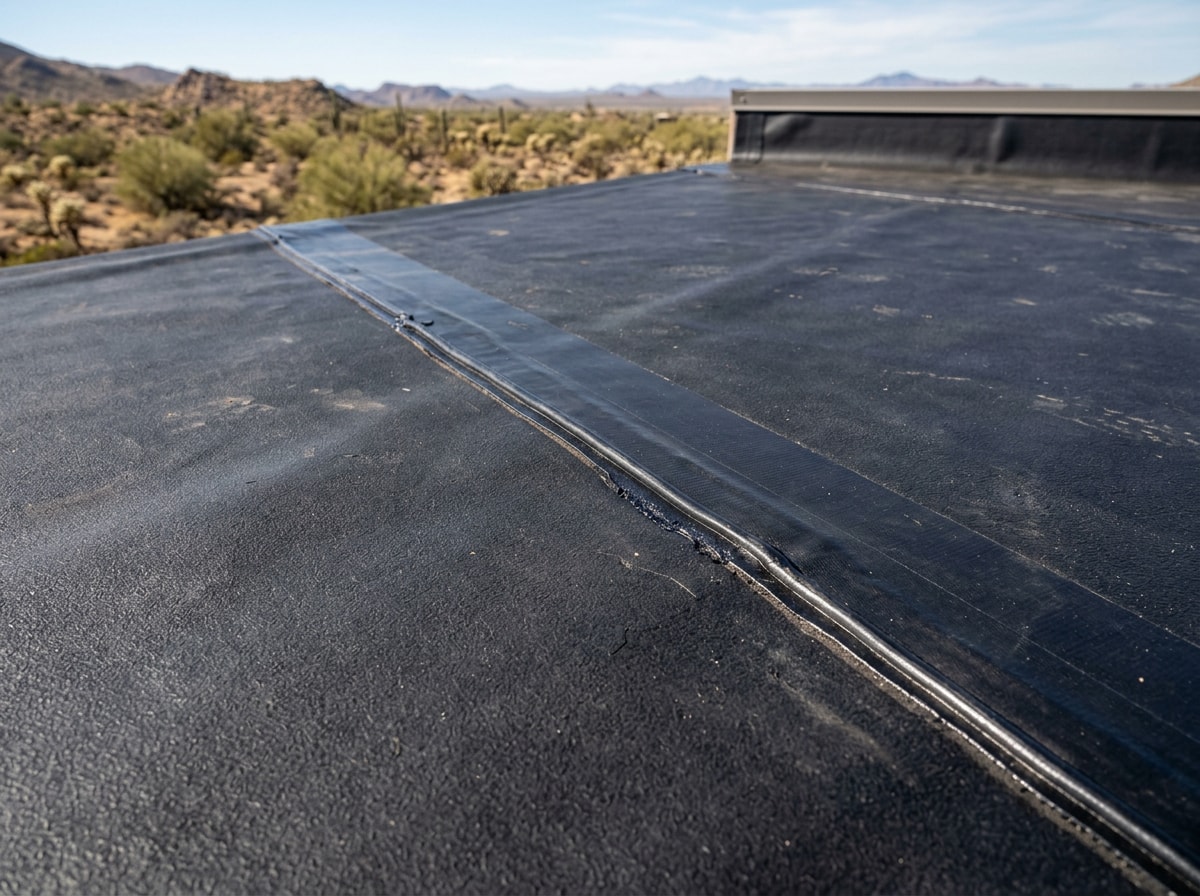
EPDM stands for ethylene propylene diene terpolymer, a synthetic rubber membrane used on low-slope roofs across the country. It comes in large rolled sheets, which matters more than it sounds: EPDM typically has larger sheets than other single-ply options, and larger sheets mean fewer seams , which is where most flat roof leaks actually start.
The material also holds up well to normal wear. EPDM withstands and resists damage from foot traffic, construction loads, and servicing mechanical equipment . And when it does get punctured, EPDM can be repaired without access to power and without the need for specialized tools , which keeps repair costs down compared to heat-welded systems.
EPDM Performance in Cave Creek's Desert Climate
Cave Creek summers are brutal on roofing. July is the hottest month of the year here, and the July high runs around 102 degrees , with months of near-100°F days stacked on top of intense UV exposure and monsoon humidity swings.
EPDM's rubber composition flexes through that thermal cycling instead of cracking, and its UV resistance slows the photodegradation that breaks down lower-grade membranes over time. That's the upside.
The trade-off is color. EPDM is typically black and must be formulated differently or coated to make it reflective , unlike white TPO or PVC, which reflect sunlight by default. On a building where summer cooling costs matter, that difference shows up on the utility bill. A cool-roof coating applied over EPDM closes most of that gap without switching membrane systems entirely, something our coating application services handle directly on existing EPDM roofs.
EPDM Rubber Roofing Cost in Cave Creek
EPDM roofing cost in the Cave Creek market typically runs $5,000 to $12,000 for a full membrane replacement on an average residential or small commercial flat roof. TPO, the white reflective alternative, usually runs $5,500 to $14,500, and PVC, known for heat-welded seams and chemical resistance, runs $6,600 to $16,500. Exact pricing depends on roof size, deck condition, and access.
| Membrane | Typical Cost Range | Typical Lifespan | Reflectivity | Seam Type |
|---|---|---|---|---|
| EPDM | $5,000–$12,000 | 20–25 years | Low (black) | Glued/taped |
| TPO | $5,500–$14,500 | 15–20 years | High (white) | Heat-welded |
| PVC | $6,600–$16,500 | 20–30 years | High (white) | Heat-welded |
There's a factor most cost guides skip entirely: embodied carbon. EPDM offers the lowest Global Warming Potential of the common membranes, at 6.93 kg CO2 per square foot, compared with 11.31 for PVC, 11.80 for modified bitumen, and 20.74 for built-up roofing . For owners weighing sustainability alongside price, that's a real differentiator baked into the material itself, not a marketing claim.
Beyond membrane type, several things move the final bid:
- Roof size and shape. More square footage and more penetrations (vents, HVAC curbs, skylights) mean more labor.
- Deck condition. Rotted or water-damaged decking discovered during tear-off adds cost that's hard to quote up front.
- Access. Roofs with limited crane or ladder access take longer to load material and stage work.
- Permit and disposal fees. Old membrane and insulation have to go somewhere, and that's a line item.
- Insulation upgrades. Adding or replacing tapered insulation during the same project is cheaper than doing it later.
EPDM vs. TPO vs. PVC: Choosing the Right Membrane
None of these three systems is universally "best." The right one depends on the building:
- Choose EPDM when budget matters most and the roof shape is simple. It's the lowest-cost option with the easiest field repairs.
- Choose TPO when reflectivity and energy savings outweigh a higher install cost. Our flat roof services team also installs TPO membrane systems for owners prioritizing cool-roof performance.
- Choose PVC for roofs exposed to grease, chemicals, or heavy rooftop foot traffic. Its welded seams hold up where EPDM's taped seams might eventually fail.
If reflectivity is the deciding factor but EPDM's price and repairability still appeal, a reflective roof coating applied over the finished membrane is worth pricing out before switching systems entirely.
The EPDM Installation Process
A sound EPDM installation starts well before the membrane ever touches the roof deck:
- Substrate inspection. Crews check the decking, drainage slope, and existing insulation for damage or moisture.
- Prep and flashing repair. Any soft decking gets replaced and flashing details around penetrations get rebuilt before the new membrane goes down.
- Membrane placement. The EPDM sheet is rolled out, allowed to relax, and positioned.
- Adhesion or mechanical attachment. Depending on the system, the membrane is fully adhered, mechanically fastened, or ballasted.
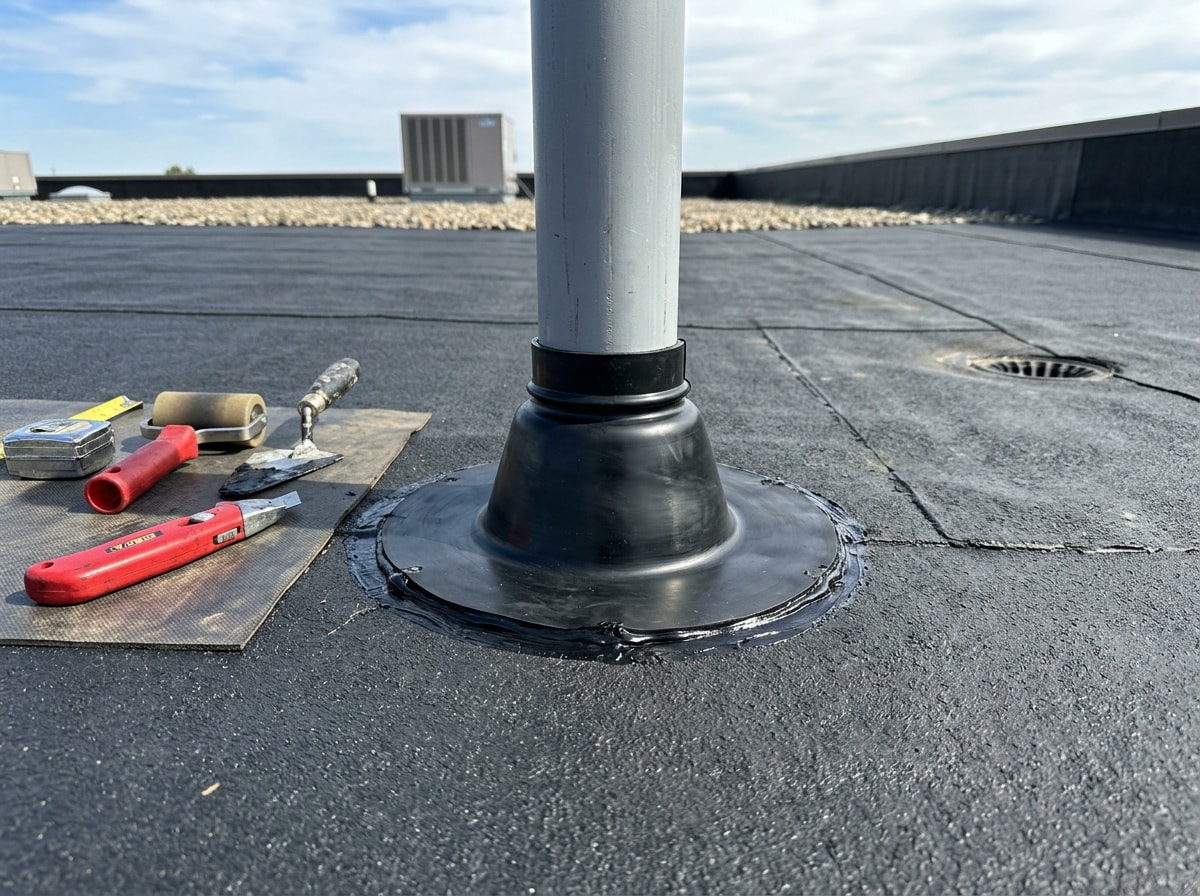
- Seaming and detail work. Seams are taped or glued, and all edges, drains, and penetrations are sealed.
- Final walk-through. A finished-roof inspection confirms there are no loose seams or missed details before crews leave.
When our crews tear off an aging EPDM roof in Cave Creek, the deck underneath almost always tells the real story: sun-cracked fasteners, dried-out flashing boots, and insulation that absorbed more monsoon moisture than the membrane ever let show on the surface. That's why the substrate inspection step isn't optional, it's the part of the job that determines whether the new roof lasts 20 years or five.
If your Cave Creek property's flat roof is showing its age, it's worth getting ahead of a failure before monsoon season. Schedule a free inspection and get a straight answer on whether repair or full roof replacement makes more sense.
Permits, Licensing, and What to Expect
Most flat roof replacements in Cave Creek require a building permit from the town's permitting office before work begins. A reputable contractor pulls that permit, schedules the required inspections, and handles disposal of the old membrane as part of the project, not as an add-on fee discovered later.
Licensing matters just as much. To be a contractor in Arizona, an entity must be licensed, and to be licensed, an entity must possess a bond, among other requirements. Confirming that status through the Arizona Registrar of Contractors before signing anything takes a few minutes and protects the warranty on the work. For ongoing upkeep after installation, routine roof maintenance and periodic roof inspections catch small seam or flashing issues before they turn into leaks. Homeowners dealing with an active leak right now can find practical first steps in our Cave Creek roofing leak repair guide.
FAQ
What factors affect flat roof replacement cost in Cave Creek?
Cost depends on roof size, membrane choice, roof accessibility, the condition of the existing deck, and permit and disposal fees. Larger or harder-to-access roofs with deck damage cost more than straightforward tear-off jobs.
How long does EPDM rubber roofing last in Cave Creek's climate?
A properly installed EPDM roof typically lasts 20 to 25 years in the Phoenix area, provided seams and flashing are inspected regularly. Intense UV exposure and monsoon cycling can shorten that if the roof is neglected.
Do I need a permit for a flat roof replacement in Cave Creek?
Yes, most flat roof replacements require a permit from the town's permitting office before work starts. Your contractor should handle the application and schedule any required inspections.
Why choose EPDM over TPO?
EPDM typically costs less than TPO, has a longer installation track record, and is easier to patch in the field. The trade-off is color: EPDM is black and less reflective than white TPO, which matters more in intense Phoenix-area heat.
Will black EPDM make my building hotter?
Black EPDM absorbs more solar heat than white TPO, so surface temperatures run higher on sunny days. A reflective coating applied over the membrane cuts heat absorption without requiring a full system replacement.
Can EPDM roofing be repaired instead of replaced?
In most cases, yes. Small punctures, seam separations, and flashing failures can be patched without specialized equipment, which is one of EPDM's biggest cost advantages over heat-welded membranes.
Ready to compare options for your property? Visit our homepage to see our full range of services, check out recent projects, or schedule a free inspection to get a firm number for your Cave Creek roof.