Roof tar in Fountain Hills, AZ is what keeps the flat sections of a lot of foothill homes watertight, and desert heat breaks it down faster than most homeowners expect. This guide covers the warning signs, what causes failure here specifically, and what repair or replacement actually costs. If you've spotted bubbling, cracking, or a stain on the ceiling under a flat roof section, start with the signs below.
Signs You Need Tar Roof Repair in Fountain Hills, AZ
The clearest signs you need tar roof repair in Fountain Hills, AZ are blistering, alligator-pattern cracking, ponding water that doesn't drain within 48 hours, bare or thinning gravel, and soft or stained spots on interior ceilings below flat roof sections.
- Blistering — small raised bubbles in the surface, usually trapped moisture or air that expanded under sun exposure.
- Alligatoring — a web of shallow cracks resembling reptile skin, a sign the asphalt has oxidized and lost flexibility.
- Ponding water — common on flat sections with poor slope; prolonged ponding accelerates every other failure mode on this list.
- Bare or thinning gravel — exposes the asphalt layer underneath to direct UV, speeding up cracking.
- Interior stains or soft ceiling spots — a sign water has already reached the decking.
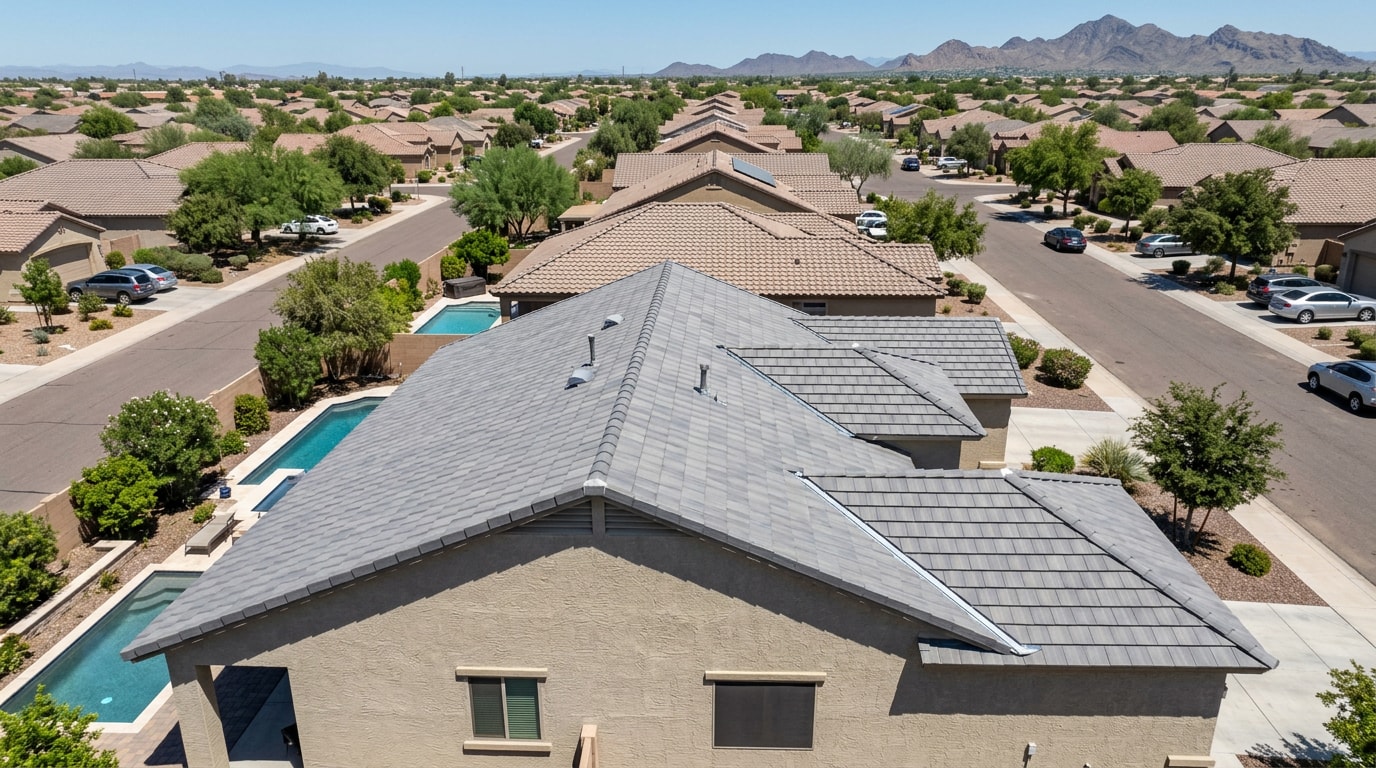
On inspections across Fountain Hills' foothill neighborhoods, we most often find blistering and alligator cracking on the flat sections tucked behind parapet walls, not on the visible tile field out front. Those low-slope areas behind entryways and single-story additions hold water and heat longer than the pitched tile roofs around them.
Catching these roof leak signs early, before water reaches the decking, is the difference between a simple patch and a much larger repair. A professional look through our roof inspection service can confirm what's actually happening under the surface, and you can schedule a free inspection before small damage turns into a bigger bill.
What Is Roofing Tar? Understanding BUR and Tar-and-Gravel Roofs
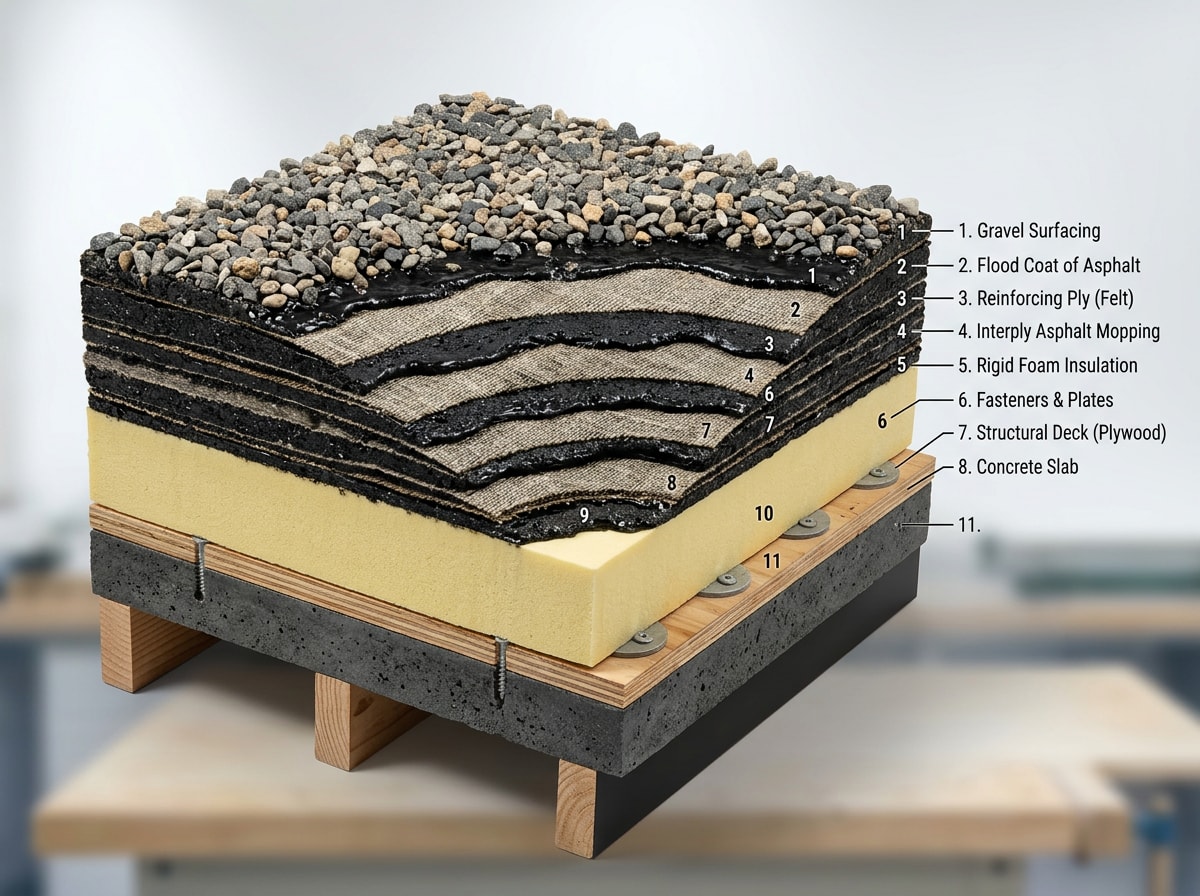
Roofing tar refers to the bitumen-based sealant used on flat and low-slope roofs, most often as part of a built-up roof (BUR) system made of alternating layers of asphalt and reinforcing fabric, topped with gravel.
Most products sold as "roofing tar" today are actually asphalt cement rather than true coal-tar pitch. That distinction matters more than it sounds. Older coal-tar pitch roofs behave differently in heat than modern asphalt-based products, and mixing the two during a repair can cause compatibility problems.
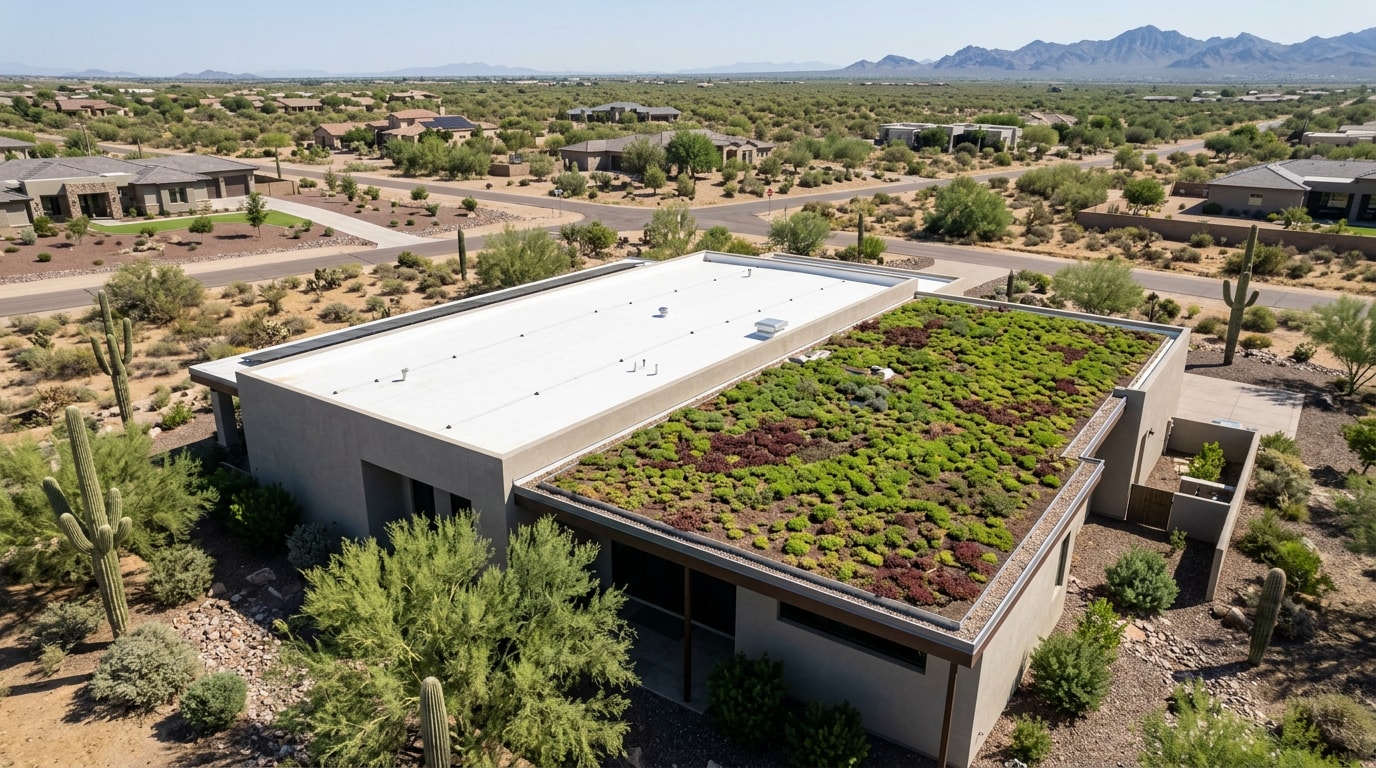
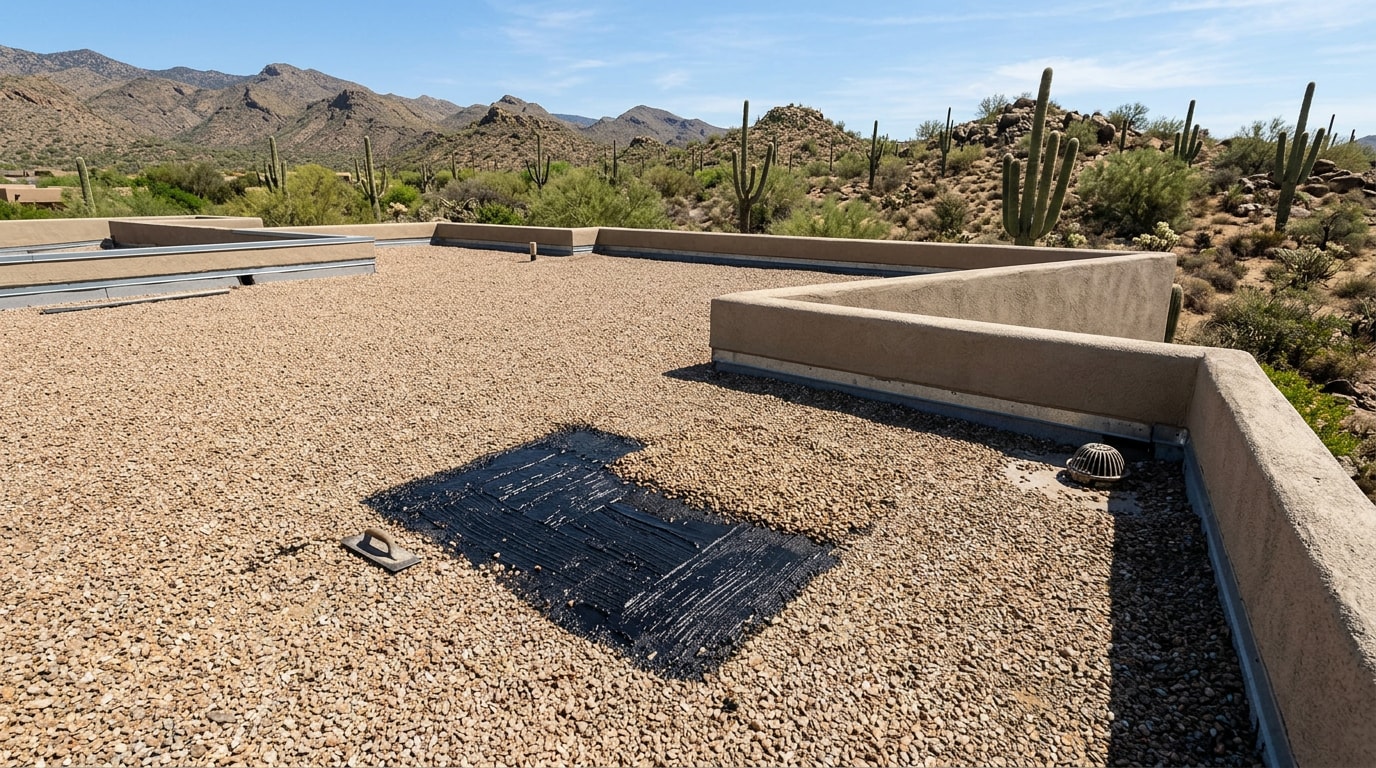
A tar-and-gravel roof is a layered system: base sheets, bitumen, and a gravel or mineral cap that protects the asphalt from UV exposure. Fountain Hills and the surrounding McDowell foothills communities have a lot of homes with flat roof sections tucked behind parapet walls, especially around entryways, patios, and single-story additions. Those are exactly the roof styles where BUR and modified bitumen systems, and the tar-based products used to seal them, show up most often.
Where Roof Tar Works Best: Common Uses and Compatible Roof Types
Roofing tar and asphalt cement are suited to BUR systems, roll roofing, modified bitumen, and spot-patching on asphalt shingle roofs. They should never be used on single-ply membrane roofs like TPO or PVC, since bituminous products can chemically attack those materials and void the manufacturer's warranty.
On compatible roof types, tar and roofing cement handle a handful of practical jobs well:
- Sealing seams between felt layers
- Patching small punctures or splits
- Bedding flashing around vents and parapet caps
- Sealing low points where water tends to collect
It's a flat roof repair material, not a general-purpose sealant. Matching it to the right roof type is the first step in any lasting fix. If you're not sure what system is on your roof, our flat roof services page walks through how to identify common Fountain Hills roof types before attempting any repair.
Common Tar Roof Problems in Fountain Hills' Climate
Desert heat is hard on any roofing material, but tar and asphalt-based BUR systems take a particular kind of beating here. Intense UV exposure, extreme daily temperature swings, and monsoon humidity combine to age a flat roof faster than the same system would age in a milder climate.
Thermal Cracking
Thermal cracking happens from repeated expansion and contraction, not just one hot day. Fountain Hills roofs can swing more than 30 degrees between a summer afternoon high and the overnight low, and that daily cycle, repeated across years, is what actually breaks down the material.
Arizona's monsoon season officially runs from mid-June through the end of September, and National Weather Service offices define the time period from June 15th through September 30th as "The Monsoon." The swing between a 115°F afternoon and a sudden monsoon downpour is a brutal stress test for aging tar roofs.
This isn't a one-season problem. Years of this temperature cycling is why tar roof problems in Fountain Hills tend to show up as a network of fine cracks rather than one dramatic failure point. If a storm catches a weak spot before you can get it repaired, emergency roof tarping can buy time until a permanent fix is possible.
Roofing Tar vs. Roofing Cement: Materials & Tools
Homeowners often use "roofing tar," "roofing cement," and "wet patch" interchangeably, but they're not quite the same thing.
- Roofing tar generally refers to the base bituminous material.
- Roofing cement (also called roofing mastic) is a trowel- or gun-applied adhesive/sealant made from asphalt and solvents.
- Wet patch cement is formulated to bond even on damp surfaces, useful for emergency repairs during monsoon season.
A typical tar roof patch requires a few core materials:
- Asphalt roofing cement
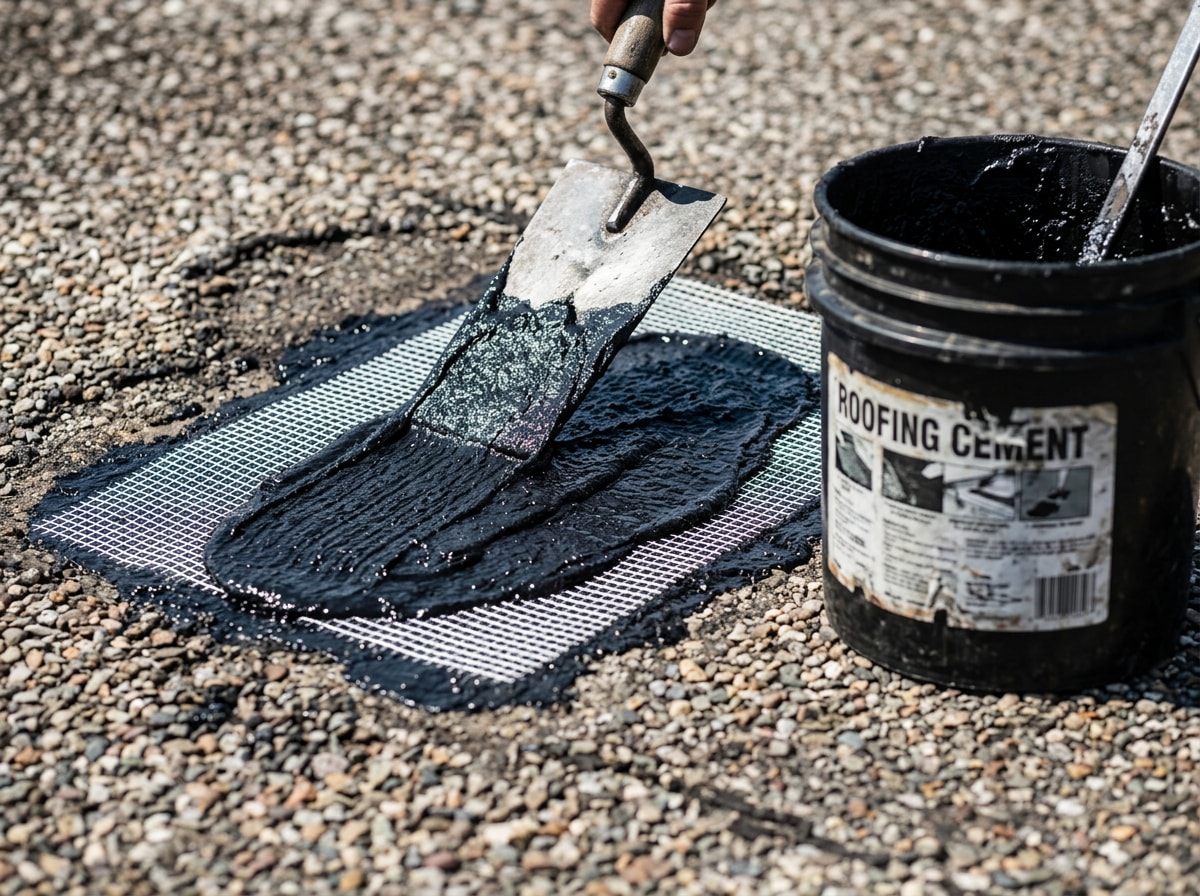
- Fiberglass or polyester roof patch fabric for reinforcement over cracks or seams
- A trowel or caulk gun, depending on the product's viscosity
- Basic safety gear for working on a low-slope roof
Material classification and performance for these products is laid out in ASTM D4586, which covers asbestos-free asphalt roof cement suitable for trowel application to roofings and flashings , a standard manufacturers reference on their product data sheets. Picking the wrong product for the job, like using a standard cement on a wet surface, is one of the most common reasons a DIY patch fails within a season.
When to Repair vs. When to Replace a Tar Roof (and What It Costs)
Repair generally makes sense when a BUR roof is under roughly 15 years old, the decking is sound, and damage is limited to isolated spots. Replacement becomes the smarter move once a roof passes 20 years, has widespread blistering or cracking, or has already been patched multiple times in the same areas, since most codes limit how many roofing layers can be built up before a tear-off is required.
Cost is usually the deciding factor for homeowners weighing these options, and it scales quickly with the extent of the damage:
| Repair Type | Typical Scope | Rough Cost Range |
|---|---|---|
| Small patch | Single crack, blister, or seam, under 2 sq. ft. | Low — a few hundred dollars |
| Multi-section repair | Several problem areas or a failing flashing detail | Mid-range — low thousands |
| Full BUR replacement | Tear-off and new built-up or modified bitumen system | Highest — several thousand and up |
These are general ranges, not quotes. Actual tar roof repair cost depends on roof size, access, and how much decking (if any) needs replacing underneath. For a roof approaching the end of its expected life, our roof replacement page outlines what a full BUR replacement typically involves, and our roof repair page covers smaller fixes.
Step-by-Step Guide to Patching a Tar Roof
The steps below explain what a professional repair process looks like, so you understand what you're paying for or what to watch out for if you attempt a small, low-risk patch yourself. This isn't a substitute for a professional inspection, especially on an older or heavily damaged low-slope roof.
Locating and Assessing the Damage
- Walk the roof carefully and press on suspicious blisters. A spongy or soft spot usually means trapped moisture underneath.
- Check flashing edges, parapet wall transitions, and drain areas, since these are the most common failure points on a BUR system.
- Mark any cracks, soft spots, or bare gravel areas before starting repairs so nothing gets missed once materials are out.
Applying the Repair and Sealing
- Clean the damaged area thoroughly and clear away loose gravel so the cement can bond directly to the surface.
- Trowel on roofing cement.
- Embed reinforcing fabric over any crack or seam wider than a hairline.
- Add a second cement layer over the fabric.
- Re-cover with matching gravel once cured.
Low-slope roof work carries real fall risk, particularly near parapet edges and skylights. OSHA's standard on work on low-slope roofs requires that when work is performed less than 6 feet from the roof edge, the employer must ensure each employee is protected from falling by a guardrail system, safety net system, travel restraint system, or personal fall arrest system. That's a good reminder that even small repairs deserve caution, and why most homeowners hand this part off to a crew that does it daily.
For a closer look at how a similar bitumen-based system holds up over time, see our guide on tar roof repair in Gilbert, AZ.
FAQ
Can I repair a tar roof myself?
Small, cosmetic fixes, like a minor blister or a hairline crack, are reasonably DIY-feasible with the right materials. Larger BUR repairs involve fall risk, matching compatible materials, and diagnosing moisture that may already be trapped under the surface, so those jobs are best left to a roofer with flat-roof experience. If you're unsure which category your damage falls into, requesting a free inspection is the safer first step.
How long does a tar-and-gravel roof last in Arizona?
A well-maintained BUR roof typically lasts 15 to 20 years in the Arizona desert climate, though intense UV exposure and monsoon stress can shorten that range without regular maintenance. Roofs with reflective coatings or more frequent inspections tend to land on the longer end of that estimate.
What is the difference between roofing tar and roofing cement?
Roofing tar is the base bituminous material used in built-up roofing, while roofing cement, also called mastic, is a formulated adhesive sealant made from asphalt, solvents, and sometimes fibers, designed for trowel or gun application on seams, flashing, and small patches. In practice, most modern repairs use roofing cement rather than raw tar.
How long does a tar roof repair take?
A single small patch usually takes a few hours, including cleanup and cure time. A multi-section repair covering several problem areas can take a full day or more, depending on roof size, access, and how much gravel needs to be reset afterward.
Is roofing tar still used on modern roofs?
Yes, but mostly in the form of asphalt-based roof cement rather than raw coal-tar pitch. It's still a standard repair material for BUR, modified bitumen, and roll roofing, though it's unsuitable for single-ply membranes like TPO or PVC.
Can roof tar stop a leak permanently?
A properly applied patch with reinforcing fabric can hold for years, but tar is a repair material, not a permanent fix for a roof that's past its service life. Repeated patching in the same spot usually signals it's time to evaluate replacement instead.
Roofing tar and BUR systems are common on flat-roof sections throughout Fountain Hills, Scottsdale, and the surrounding foothill communities. If you'd rather have a second set of eyes before climbing up there, the team at Irish Roofing Company serves homeowners in Fountain Hills, AZ and the greater Phoenix Valley. Schedule a free inspection and get a straight answer on whether your roof needs a patch or a full replacement.