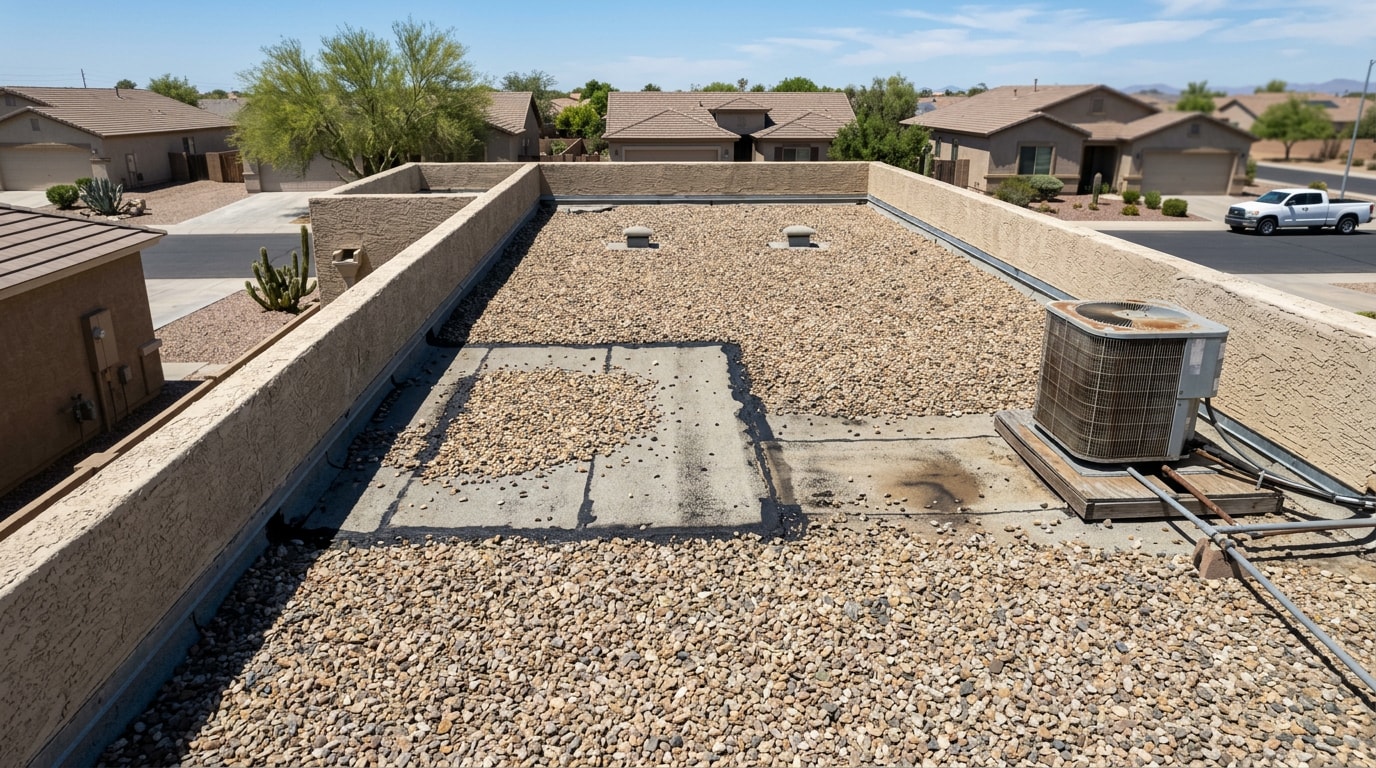
Tar roof repair in Gilbert, AZ comes down to one issue more than any other: Arizona sun breaks down asphalt faster than almost any other U.S. climate. If you own a tar-and-gravel roof, also called a built-up roof (BUR), knowing how it fails and what a proper repair involves can save you thousands over the life of the roof. Here's what actually determines whether you need a patch or a full tear-off.
What Is a Tar-and-Gravel (BUR) Roof?
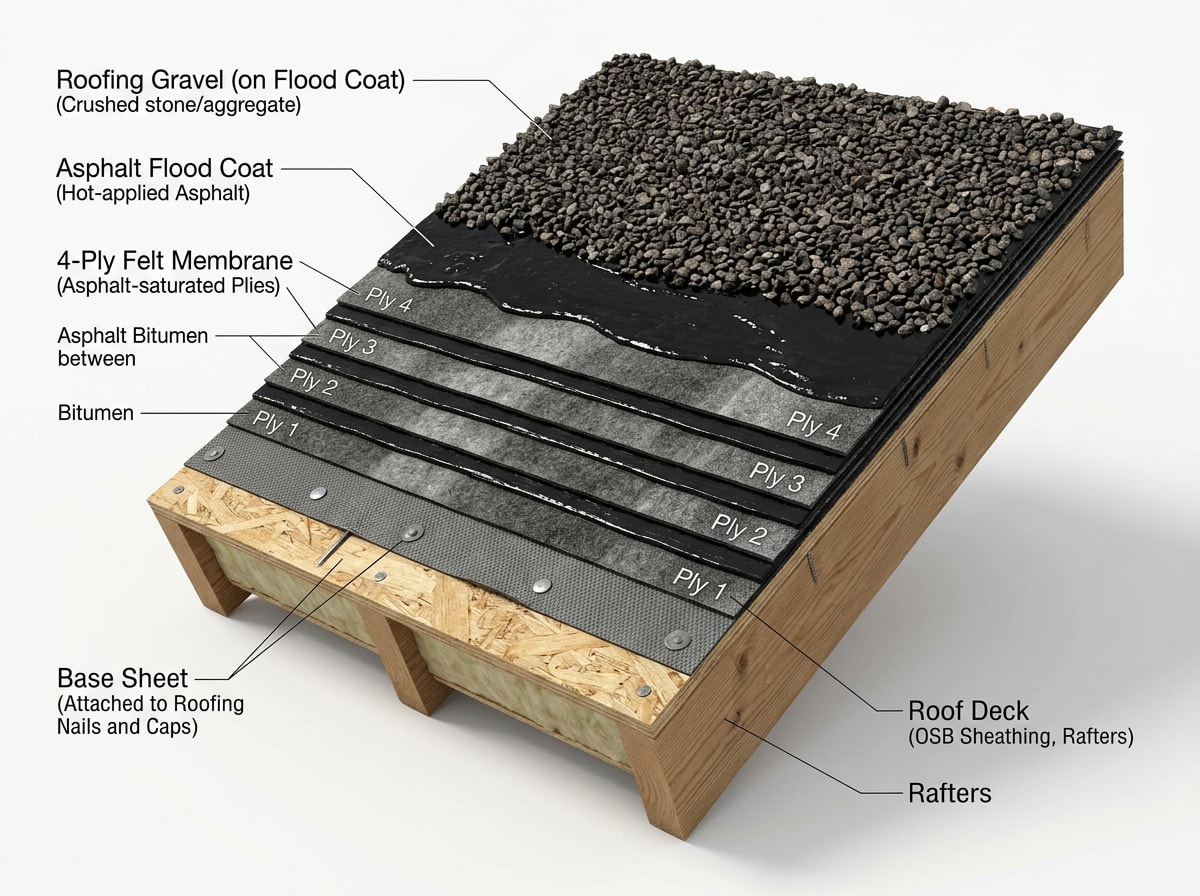
A built-up roof is made from alternating layers of roofing felt and bitumen, either asphalt, coal tar pitch, or cold adhesive, built over rigid insulation and capped with a layer of gravel or crushed mineral rock. Think of it as a stack: a base sheet bonds to the deck, felt plies get mopped with hot asphalt one layer at a time, and a flood coat locks the gravel cap in place.
BUR is usually the least expensive flat-roof system to install, which is why it's still common on older Gilbert homes and commercial buildings. The tradeoff is durability in extreme heat. Gilbert's intense summer sun breaks down that asphalt base faster than modified bitumen or TPO systems, so BUR roofs typically need attention sooner in their lifespan.
Signs You Need Tar Roof Repair in Gilbert, AZ
Most BUR failures give warning signs well before a roof actively leaks. Watch for:
- Bald spots where gravel has worn away, exposing the asphalt cap sheet underneath
- Alligator-pattern cracking in the tar surface, a classic sign of UV-driven asphalt embrittlement
- Standing water that doesn't drain within a day or two after a storm
- Raised blisters or bubbles in the membrane, which signal trapped moisture or gas
- Interior water stains on ceilings below flat-roof sections, especially near parapet walls or roof penetrations
Catching any of these early is the difference between a same-day patch and a full-section replacement. If you're noticing one or more of these signs, it's worth getting ahead of it with a free roof inspection before the next monsoon storm rolls through.
Common Tar Roof Problems in Gilbert's Climate
Gilbert's triple-digit summers and monsoon storms put tar-and-gravel roofs under real stress from two directions: UV degradation and sudden moisture loading. Here's how each common failure mode shows up and gets fixed.
Infrared Leak Detection
Infrared scanning detects moisture trapped beneath the roofing surface by reading temperature differences left by water that's seeped into the insulation layer. This lets a technician map leak locations without tearing into the membrane first, which cuts both diagnosis time and repair cost on Gilbert properties where the actual leak source is often several feet from the visible interior stain.
Membrane Patch Repair
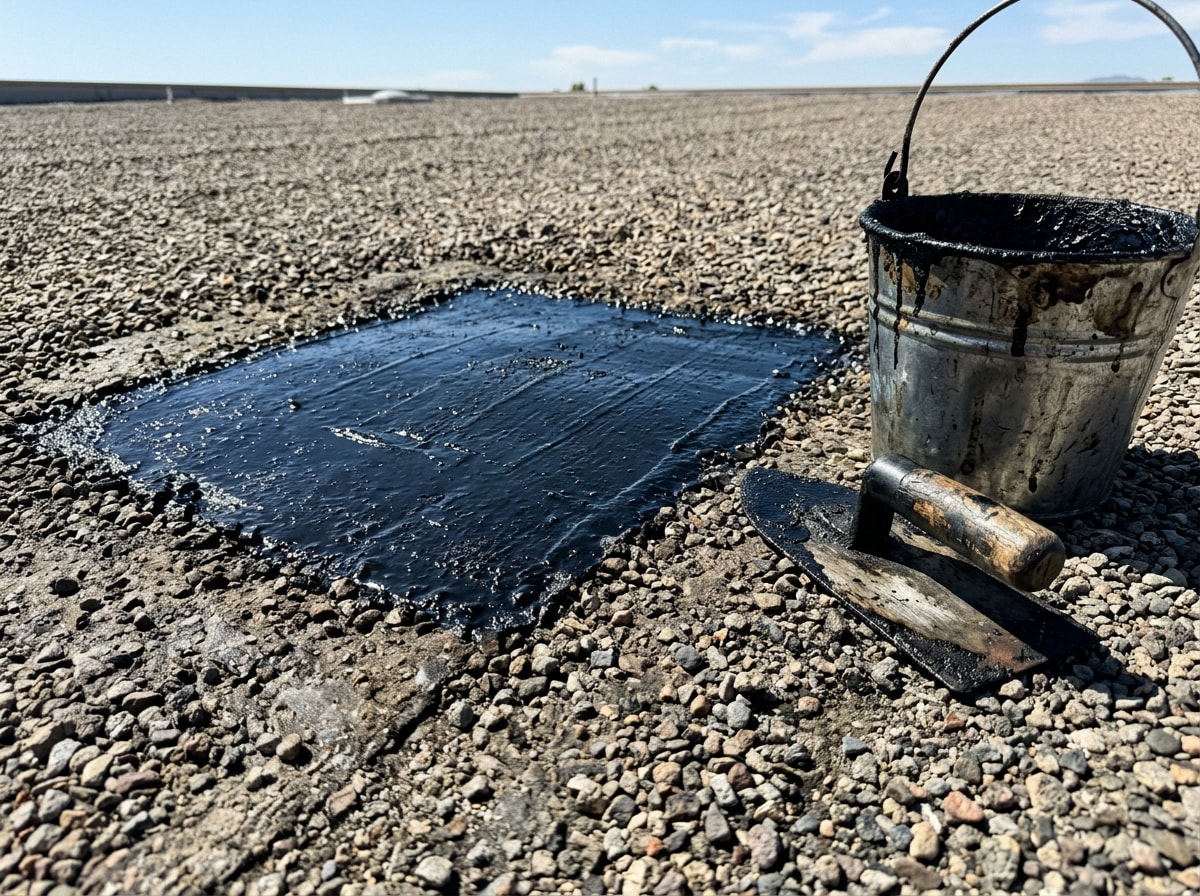
The most common BUR failure point we see is a cracked asphalt cap sheet with felt exposed underneath. A proper patch cuts out the damaged section, dries the substrate, and seals new felt and bitumen into the surrounding roof so water can't track sideways under the patch edge. Left alone, exposed felt wicks moisture into the insulation board within a single storm cycle.
Ponding Water Solutions
Tar-and-gravel roofs are especially prone to ponding because their low slope and gravel ballast tend to trap water rather than shed it. Standing water left on a flat roof for an extended period softens the asphalt cap and accelerates membrane breakdown, a frequent issue after Gilbert's monsoon downpours. Where ponding is structural (a low spot in the deck rather than a clogged drain), tapered insulation or a crickets-and-drains retrofit is usually a better fix than repeated patching.
Thermal Cracking
Flat roofs expand and contract as temperatures swing between Gilbert's 115°F afternoons and much cooler overnight lows. That daily cycling is the leading cause of tar cracking on BUR roofs, and it's why flexible repair materials matter more here than in milder climates. A rigid patch that can't move with the substrate will crack again within a season.
Commercial vs. Residential Repair Scope
Built-up roofs show up on commercial buildings more often than homes, and the repair scope varies a lot by square footage. A residential-scale tar patch usually takes a crew a few hours. Commercial tar-and-gravel repair tends to involve a broader re-coat or overlay spanning several days, which is why commercial flat roof waterproofing is typically scoped and priced separately from a single residential patch.
Tar Roof Repair Cost in Gilbert, AZ
Exact pricing depends on roof access, the extent of saturated insulation, and whether the repair is residential or commercial scale. These are general planning ranges based on typical Gilbert jobs, not a quote:
| Repair Type | Typical Scope | General Price Range |
|---|---|---|
| Small membrane patch | Single cracked or blistered section, a few square feet | $300 – $900 |
| Multi-spot patch repair | Several isolated leak points across one roof | $800 – $2,500 |
| Ponding water correction | Tapered insulation or drain retrofit in one low area | $1,500 – $5,000+ |
| Partial re-coat / overlay | Section of commercial BUR showing widespread wear | $3,000 – $10,000+ |
| Full tear-off and replacement | Saturated insulation, multiple failure points | Priced per square foot after inspection |
For an exact number, a roof repair estimate based on an actual inspection is the only reliable way to budget, since two roofs with similar square footage can need very different scopes of work.
Patch vs. Full Tear-Off: How to Decide
Surface damage limited to one or two small areas almost always favors a patch. It's faster, cheaper, and buys real time on an otherwise sound roof.
Widespread blistering, saturated insulation discovered during a probe test, or multiple active leak points across an aging BUR system usually means a full tear-off makes more financial sense than repeated patching. Every patch added to a failing roof is money spent on a system that's already past its useful service life. If an inspection turns up more than two or three independent problem areas, ask directly whether roof replacement pencils out cheaper over a five-year horizon than ongoing patch work.
Keeping a Repaired Tar-and-Gravel Roof Sound
Repairing a tar-and-gravel roof is only half the equation. What you do afterward determines whether that repair lasts two years or ten.
An acrylic cool-roof coating adds a reflective, waterproof layer over the repaired cap sheet. Cool roof coatings work by keeping buildings cooler on hot days to improve indoor comfort and safety, and reducing building air conditioning costs and reducing the strain on the electrical grid , according to the U.S. Environmental Protection Agency's ENERGY STAR program. On a Gilbert roof, that reflectivity also slows the UV breakdown that caused the original cracking.
For roofs showing early wear but not yet ready for a full re-coat, patching weak spots in the membrane can buy several more years of service. If your flat roof uses a rolled asphalt system rather than a gravel cap, the same logic applies through rolled roof maintenance rather than BUR-specific patching. Many Gilbert property owners pair either approach with a preventive roof maintenance plan and a polyurethane roof coating to stretch service life further between major repairs.
Timing matters too. Arizona's monsoon season, which runs from June 15 to September 30, is associated with thunderstorms that produce lightning, strong winds, and heavy rains , so scheduling a membrane inspection before mid-June gives a crew time to seal weak spots before storm season tests them. If a storm catches a damaged roof off guard, emergency roof tarping limits interior damage until a permanent repair can be scheduled.
Hiring a Qualified Gilbert Roofer for BUR Repair
A roofer handling a BUR or tar-and-gravel system should have real experience with large flat-roof projects, not just asphalt shingles. Before you hire anyone for tar roof repair in Gilbert, AZ, confirm they're licensed, bonded, and insured, and ask for documentation specific to your job rather than a general certificate.
Fall protection compliance is also worth asking about directly, since low-slope roof work carries real risk. Employers need to know the pitch of the roof and follow the appropriate standard, with low-slope roofs of 4:12 or less falling under 29 CFR 1926.501(b)(10) , per OSHA's published roofing safety guidance. A contractor who can't speak to how their crew handles fall protection on a flat roof is a contractor worth skipping.
Property managers and homeowners alike can review completed projects to see how a contractor's past flat-roof work has held up, and the roofing contractor services page outlines the credentials a qualified crew should offer before you sign anything.
Why Gilbert Property Owners Call Irish Roofing Company
Irish Roofing Company is owned by John McClean, who was born and raised on a small farm in Newcastle, County Down, Ireland, where he grew up surrounded by construction and learned roofing at just 10 years old . That hands-on start carried into decades of commercial project management before he brought over 20 years of roofing experience to Arizona, including deep familiarity with the most common sources of roof damage in the state's climate .
In our own calls across Gilbert's flat-roof neighborhoods, the pattern repeats: gravel blows clear off the roof along parapet edges after a strong monsoon downburst, exposing the cap sheet in that strip first, well before the rest of the field shows wear. That's usually where we start a leak investigation, and it's a detail a generic inspection checklist won't catch. Irish Roofing Company holds Arizona ROC license #325437 and serves Gilbert, AZ along with surrounding East Valley communities. You can see our full service area and current projects on the homepage.
Ready to get a straight answer on patch versus replacement? Schedule a free inspection and we'll walk the roof with you before recommending anything.
FAQ
How much does tar roof repair cost in Gilbert, AZ?
A small membrane patch typically runs $300 to $900, while multi-spot repairs or ponding corrections can range from $800 to $5,000 depending on scope. Larger commercial re-coats or overlays often start around $3,000. For an exact figure, request a free roof repair estimate based on your property's actual condition.
How long does a tar-and-gravel roof last in Arizona?
Most BUR roofs are built for a 15 to 20 year service life, but Gilbert's intense UV exposure and heat cycling tend to shorten that window compared to milder climates. Roofs that receive regular maintenance and periodic cool-roof recoating generally outlast ones left unmaintained.
Can I repair a tar roof myself?
Small cosmetic issues aside, DIY tar roof repair is risky. Improperly sealed patches often trap moisture under the new material, which can make the underlying damage worse and harder to diagnose later. Low-slope roof work also carries real fall risk, which is why professional crews follow OSHA fall protection standards on every job.
How long does a tar roof repair take?
A localized tar-and-gravel patch usually takes a few hours to a day. A larger membrane section replacement or re-coat can take several days, depending on roof size and weather conditions during the monsoon season.
What impact does Arizona's weather have on tar roofs in Gilbert?
Intense UV exposure and summer monsoon storms are the two biggest stressors on tar-and-gravel roofs, making asphalt brittle and prone to cracking while storm winds displace gravel ballast. That combination is why Arizona flat roofs tend to age faster than roofs in milder regions.
What signs indicate my tar roof needs repair?
Common warning signs include bald spots where gravel has worn away, alligator-pattern cracking in the tar cap, water pooling after storms, and raised blisters in the membrane surface. Any of these warrant a professional inspection soon rather than waiting for an active leak.