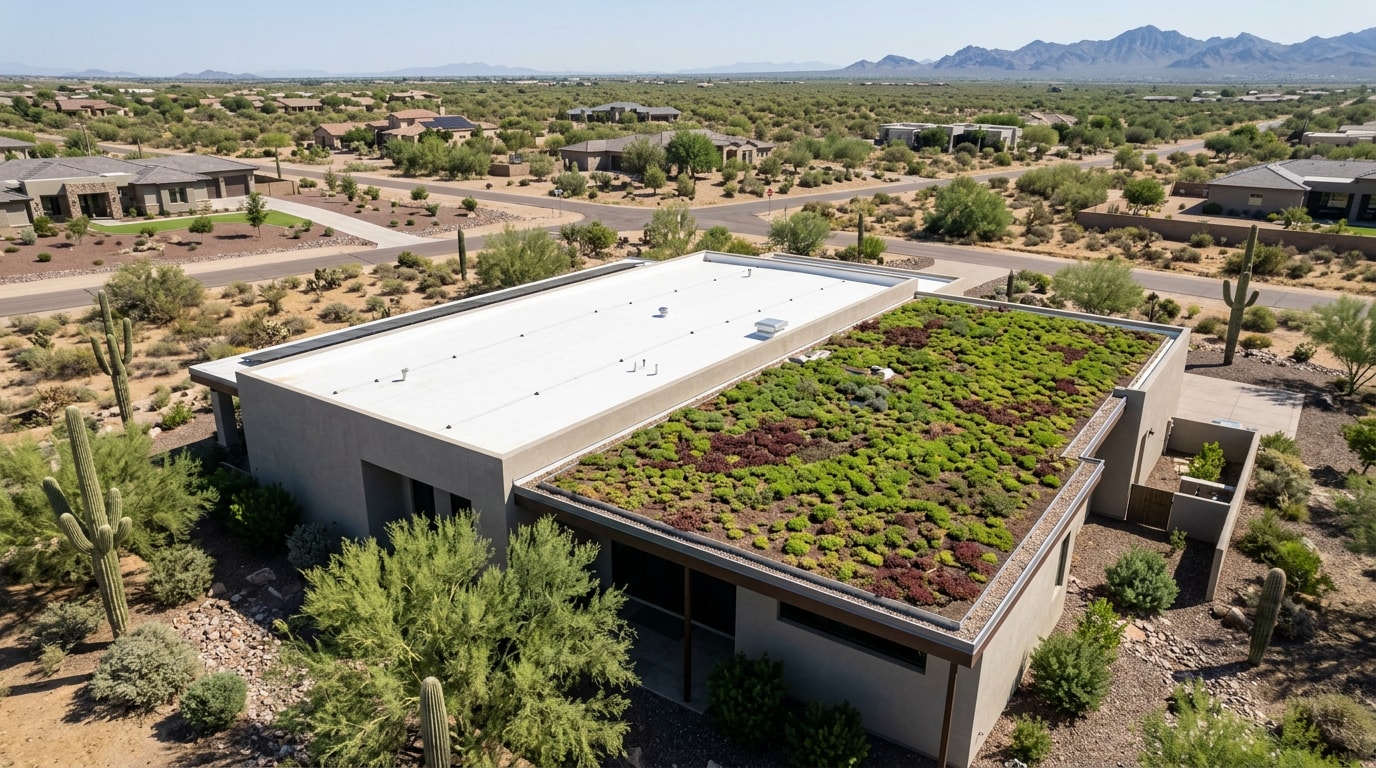
Green roofing in Queen Creek, AZ means one of two very different products: a true vegetative roof with soil and plants, or a reflective cool roof system that cuts heat without the garden. Both can lower cooling bills in a town that spends most of summer in triple digits, but only one needs a watering schedule and structural engineering. Here's what each option actually costs, how it holds up under monsoon rain, and what the Town of Queen Creek requires before you install either one.
What Is Green Roofing? Vegetative Roofs vs. Sustainable Roofing Systems
"Green roofing" gets used two ways in the industry, and mixing them up wastes time with contractors.
A true vegetative roof has soil, drainage layers, and living plants. A sustainable or "eco-friendly" roofing system is any product, including reflective coatings and cool roof membranes, that reduces heat gain and energy use without the garden on top.
Both count as green roofing. They perform, cost, and maintain very differently. Knowing which one you're actually asking about before you request a quote saves a round of confused phone calls.
Browse our roofing contractor services to see which systems we install around Queen Creek, or check our Queen Creek, AZ service area page for local project examples.
Benefits of Green Roofing in a Desert Climate
Whether vegetative or reflective, green roofing systems generally deliver the same four advantages, just at different intensities.
- Lower cooling bills. A soil layer or reflective membrane blocks heat transfer into the building, cutting the AC load during Queen Creek's long cooling season.
- Better stormwater handling. Vegetative systems absorb rainfall instead of dumping it straight into gutters during monsoon downpours.
- Longer roof lifespan. The vegetative or coating layer shields the waterproofing membrane from direct UV exposure and daily thermal cycling, the two biggest causes of early roof failure in the desert.
- Added green space and habitat.
Green roofs provide aesthetic value and habitat for plant and animal species, and improve human interaction with nature by introducing green space into the built environment.
Stormwater Performance Is the Biggest Differentiator
This is where vegetative roofs pull ahead of every other "green" option. Green roofs reduce and slow stormwater runoff and filter pollutants from rainfall, and extensive and intensive green roof systems can reduce runoff by 60 to 100 percent, respectively. That matters during Arizona's monsoon season, when short, intense downpours overwhelm drainage faster than steady rainfall would.
Types of Green Roofs: Extensive vs. Intensive
Vegetative roofs fall into two categories, and the difference changes everything about cost, structural load, and upkeep.
| Feature | Extensive Green Roof | Intensive Green Roof |
|---|---|---|
| Soil depth | Shallow (2-6 inches) | Deep (8+ inches) |
| Plant types | Sedums, native groundcovers | Shrubs, small trees, rooftop gardens |
| Structural load | Lower, often no reinforcement needed | High, usually requires engineering review |
| Maintenance | Low: seasonal weeding, irrigation checks | High: regular pruning, fertilizing, watering |
| Best fit for Queen Creek | Yes, with drought-tolerant species | Rare outside commercial or custom builds |
For most Queen Creek homes, an extensive system is the only vegetative option that makes structural and financial sense. Intensive roofs are typically reserved for commercial buildings with reinforced decks.
Does a Vegetative Green Roof Work in the Sonoran Desert?
Yes, but only as an extensive system: shallow growing media, drought-tolerant native plants, and drip irrigation. A rooftop lawn or anything resembling a traditional garden struggles against Queen Creek's summer heat and quickly becomes a maintenance liability.
Species selection matters as much as the system itself. Arizona's own water conservation office maintains xeriscape guidance built around drought-resistant plants selected to conserve water , which is a useful starting point before committing to a vegetative roof design here. You can review the state's regional plant lists through the Arizona Department of Water Resources landscaping program.
Smart irrigation controllers that adjust watering based on soil moisture and seasonal rainfall help desert-adapted plants survive the hottest stretches without wasting water. In our inspections of flat and low-slope roofs around Queen Creek, the irrigation line and drainage path cause more early failures than the plants themselves, which is why we treat irrigation design as part of the roofing scope, not an afterthought handed to a landscaper.
Green Roof vs. Cool Roof vs. Coated Spray Foam
Choosing between a true vegetative system, a reflective cool roof, or a coated spray-foam roof comes down to upfront cost, water needs, and how much ongoing maintenance you want to take on.
| Feature | Vegetative Green Roof | Cool Roof (Reflective) | Coated Spray Foam |
|---|---|---|---|
| Upfront cost | Highest | Moderate | Moderate |
| Maintenance | High (irrigation, weeding) | Low | Low (periodic recoating) |
| Water need | Regular drip irrigation | None | None |
| Typical lifespan | Long, membrane-protected | Long | Long with recoating |
| Heat performance | Excellent (insulating) | Excellent (reflective) | Very good |
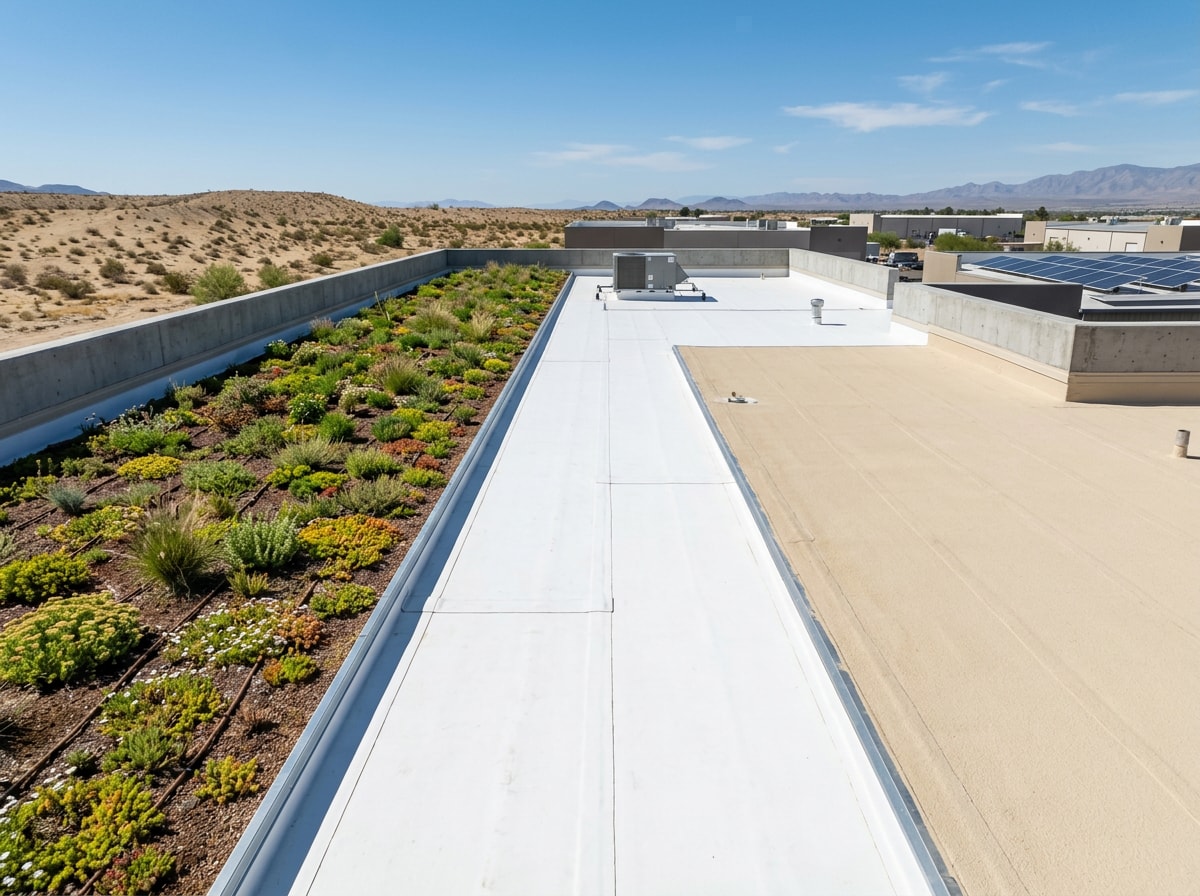
Cool roofs are engineered to reflect much of the sun's radiant energy back into space instead of transferring it as heat into the building, and the EPA's Energy Star program set a minimum initial reflectance of 0.65, compared to 0.06 to 0.26 for conventional asphalt roofs.
The Department of Energy has found that reflective roof products can lower roof surface temperature by up to 100 degrees and reduce peak cooling demand by as much as 15 percent. You can see the government's current purchasing and savings guidance on the DOE's cool roof products page.
If a reflective or coated option fits your budget better than a planted roof, explore our acrylic roof coating, roof coating, and flat roof services pages.
Installation Process and Queen Creek Permit Requirements
Every green roofing project, vegetative or reflective, starts the same way: a structural assessment of whether the existing deck can carry the added weight of soil and moisture, or simply needs a clean substrate for coating.
- Structural review. A contractor or engineer checks load capacity against the planned system weight.
- Waterproofing membrane. This layer goes down first, regardless of what's installed on top.
- Planting or coating layer. Soil, drainage mat, and plants for vegetative systems; reflective coating or membrane for cool roofs.
- Maintenance plan. Irrigation schedule for plants, or a recoating interval for reflective systems.
Vegetative roof design in the U.S. generally follows ASTM E2777, the industry standard guide covering plant selection, media depth, drainage, and wind scour resistance for green roof systems.
Permitting adds a local wrinkle. The Town of Queen Creek requires a building permit for most construction and alteration work, and all work must comply with the currently adopted Town building codes and other ordinances as amended by the Town of Queen Creek.
Obtaining the permit by completing an application is the owner's responsibility. Confirm current requirements directly with Queen Creek Development Services, Building Safety before structural work begins, especially for an intensive vegetative system. A roof inspection is the right first step to confirm what your deck can actually support.
Green Roof Maintenance Checklist
A vegetative roof is more hands-on than a standard roof, but manageable with a seasonal routine:
- Check irrigation lines and emitters monthly during summer
- Pull weeds and invasive species each spring and fall
- Clear drains and scuppers before monsoon season
- Inspect root barriers for any sign of membrane penetration
- Trim or thin plant growth to keep weight within design limits
Cool roofs and coated systems need far less: a periodic wash to restore reflectivity, plus a recoat every several years depending on the product. Our roof maintenance plans cover both types.
Cost of Green Roofing in Queen Creek, AZ (2026)
Green roofing costs more upfront than a standard reroof, and the gap is widest for vegetative systems.
| System Type | Typical Installed Cost | Notes |
|---|---|---|
| Extensive vegetative roof | $10-$20 per sq ft | Shallow soil, drought-tolerant plants |
| Intensive vegetative roof | $15-$25+ per sq ft | Deeper soil, higher structural cost |
| Cool roof coating | Moderate, well below vegetative systems | No irrigation, lower labor cost |
| Coated spray foam | Moderate | Includes recoat cycle in long-term cost |
Industry cost guides put intensive vegetative roofs at roughly $15 to $25 per square foot and extensive systems at $10 to $20 per square foot , and separate EPA-sourced estimates put extensive roofing starting around $10 per square foot and intensive systems around $25 per square foot . On top of installation, annual maintenance for either type typically runs $0.75 to $1.50 per square foot , which homeowners often overlook when comparing a planted roof to a reflective one.
That higher initial investment is usually offset over time through lower cooling bills and a longer roof lifespan, though actual payback varies by home size, system type, and local energy rates. For a closer look at low-slope options that pair well with cool roof upgrades, see our guide on greenhouse roofing for desert growing spaces.
Ready to compare real numbers for your property? Schedule a free inspection and we'll walk your roof, check structural capacity, and price out both vegetative and reflective options side by side.
FAQ
Can I retrofit my existing roof with a green system?
Often, yes, but it depends on your roof's structural capacity. A professional assessment determines whether reinforcement is needed before any soil or planting layer goes on.
How much stormwater does a green roof hold back?
A properly built extensive system can cut roof runoff significantly during a storm, reducing the volume and slowing the peak flow compared to a standard roof during Queen Creek's monsoon bursts.
Does a green roof really make the roof last longer?
Generally, yes. The vegetative or reflective layer shields the waterproofing membrane from UV exposure and thermal cycling, which are the main causes of early roof failure in Arizona.
Is a vegetative roof worth it in Queen Creek's heat?
Only as an extensive system with drought-tolerant plants and drip irrigation. A heavier intensive garden roof fights the climate and the structure of most residential homes here.
Do I need a permit for green roofing in Queen Creek?
Yes. The Town of Queen Creek requires a permit for most construction and alteration work, including structural changes tied to a vegetative roof. Confirm scope with Development Services before starting.
Is a cool roof cheaper than a vegetative green roof?
Yes, by a wide margin. Cool roof coatings and reflective membranes skip the soil, irrigation, and structural upgrades a true vegetative roof requires, which keeps both installation and maintenance costs lower.
If you're ready to see what either option looks like on your own roof, visit our homepage or head straight to contact us to schedule a free, no-pressure inspection.
Written for Irish Roofing Company by our Arizona roofing team, which inspects and installs cool roof, coating, and low-slope systems across Queen Creek, Gilbert, Mesa, and the East Valley. Questions about a specific property? Reach us through {{SITE_URL}}/contact.