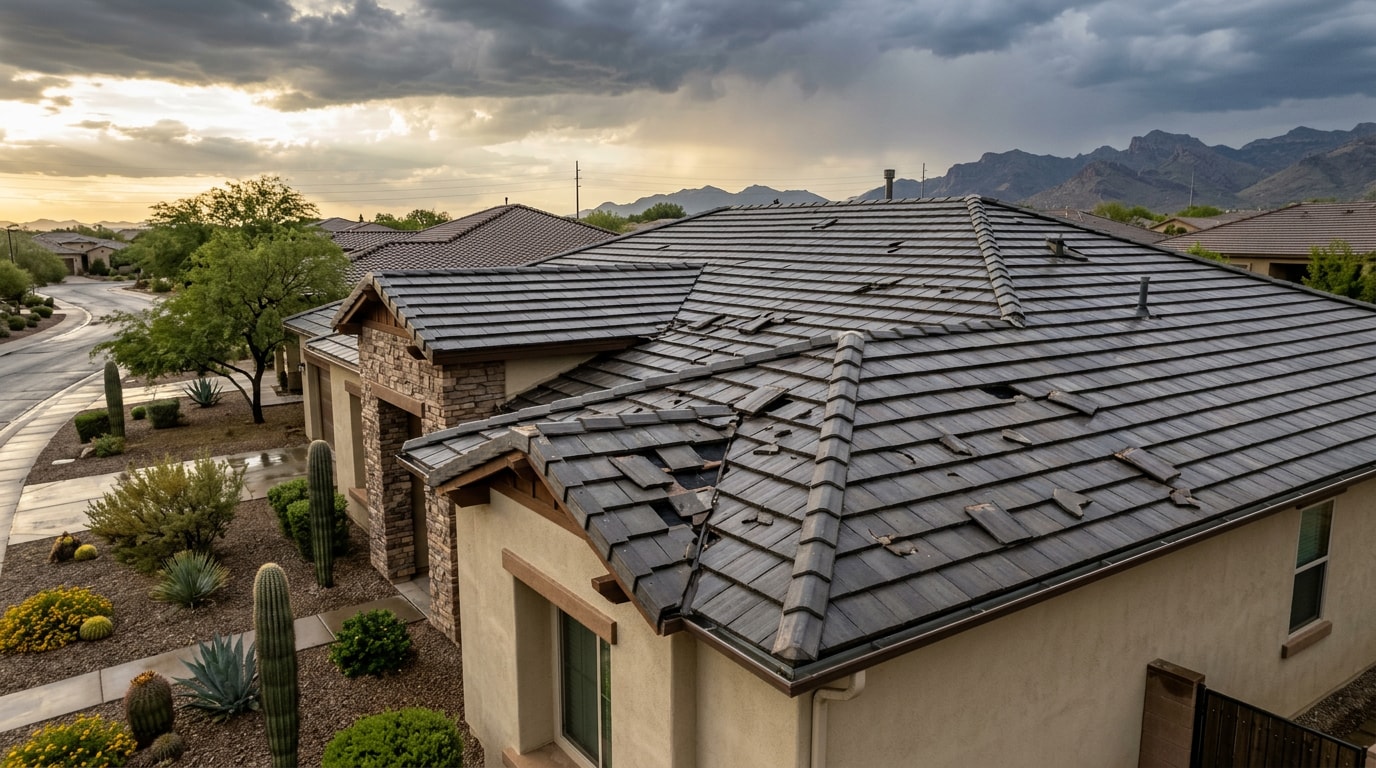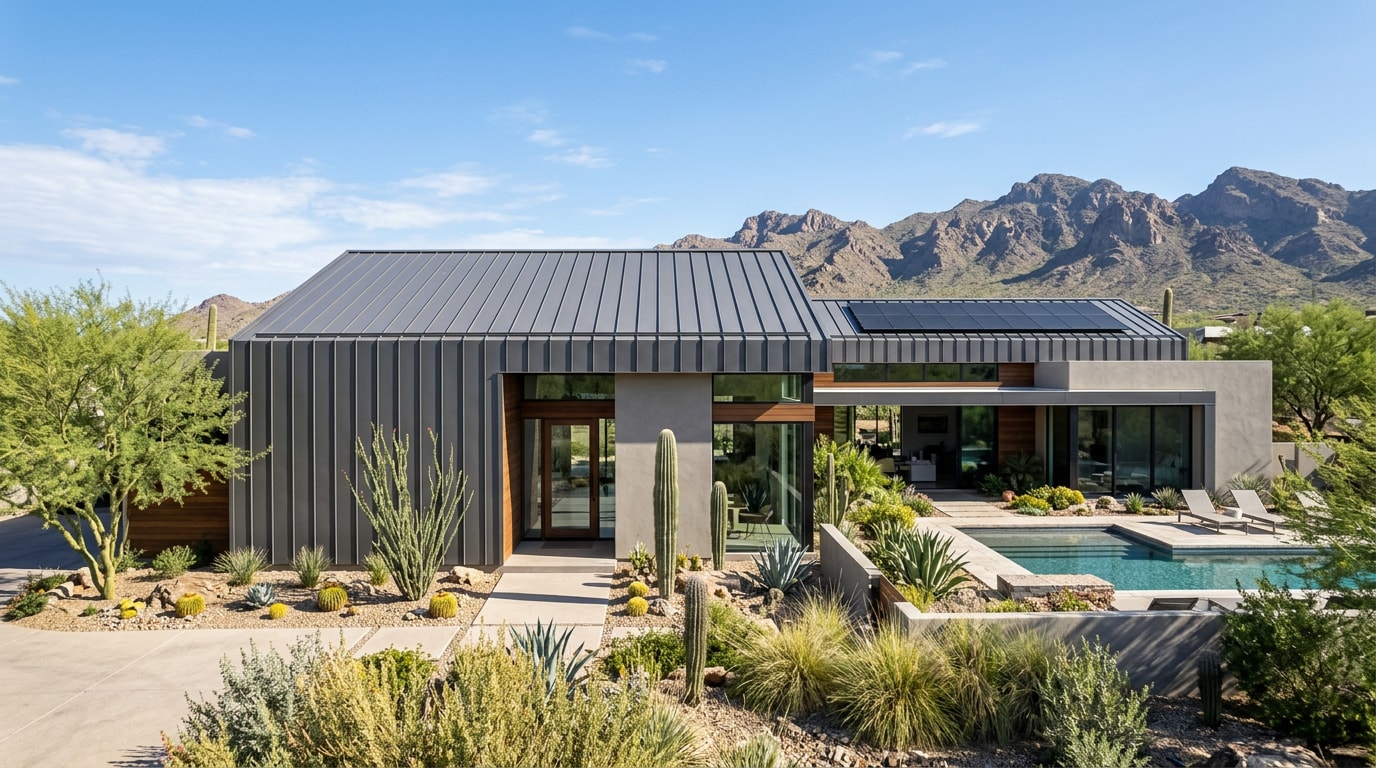
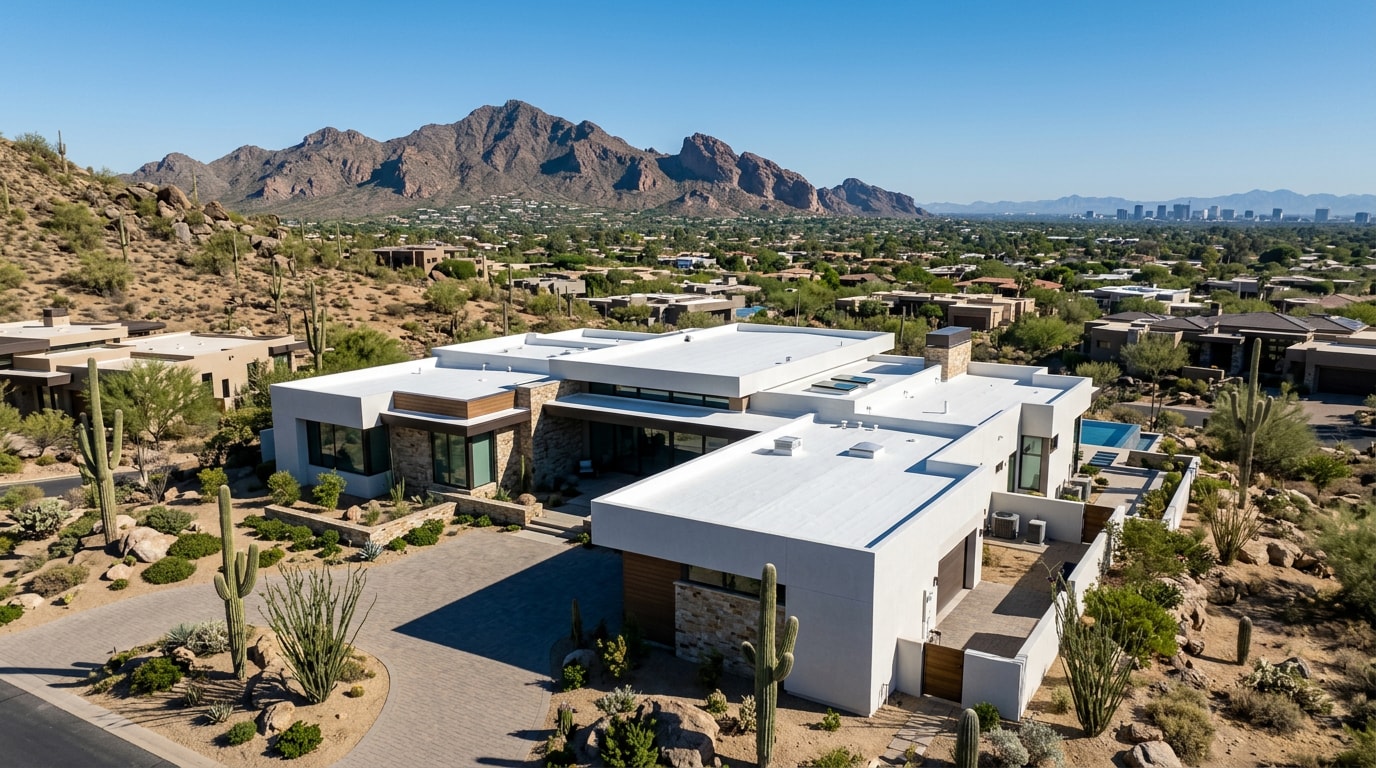
SPF roofing in Paradise Valley, AZ has become the default fix for flat and low-slope sections that keep cracking under the desert sun. Spray polyurethane foam seals a roof deck into one continuous, insulating membrane with no seams for monsoon water to find. Here's what it actually costs, how long it lasts, and where it falls short.
What Is SPF (Spray Polyurethane Foam) Roofing?
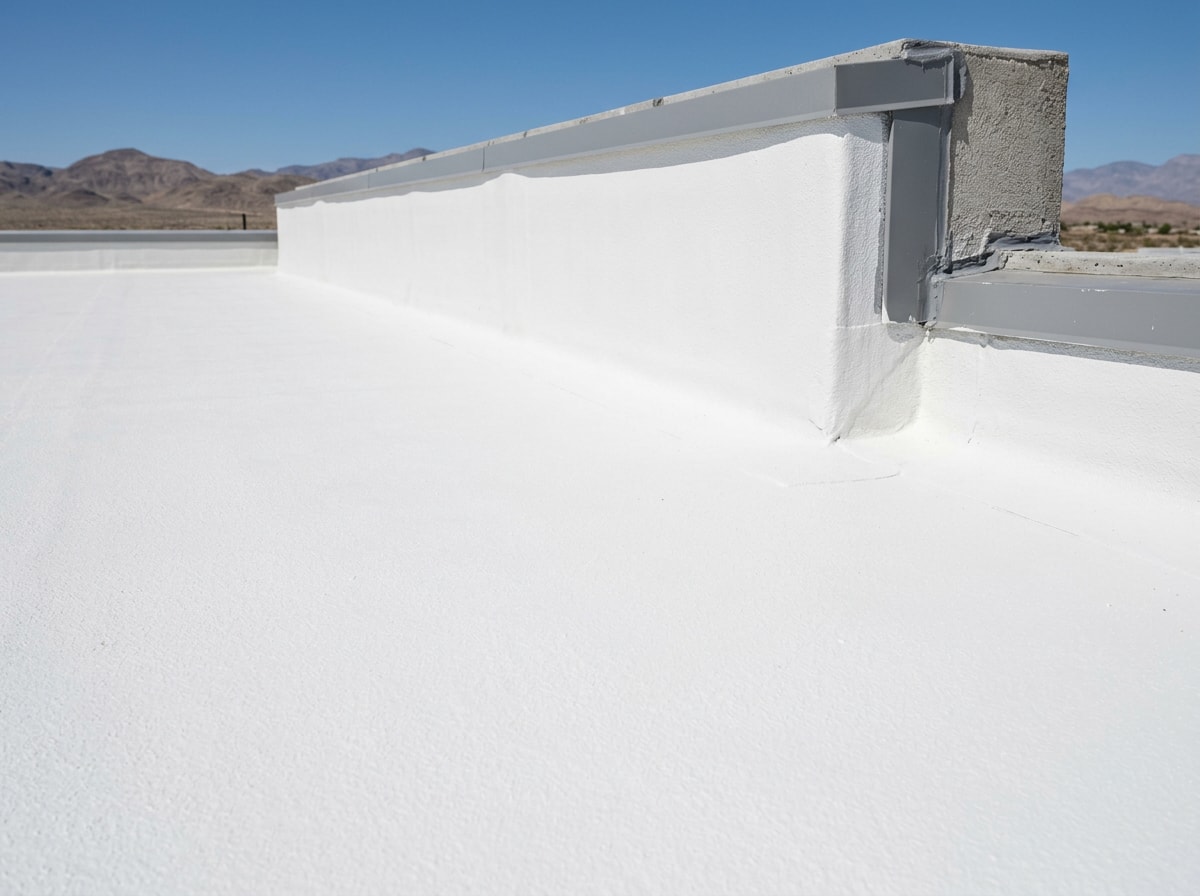
SPF roofing is a liquid-applied system. Two chemical components meet at the spray gun, expand into rigid closed-cell foam on contact with the roof deck, and get sealed under a protective elastomeric topcoat.
The result is a seamless, insulating membrane with no fasteners and no seams.
You'll see it called a few different things: spray foam roofing, SPF roofing, or spray polyurethane foam by its full chemical name. In Paradise Valley, it's used almost exclusively on flat or low-slope areas, parapet-wall sections, patio additions, and the flat connector roofs common on mid-century and desert contemporary homes.
Why Foam Roofing Matters in Paradise Valley's Climate
Paradise Valley roofs face a brutal combination: relentless UV, triple-digit summer heat, and sudden monsoon downpours that find any weak seam within minutes.
Phoenix Sky Harbor, the closest long-term weather station to Paradise Valley, recorded a cooling degree day total of 5,354 in 2025, well above its 30-year normal. That single number explains why flat-roof systems here fail faster than almost anywhere else in the country, and why a reflective, insulating membrane matters more in this market than in milder climates.
SPF's closed-cell structure resists water intrusion on contact, and its reflective topcoat pushes back against solar heat gain instead of absorbing it. The Cool Roof Rating Council and ENERGY STAR both note that a cool, reflective roof surface lowers roof temperature and reduces the cooling load on the building beneath it, which is exactly the mechanism SPF's topcoat relies on.
Benefits of SPF Foam Roofing for Paradise Valley Homes
- Seamless waterproofing. No seams means no entry point for wind-driven monsoon rain.
- Added insulation. Closed-cell foam adds real R-value directly at the roof deck, not just reflectance.
- Lightweight, low-disruption install. Foam can often go over an existing roof, so tear-off and the dumpster fees that come with it are frequently avoidable.
- Contour-hugging application. Unlike rolled roofing or built-up systems that rely on overlapping sheets, foam conforms to parapet walls, drains, and penetrations without extra flashing details.
That combination of waterproofing, insulation, and installation speed is why foam has become the go-to fix for aging flat sections across the Valley, not just in Paradise Valley but in Scottsdale, Cave Creek, and Fountain Hills as well.
How Much Does SPF Roofing Cost in Paradise Valley?
Pricing depends on three things: whether the old roof needs to be torn off, how thick the foam needs to be sprayed, and how much roof detail (AC units, skylights, parapet walls) the crew has to work around.
| Scope of Work | Typical Cost Per Sq. Ft. Installed | Notes |
|---|---|---|
| New foam over existing roof (no tear-off) | $4.00 - $7.00 | Most common scope for Paradise Valley flat sections |
| Tear-off + new foam system | $6.00 - $9.00 | Needed when the deck is wet or the old roof has multiple layers |
| Recoat only (sound existing foam) | $2.00 - $4.00 | Due every 10-15 years; far cheaper than a new install |
A typical residential flat-roof section in Paradise Valley runs somewhere between $7,000 and $18,000 installed, depending on square footage and whether tear-off is required. An on-site inspection is still the only way to get an exact number, since roof condition and access swing the price more than any other factor. Schedule a free inspection to get a firm quote for your property.
SPF Roof Installation: How It's Actually Applied
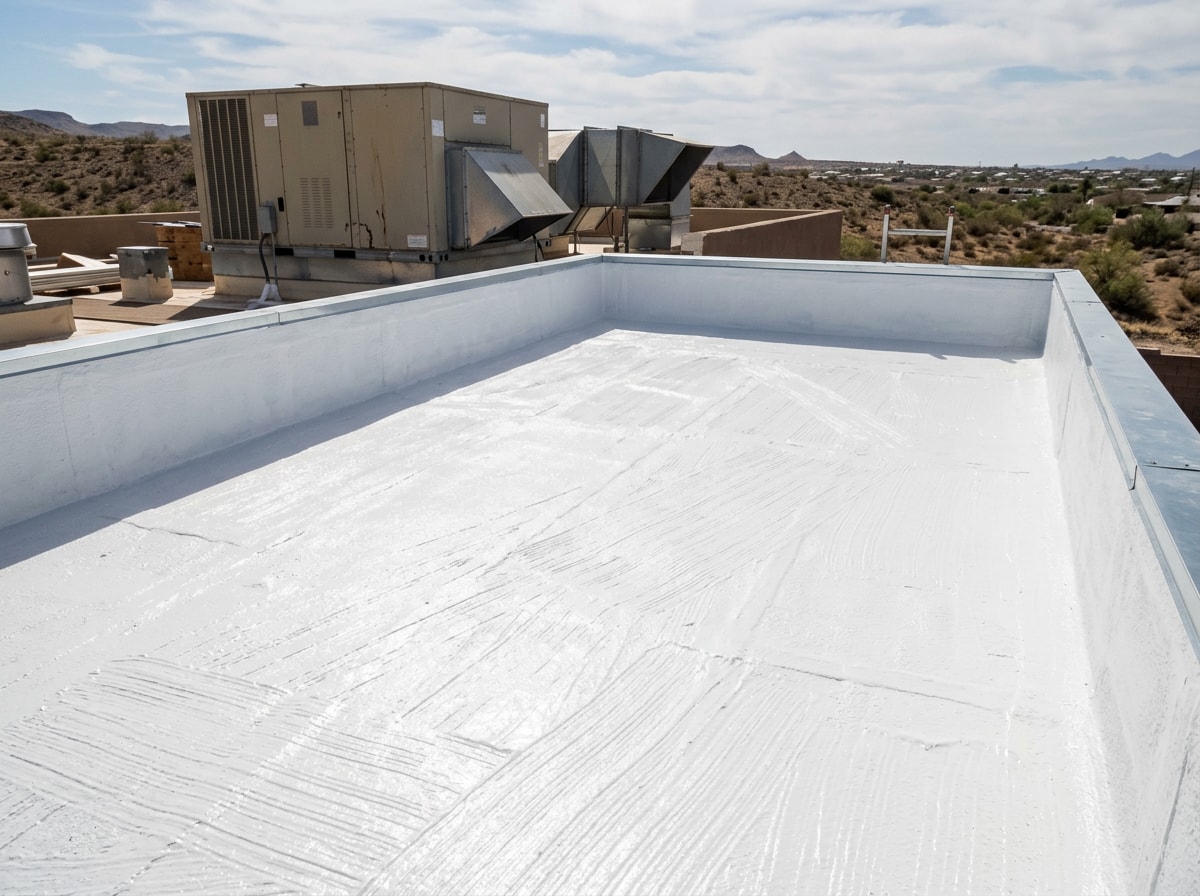
Installation happens in three stages: roof prep, foam application, and the protective topcoat.
- Prep and inspection. A qualified crew checks for trapped moisture and deck damage before spraying anything, since foam seals in whatever is underneath it permanently. Request a roof inspection if you're not sure what condition your deck is in.
- Foam application. The two liquid components meet at the spray gun and expand to roughly thirty times their original volume almost instantly. Crews build up closed-cell foam in multiple thin passes rather than one thick one, because foam generates heat as it cures and a single heavy pass risks uneven density and weak spots.
- Topcoat. Once the foam cures, a reflective elastomeric coating goes on to protect it from UV and foot traffic. This is the layer that actually determines how long the system lasts.
The Spray Polyurethane Foam Alliance publishes the thickness and application standards that reputable installers follow, and SPF roofing systems are recognized directly in the International Building Code and International Residential Code when installed to those standards.
Recoating: The Part of SPF Ownership Nobody Skips Without Regret
Foam itself doesn't really wear out in Arizona's dry climate. The coating over it does.
In Paradise Valley's intense UV exposure, that topcoat typically needs recoating every 10 to 15 years. Skip it, and UV degradation reaches the foam underneath, which is a far more expensive repair than a routine roof coating application. We've recoated foam sections on more than a dozen Paradise Valley properties this year, and the pattern is always the same: the roofs that get recoated on schedule look and perform like new, and the ones that don't end up needing foam repair, not just a new topcoat.
Silicone and acrylic coatings plan that tracks your install date makes the recoat decision proactive instead of reactive.
How Much Energy Does a Foam Roof Save?
This is where SPF pulls ahead of a simple reflective coating. It stacks two separate energy-saving mechanisms instead of relying on just one.
The reflective topcoat lowers roof surface temperature the same way any cool roof does. But the foam underneath also adds real insulation value at the deck, something a coating alone on asphalt or tile can't do. Independent case studies on SPF roof retrofits generally show 15% to 35% reductions in cooling costs, with the larger savings showing up on homes that had little or no roof insulation before the foam went on. Homes with newer, better-insulated attics see smaller gains since there's less inefficiency to correct in the first place.
Actual savings always depend on home size, existing insulation, and HVAC efficiency, so treat any flat percentage you hear as a starting range, not a guarantee.
Foam Roofing vs. Other Roofing Systems
SPF typically outperforms rolled or built-up roofing on flat sections, often lasting decades longer when the recoat schedule is kept.
Compared to tile, which suits Paradise Valley's pitched rooflines but isn't practical on flat areas, SPF fills a gap tile physically can't cover. Compared to standing seam metal, which is a strong option on sloped sections of the same home (see our Paradise Valley metal roofing guide for that comparison), foam remains the better choice specifically for flat and low-slope areas because metal panels aren't designed for near-zero pitch.
Against asphalt shingles, foam offers better insulation and zero seams, though shingles remain more common and more economical on sloped sections. For flat or low-slope roofs specifically, SPF is generally the stronger long-term option. Browse our full flat roof services to see how foam fits into a mixed-material roof plan.
Where SPF Falls Short (The Honest Version)
No roofing system is right for every situation, and foam has real limitations worth knowing before you commit:
- Hail and impact damage. SPF systems, like any roofing product, are susceptible to hail, and impacts can dent the foam and compromise the protective coating, according to SPFA's own technical guidance.
- The recoat is not optional. Skipping it doesn't just shorten lifespan modestly, it risks full foam replacement instead of a routine coating job.
- Installation window matters. Foam has to be sprayed within specific temperature and wind conditions, which can affect scheduling during peak summer heat.
- Moisture under the foam is permanent until it's cut out. Any trapped moisture at install time gets sealed in, which is why a thorough pre-install inspection isn't optional either.
Wind uplift and roofing component standards for SPF systems are documented in detail by the Insurance Institute for Business & Home Safety, which is worth a look if you want the engineering side of why installation quality matters as much as the material itself.
Finding a Trusted SPF Roofing Contractor in Paradise Valley
Look for a licensed, insured contractor with a real track record of SPF installs in this specific climate, not a general roofer dabbling in foam as a side offering.
Ask three things before signing anything:
- How many local SPF roofs have you installed and recoated?
- What warranty backs both the foam and the coating separately?
- Can I see completed foam roofing work in this area?
You can review our completed projects across the Valley, or go straight to scheduling a free inspection to get a firm scope and price for your roof.
Irish Roofing Company has served Paradise Valley and the surrounding Phoenix Valley since 2019, handling everything from single flat-roof recoats to full foam replacements. Visit our homepage to see the full range of roofing, tile, metal, and waterproofing services we offer across the region.
FAQ
How much does SPF roofing cost in Paradise Valley?
New foam installation typically runs $4 to $9 per square foot installed, depending on whether tear-off is needed. Most residential flat-roof projects total $7,000 to $18,000. A recoat on sound existing foam costs far less, usually $2 to $4 per square foot.
How long do foam roofs last in Paradise Valley?
A properly installed and recoated SPF roof commonly lasts 25 to 30+ years, and systems that stay on schedule with recoating can last significantly longer since each recoat resets the protective surface. The foam itself holds up well in Arizona's dry climate; the coating on top is what determines the real lifespan.
How often does a foam roof need recoating in Paradise Valley?
Every 10 to 15 years, depending on the coating type used and how much direct UV exposure the roof gets. Silicone coatings tend to last toward the longer end of that range; acrylic coatings need attention closer to the 10-year mark.
How much energy does a foam roof save in Paradise Valley?
Most case studies show 15% to 35% reductions in cooling costs after a foam roof install, with the biggest gains on homes that had poor roof insulation beforehand. Savings vary with home size, existing insulation, and HVAC efficiency.
Is SPF roofing only for commercial buildings, or does it work for homes too?
It works well on residential flat and low-slope sections. Many Paradise Valley homes, especially mid-century and desert contemporary designs with parapet walls, have flat roof areas that are ideal SPF candidates even though the rest of the roof is tile or shingle.
Can SPF go over an existing roof without a full tear-off?
Often, yes. Foam can frequently be applied directly over an existing flat roof system, which shortens the project and avoids tear-off costs. A pre-install inspection is still required to confirm there's no trapped moisture or deck damage, since foam seals in whatever is underneath it.
What's the biggest risk with foam roofing in a desert climate?
Skipping the recoat. The foam itself tolerates Arizona's dry heat well, but the UV-protective topcoat degrades over time. Once it fails, UV reaches the foam directly, turning a routine coating job into a more expensive foam repair.