Metal roofing in Paradise Valley, AZ has moved from a niche upgrade to the default choice for homeowners replacing a second or third failed tile or shingle roof. Triple-digit summers, monsoon wind gusts, and HOA boards that still expect a high-end look are pushing the shift. This guide covers real 2026 pricing, panel styles, local wind-code numbers most contractor sites never mention, and what actually happens when a metal roof gets repaired or maintained here.
Why Paradise Valley Homeowners Are Switching to Metal
Tile cracks under thermal stress. Shingles curl and lose granules after a decade in direct desert sun. Metal handles both problems better, which is why it has become the go-to upgrade for owners who already replaced one failing roof and don't want to do it again.
Built for Monsoon Wind, Not Just Rated for It
Most marketing pages quote a single "withstands 150 mph winds" number without saying what that's measured against. Here's the number that actually governs your roof: Scottsdale and most Maricopa County jurisdictions require residential construction to meet a minimum ultimate design wind speed of 105 mph under the 2021 IBC and ASCE 7 standards. A properly installed standing seam or interlocking metal panel system is engineered well past that baseline, which is why it resists the uplift that tears loose asphalt tabs and lifts tile during a fast-moving monsoon cell.
If you want hard proof instead of a sales number, ask your contractor for the panel's UL 580 or FM 4474 wind-uplift test rating and compare it to the code minimum for your jurisdiction.
Hail and wind resistance also travel together for a practical reason. The panel gauge that keeps a roof from flexing in high wind is the same gauge that resists denting. Some metal roofing products carry a Class 4 impact rating under UL 2218, the top tier of the test. That rating can matter beyond storm performance, too: several insurers offer premium credits for Class 4 roofing or for roofs certified under the IBHS FORTIFIED Home standard. Coverage and discount amounts vary by carrier and aren't guaranteed in Arizona, so confirm directly with your agent before counting on a savings figure.
A Roof That Outlasts Two or Three Shingle Replacements
Metal roofs commonly last 40 to 70 years depending on panel gauge, coating, and maintenance, versus 15 to 20 years for asphalt shingles baked by Arizona sun. A homeowner who installs metal once may never need another full tear-off, while a shingle roof owner typically replaces theirs two or three times over that same stretch.
Lifespan isn't automatic, though. Coating quality, installation accuracy, and how often seams get inspected all decide whether a roof hits the 40-year mark or the 70-year one. We've pulled 20-year-old standing seam panels off Paradise Valley homes that still looked close to factory finish under the Kynar coating, right next to flashing that needed resealing because nobody had checked it since install day.
Energy Efficiency: How Much Cooler Does Metal Actually Run
Paradise Valley AC bills are brutal from May through September, and roof material plays a bigger role in that than most homeowners realize.
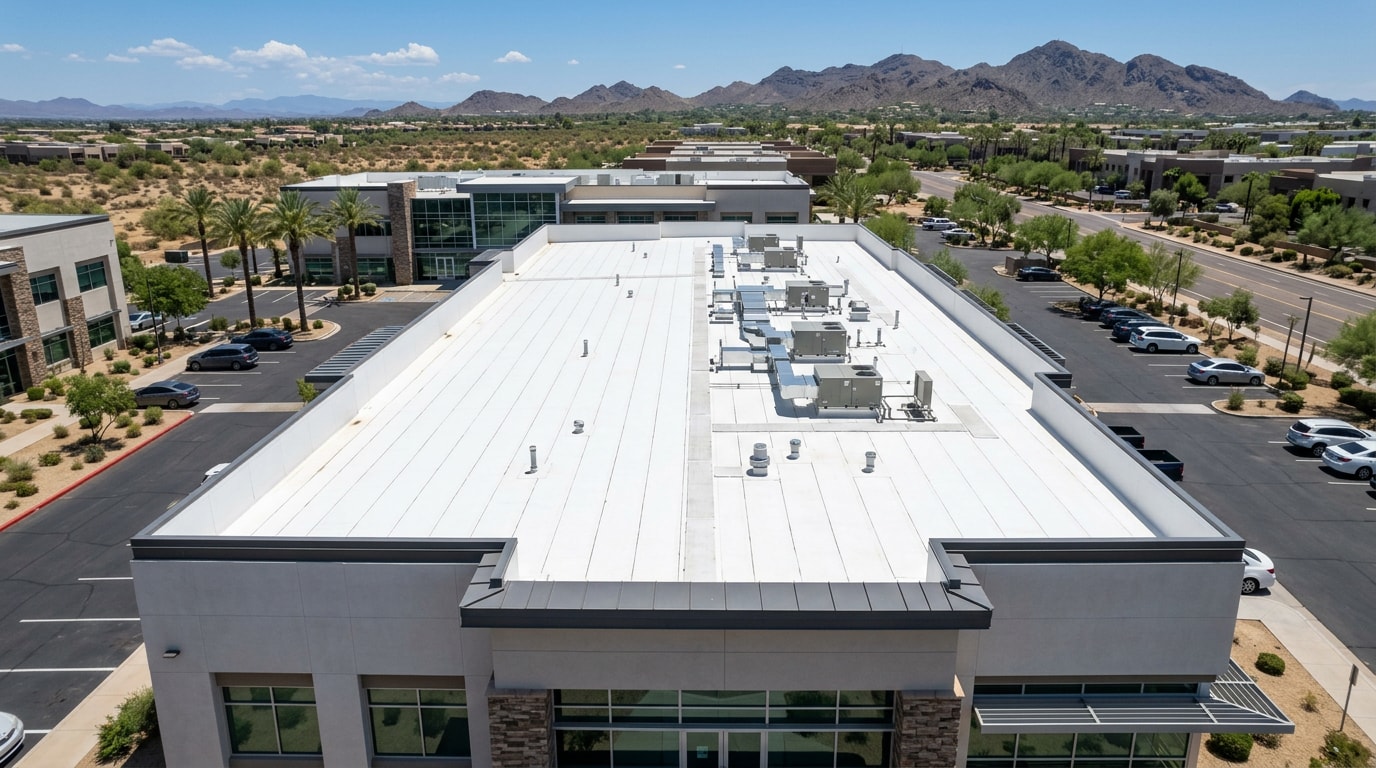
Reflectivity is the mechanism. According to the U.S. Department of Energy's consumer guide to cool roofs, most dark roofing materials reflect only 5 to 20 percent of incoming sunlight, while light-colored and cool-coated products can reflect 55 to 90 percent depending on the finish. Metal roofing with a factory cool coating sits toward the higher end of that range, which translates into a measurably cooler attic, especially on west-facing slopes that take the hardest afternoon sun.
One caveat worth flagging: several roofing sites still advertise a federal tax credit for installing an ENERGY STAR metal roof. Rules around roofing-specific federal energy credits have changed more than once in the past few years, so don't build that credit into your budget until you've confirmed current eligibility with a tax professional.

Metal Roofing Styles for Paradise Valley Homes
Most homeowners narrow the decision down to two main profiles before calling a contractor.
Standing Seam Metal Roofing
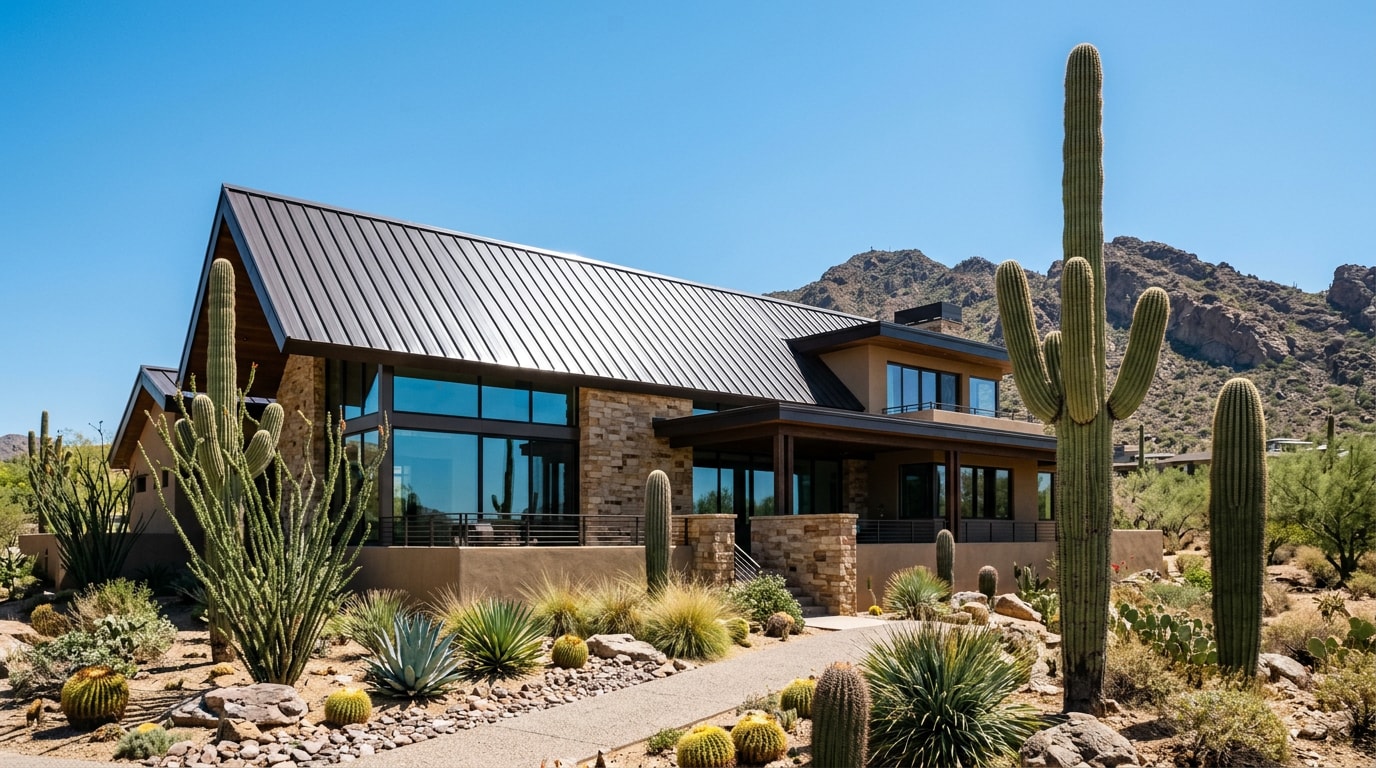
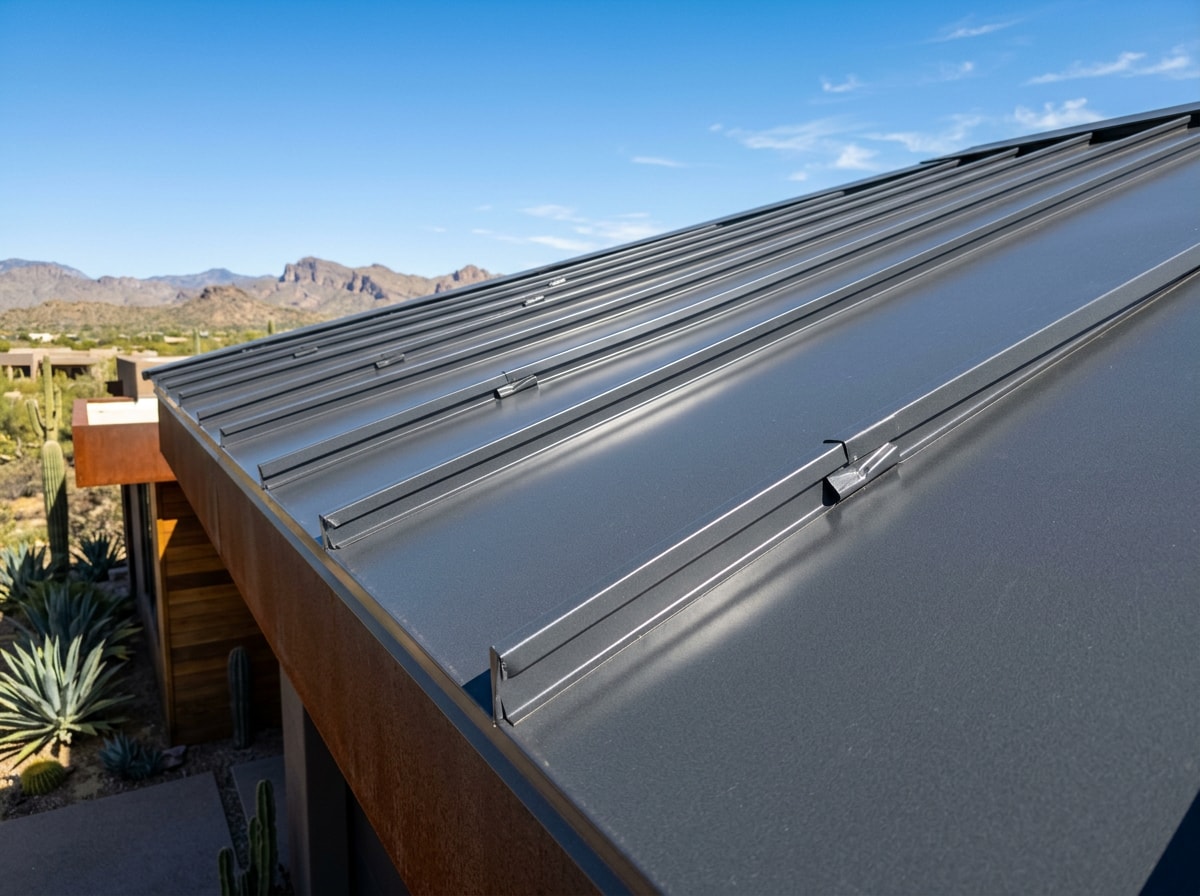
Standing seam uses raised, interlocking panel seams with concealed fasteners, giving it a clean, linear look that reads as modern without clashing with Southwestern architecture. It's the most popular premium choice locally because the hidden-fastener design reduces leak points and holds up better against wind than exposed-fastener panels.
This profile also tends to carry the longest warranties and highest resale value among metal options, which is why homeowners planning to stay long-term usually default to it. Our metal roofing services page covers panel and finish options available locally, and you can see completed standing seam jobs on our projects page.
Metal Tile Roofing
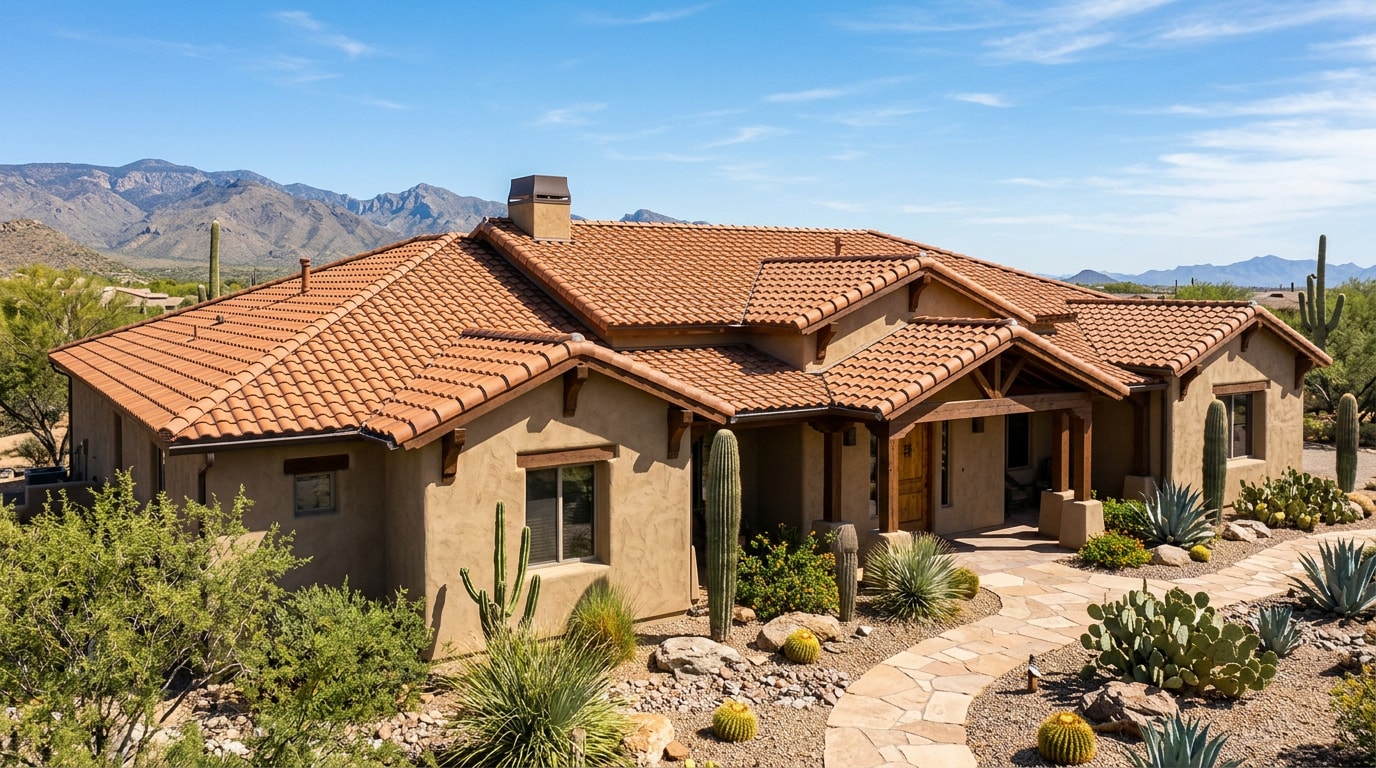
Metal tile, often stone-coated steel, mimics the look of traditional barrel or flat clay tile while weighing a fraction as much. For HOA communities built around a Southwestern tile look, this option keeps neighborhood continuity without the cracking and weight concerns of real clay. You can browse metal tile options if your HOA guidelines call for a tile profile.

Metal Roof Cost in Paradise Valley, AZ (2026)
Cost depends mainly on profile, panel gauge, and finish, plus how complex the roofline is. Here's a realistic per-square-foot breakdown for the area:
| Metal Roofing Type | Price Per Square Foot (Installed) |
|---|---|
| Corrugated / exposed-fastener panel | $7.00 – $9.00 |
| Metal tile (stone-coated steel) | $8.00 – $11.00 |
| Standing seam | $9.00 – $18.00 |
For a typical 2,500-square-foot Paradise Valley roof, standing seam generally lands between $25,000 and $45,000 total, with corrugated panels running lower and metal tile in the middle. It's a bigger upfront number than asphalt, but the 40-plus year lifespan is usually the stronger long-term play. Ready to see real pricing for your roof instead of a range? Schedule a free inspection and we'll walk the roof with you before quoting anything.
Metal Roof Repair and Maintenance
Even durable metal roofing needs occasional attention in this climate. The most common metal roof repair calls involve seam resealing after years of UV exposure, loosened fasteners from thermal expansion and contraction, and isolated panel replacement after a hailstorm.
Routine metal roof maintenance, mainly annual seam and fastener checks, catches these issues before they become leaks. If you're noticing a rust spot or a loose panel edge, our metal roof repair page covers what a typical repair visit includes. A yearly roof inspection is the cheapest insurance you can buy against a surprise leak mid-monsoon season, which officially runs June 15 through September 30 in Arizona.
Finding the Right Paradise Valley Metal Roofing Contractor
Installation quality determines whether a metal roof hits its 40-year potential or fails early. Look for a licensed installer with manufacturer certification, since many warranties are voided by improper fastening or flashing work.
Irish Roofing Company has served the Scottsdale and Paradise Valley area since 2019 under Arizona ROC License #325437, and our crews handle the HOA design-review process that many Paradise Valley communities require before a metal roof installation can begin. We also work the surrounding Scottsdale, AZ market, and much of the desert-durability approach we use on a Chandler residential install applies directly to Paradise Valley's climate and code requirements. Ask any contractor about past local projects and permit handling before signing anything, and check out our Paradise Valley, AZ service area page for more on how we work in your specific community.
Learn more about our full range of roofing services on our homepage, or contact us directly to schedule a free inspection.
FAQ
How much does a metal roof cost in Paradise Valley?
Most Paradise Valley homes land between $25,000 and $45,000 for a full standing seam installation, with corrugated and metal tile options running lower depending on profile. See the cost table above for a per-square-foot breakdown.
Do metal roofs make Paradise Valley homes hotter?
No. With a cool roof coating, metal roofs typically run cooler than asphalt shingles because they reflect more solar energy instead of absorbing it. Dark asphalt reflects as little as 5 to 20 percent of sunlight, while cool-coated metal can reflect well over half.
What styles of metal roofing are available in Paradise Valley?
Standing seam offers a clean, modern profile with concealed fasteners. Metal tile mimics traditional clay tile at a fraction of the weight. Corrugated or architectural panels provide a more budget-friendly, industrial look.
How long does a metal roof typically last?
Metal roofs typically last 40 to 70 years, though the exact lifespan depends on panel gauge, coating quality, and how consistently the roof is maintained.
Are metal roofs noisy during rain or hailstorms?
Not when installed correctly. Solid decking and underlayment beneath the panels absorb sound, preventing the "tin roof" noise effect people associate with older, uninsulated metal buildings.
Does metal roofing lower my homeowners insurance?
It can, but it depends on your carrier. Some insurers offer discounts for Class 4 impact-rated roofing or IBHS FORTIFIED certification, since both reduce storm-claim risk. Confirm specific savings with your agent before assuming a discount applies in Arizona.
Do Paradise Valley HOAs allow metal roofing?
Most do, but nearly every Paradise Valley HOA requires design review before installation, especially for color and profile. A contractor experienced with local HOA submittals can save you weeks of back-and-forth.