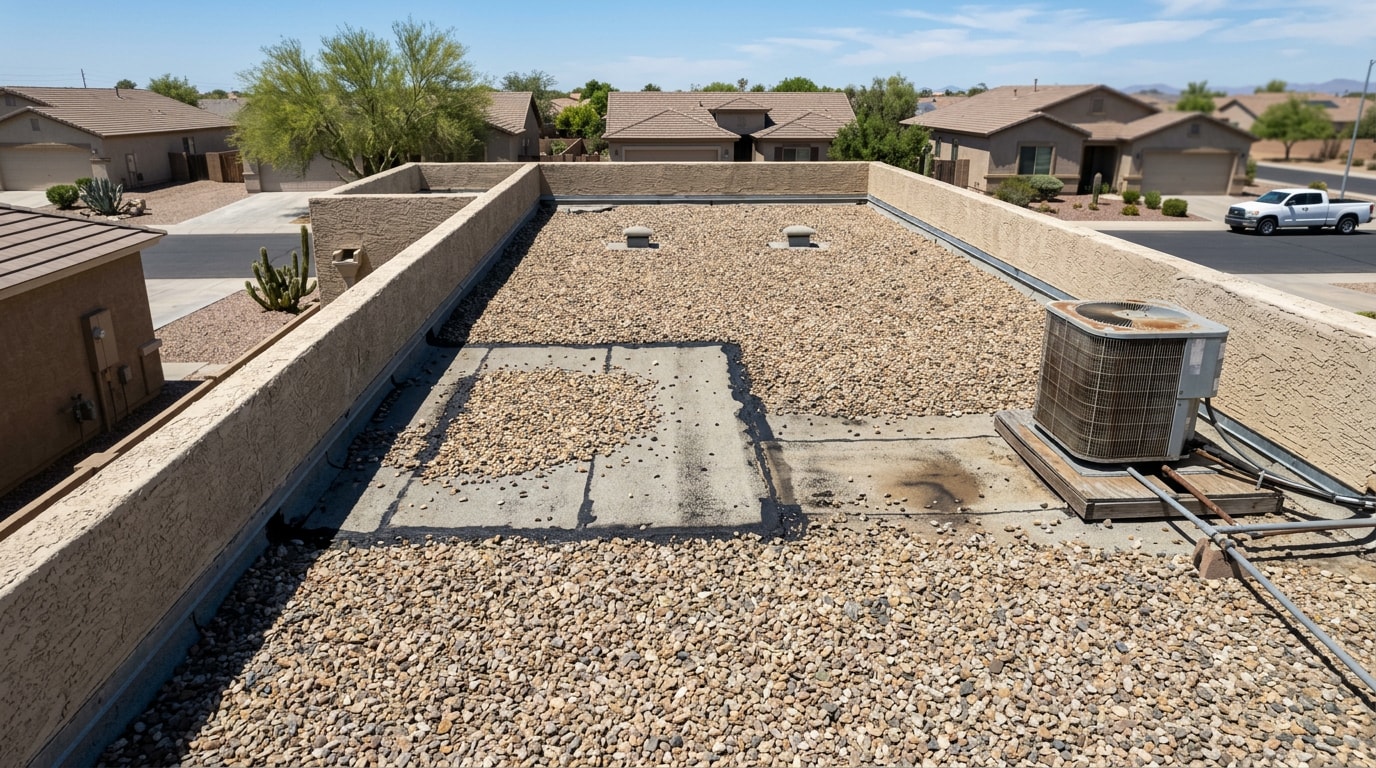
Flat roof flashing in Mesa, AZ has one job that matters more than any other: keeping water out of seams that never get the benefit of a slope. When it fails, Mesa's UV load and monsoon wind find the gap within one storm season, not several. This guide breaks down every flashing type on a Mesa flat roof, the local conditions that wear it out fastest, and what a real repair should look like before you call anyone.
Irish Roofing Company's field crews work these roofs across the East Valley, and this guide reflects what we actually find on inspections, not a generic national checklist. If you want a second opinion on a roof you're worried about, you can always schedule a free inspection before the next storm rolls through.
Flat Roof Flashing Types in Mesa
Flat roof flashing is the metal or membrane material installed at roof edges, wall transitions, and penetrations to stop water from entering where a flat roof can't rely on slope alone. Because flat roofs hold standing water longer than pitched roofs, flashing has to seal tighter and last longer under sustained moisture.
Here's how the five main types break down on a typical Mesa flat roof.
| Flashing Type | Where It's Used | Common Materials | Failure Signs |
|---|---|---|---|
| Base (curb) flashing | Parapet walls, equipment curbs, mechanical stands | Galvanized steel, aluminum, rubberized membrane | Cracking at the wall-to-membrane seam |
| Counter flashing | Caps the top edge of base flashing | Sheet metal, reglet systems | Gaps between counter and base layers |
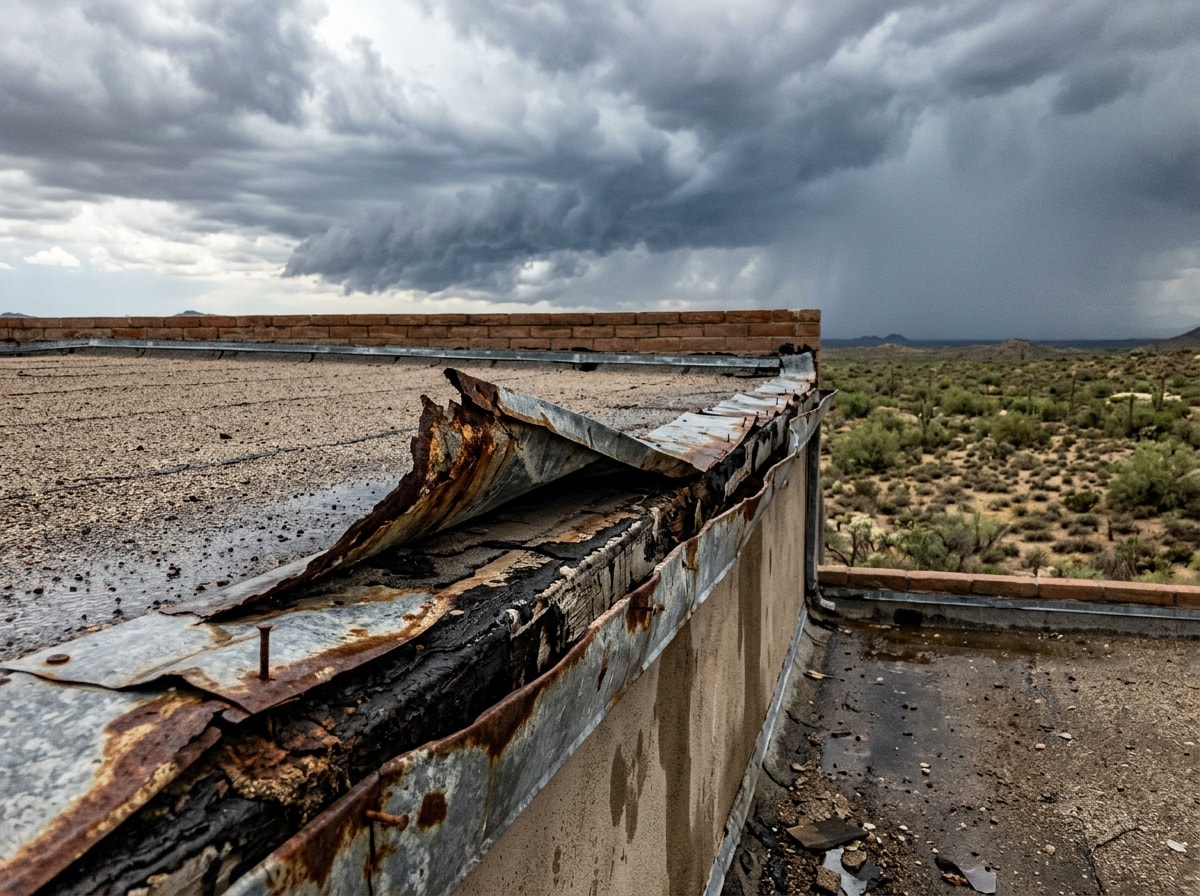
| Edge (drip edge/gravel stop) | Roof perimeter | Galvanized steel, aluminum | Curling, rust, fascia staining below |
| Pipe (vent) flashing | Plumbing stacks, HVAC lines | Rubber boots, lead, galvanized metal | Cracked boot collar, UV-brittle rubber |
| Step flashing | Flat-to-sloped wall transitions, additions | Galvanized steel, aluminum | Lifted overlaps, visible daylight at seams |
Base Flashing (Curb Flashing)
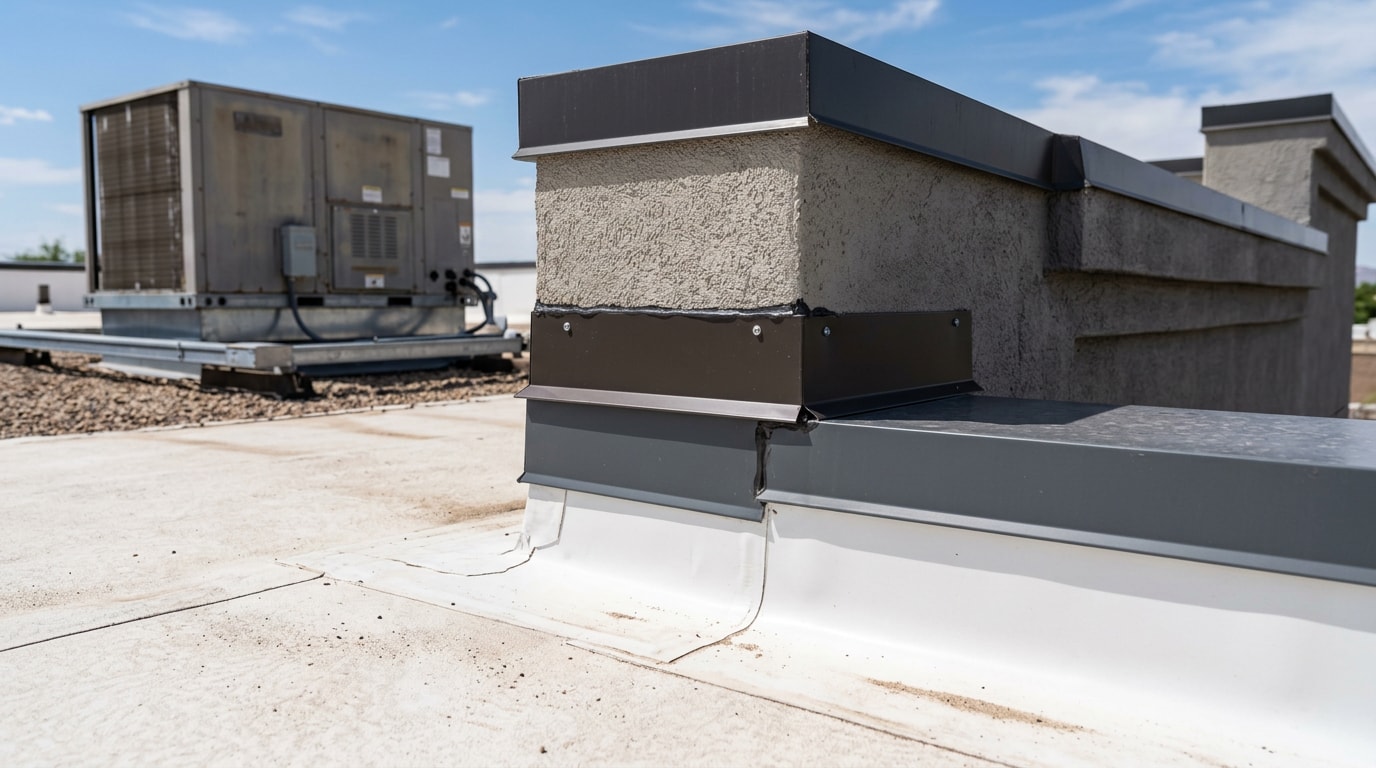
Base flashing seals the transition where a flat roof membrane meets a vertical surface, a parapet wall, equipment curb, or mechanical stand. This seal has to stay watertight under sustained pressure since flat roofs hold water longer than sloped ones. Installers typically use galvanized steel, aluminum, or rubberized membrane, depending on the roof system.
Counter Flashing
Counter flashing is the second layer that covers the top edge of base flashing, locking it into the wall and keeping water from working behind the seal. This two-part system matters most on commercial and flat assemblies, where roof-to-wall transitions see more standing water and thermal movement than a pitched roof typically does.
Edge Flashing (Drip Edge / Gravel Stop)
Edge flashing runs along the roof's perimeter to guide water off the deck instead of letting it curl underneath and rot the fascia below. Ballasted and built-up roofs often use a wider gravel-stop variant to hold loose ballast in place.
Mesa updated its building code on January 8, 2026, when the city moved to the 2024 International Building Code family, which sets current minimum attachment and overlap standards for edge and parapet flashing. If your roof was last flashed under an older code cycle, it's worth asking a contractor whether the detailing still meets current Mesa building code requirements.
Pipe Flashing
Pipe flashing, sometimes called vent flashing, seals the gap where plumbing stacks or HVAC lines pass through the membrane. Rubber boots flex with temperature swings, which matters given Mesa's wide day-to-night range, while metal flashings resist UV better but flex less. Either way, a tight seal at the base is essential since roof penetrations are common leak points.
Step Flashing
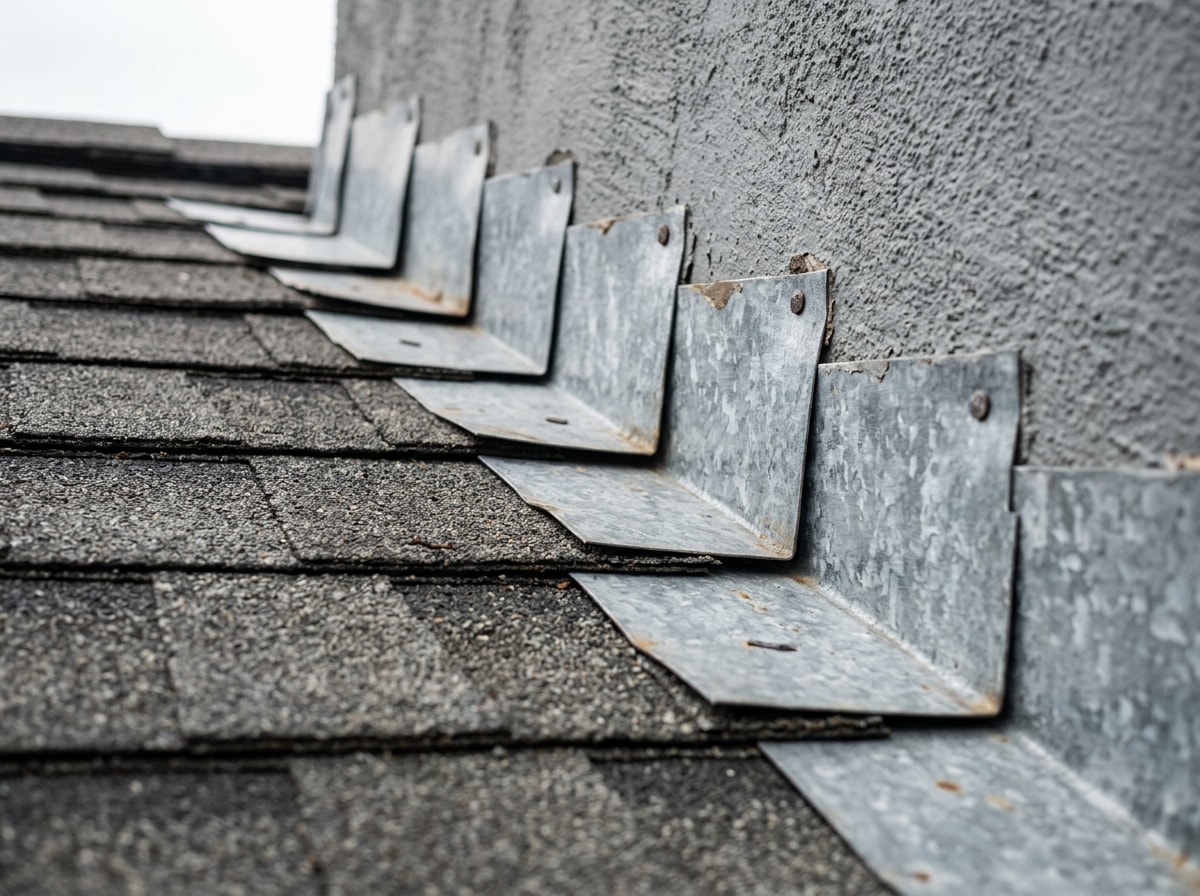
Flat roofs use step flashing less often than pitched roofs, but it still shows up at roof extensions, additions, and anywhere a flat section meets a steeper wall. Each piece overlaps the one below it, layering like shingles so water moves downward and outward instead of finding a seam to slip through.
Roof Flashing vs. Roof Edge Metal
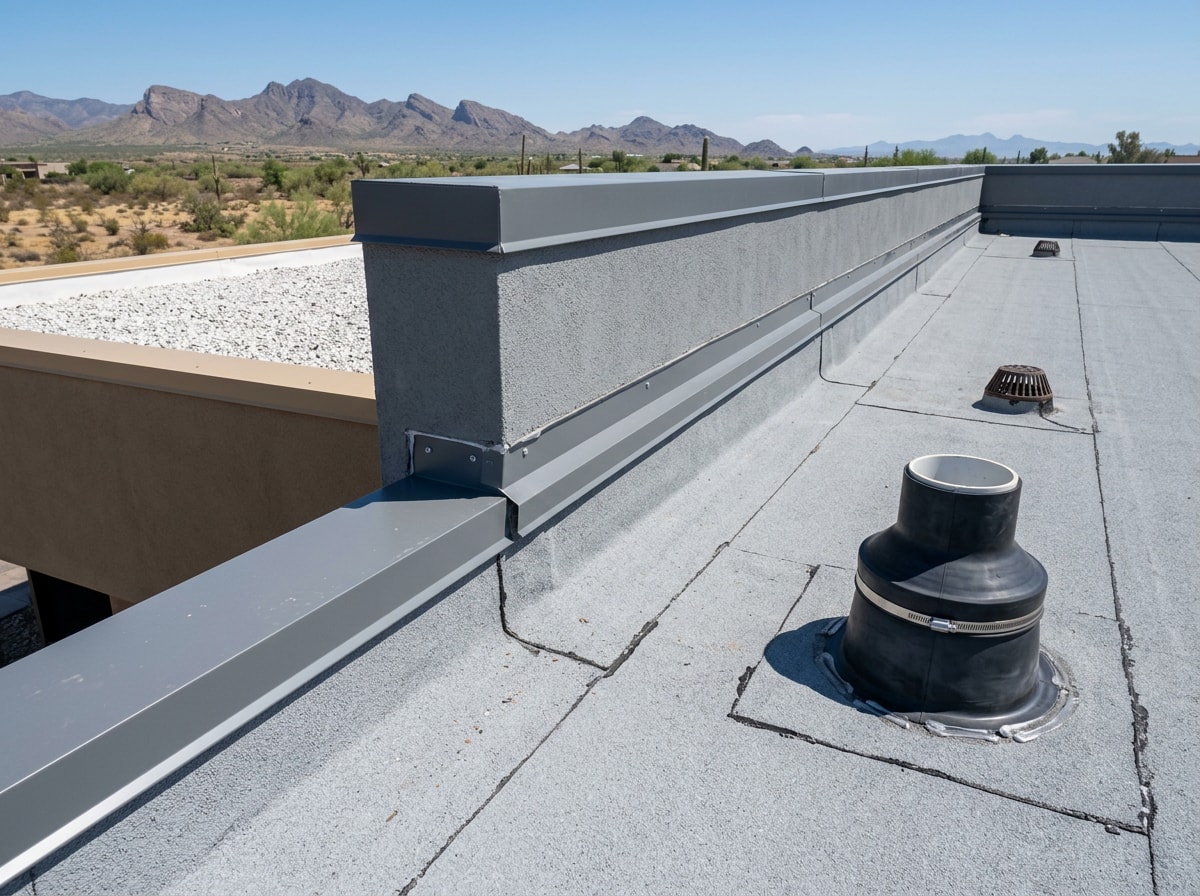
Homeowners often use these terms interchangeably, but they're not the same thing. Flashing seals a specific joint against water intrusion. Edge metal, like a parapet cap or scupper trim, mostly manages water flow and finishes the roof's edge appearance.
On a Mesa flat roof, flashing shows up at parapet-to-membrane seams and equipment curbs. Edge metal shows up as the cap over a parapet wall or the lining inside a scupper opening.
- Role: Flashing seals joints; edge metal manages water flow and finishes edges.
- Location: Flashing at walls, curbs, and penetrations; edge metal at parapet caps and scuppers.
- Failure signs: Flashing leaks show up indoors; edge metal failures show up as exterior staining.
Local Flat Roof Flashing Challenges in Mesa, AZ
Mesa's climate puts flashing through two extremes every year. Intense summer UV exposure dries out sealants and makes metal flashing brittle, while monsoon season brings sudden wind-driven rain that finds every weak seam. Arizona's monsoon season runs from June 15 through September 30 and brings thunderstorms with lightning, strong winds, and heavy rain. Storm gusts strong enough to lift loose flashing or drive water sideways under a parapet cap aren't unusual during peak monsoon weeks.
Ponding water adds another layer of stress. Flat roofs with poor drainage hold water around curbs and scuppers long after a storm, softening flashing seals from underneath, and blocked scuppers make it worse. Over several monsoon seasons, these cycles of UV drying and sudden saturation typically push aging flat roof flashing toward failure.
In our own inspections across Mesa neighborhoods, the most common surprise isn't a dramatic tear, it's a single lifted seam at a parapet corner that's been quietly letting water in for a season or two before anyone notices a stain. That's exactly why a pre-monsoon check matters more here than in milder climates.
If you're in a neighboring community, the same wind-and-UV cycle applies. Our Mesa, AZ area page covers roof systems specific to this market in more detail.
Professional Inspection & Diagnosis Process
A thorough flashing-focused inspection covers more than a quick walk across the roof. A qualified inspector checks the membrane, every flashing seam, drain, scupper, edge detail, and penetration, then follows up with an interior check for attic or ceiling moisture.
That interior step matters because the visible leak spot often isn't where water actually enters. Water can travel along a deck or insulation layer for several feet before dripping through a ceiling, so chasing the stain alone can lead to the wrong repair. We've walked onto roofs where a previous contractor patched the ceiling stain directly below a leak, only for the water to keep coming in from a parapet seam twelve feet away.
A proper roof inspection traces moisture back to its real entry point before repair work begins.
Flashing Repair Solutions
Repair strategy depends on what's actually failing. Drainage corrections, clearing scuppers, adding tapered insulation, or resealing low spots, address the water itself, while targeted flashing repairs at vents, skylights, and wall transitions fix the seal.
The approach also shifts with roofing system type:
- Membrane roofs (TPO, EPDM, modified bitumen) typically need seam-specific patches or flashing boot replacement.
- Spray foam roofs rely more on recoating and sealing penetrations rather than patching metal.
- Built-up/gravel roofs often need gravel-stop and counter-flashing repairs at the perimeter.
A flat roof repair specialist should confirm system type before recommending a fix. If your building uses a TPO or similar single-ply membrane, our TPO membrane installation page covers how that system handles flashing details differently than foam or built-up roofs. Commercial properties with parapet-heavy roof lines also benefit from a dedicated look at commercial flat roof waterproofing, since flashing failure and membrane waterproofing issues usually show up together.
Materials, Equipment, and Installation Standards
Getting flat roof flashing right in Mesa often comes down to material selection as much as installation quality.
| Material | Cost Position | UV/Corrosion Resistance | Trade-Off |
|---|---|---|---|
| Galvanized steel | Lowest | Moderate | Rusts once the zinc coating scratches |
| Aluminum | Mid-range | Strong UV and corrosion resistance | Softer, can dent |
| Copper | Highest | Excellent, often outlasts the roof | High upfront cost |
Installation quality matters just as much as the material choice. Flashing needs to stay compatible with the existing roofing system and meet durability standards like those published in the NRCA Guidelines for Architectural Metal Flashings, which cover metal flashings used in low- and steep-slope roof systems along with design considerations such as joinery and protective coatings . Reinforced, UV-resistant flashing with proper overlap typically outperforms budget materials installed carelessly.
If your flat roof sits next to a tar-and-gravel section, the repair logic is similar but not identical. Our tar roof repair guide for Gilbert, AZ walks through that system specifically.
Browse our complete roofing contractor services for more on materials and options available across Mesa, or visit Irish Roofing Company directly to see recent work in the area.
FAQ
How often should flat roofs be inspected in Mesa?
Most Mesa flat roofs benefit from at least one inspection a year, ideally before monsoon season begins in mid-June. A second check after any major storm helps catch wind or hail damage early, since flashing issues aren't always visible from the ground.
What causes most flat roof leaks?
Most flat roof leaks trace back to flashing failure, seam separation, or long-term ponding water breaking down the membrane. UV exposure also plays a role, drying out sealants over years of Arizona sun. Leaks usually result from a combination of aging materials and standing water finding a weak point.
How often should roof flashing be replaced?
Flashing often lasts close to the life of the surrounding roofing system when installed and maintained well, but it should be checked visually at least once a year. Replace it sooner if you notice cracking, rust, lifted edges, or gaps at seams.
What's the best flashing material for Mesa's climate?
Aluminum offers the best balance of UV resistance and cost for most Mesa homes. Galvanized steel works but needs more frequent inspection once the coating scratches. Copper lasts the longest and resists corrosion best, but the higher material cost usually only makes sense on higher-end or long-term-hold properties.
Can a leak be fixed if previous contractors couldn't find the source?
Yes, in most cases. A flashing-focused inspection that checks every seam, drain, and penetration, then follows water through the interior deck and insulation, usually locates leaks that a surface-level look missed. This is one of the most common reasons property owners get a second opinion.
How much does it cost to repair flat roof flashing?
Flashing repair costs vary by access difficulty, material type, and how much damage has already spread, so a single number rarely tells the full story. Spot repairs tend to fall into a modest range, while full flashing replacement costs considerably more. A site visit gives the most accurate number for a specific roof, which is why we offer a free inspection before quoting any work.